If you’re shipping from China to Amazon for the first time, the whole “Amazon FBA Shipping” thing can feel overwhelming. Where do you check the status after you send the goods? Where exactly do the labels go? When should you do what? Unless you’ve actually done it before, it’s hard to get all these details straight in your head.
Amazon FBA Shipping – often called “FBA head haul” – is the process of moving your goods from their origin in China to an Amazon FBA warehouse in the destination country, by sea, air, or express courier. Over 82% of active Amazon sellers use FBA, and a large chunk of them source from China. Understanding how Amazon FBA Shipping actually works is essential for any seller based in China.
But in 2026, Amazon FBA Shipping is no longer as simple as “find a forwarder and ship it out.” As of January 1, 2026, Amazon fully discontinued its FBA prep and labeling service, which had been running for over a decade. On March 31, the sticker‑less commingled inventory option ended – all FBA inventory must now have FNSKU labels applied before shipping. Getting your goods from the factory to the shelf involves more compliance steps than ever before.
Here are 7 steps that break down the entire Amazon FBA Shipping process from start to finish.
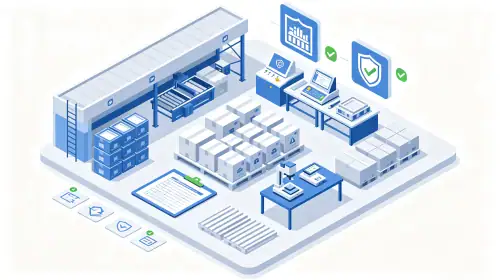
Step 1: Supplier Preparation and Product Compliance
Before your goods leave the factory, everything starts with your supplier. This is the part of Amazon FBA Shipping that’s easiest to overlook – and the one that causes the most problems.
First, make sure your products meet the compliance requirements of the destination country. Shipments to the US may need FCC (electronics), CPC (children’s products), FDA (food‑contact materials or cosmetics) certifications, and more. For Europe, you’ll need CE or UKCA. Product manuals, safety warning labels, and packaging materials must also meet the destination country’s environmental standards – all of this needs to be sorted before shipping.
It’s a good idea to arrange a third‑party quality inspection before shipment. If a batch gets sent back due to quality issues, you lose more than just the cost of the goods – you also lose time and miss your sales window.
What to communicate to your supplier:
-
Give them detailed FBA packaging and labeling requirements (preferably with pictures)
-
Confirm the quantity per SKU and how they’re packed into cartons
-
Ask them to send photos of the packaging and labels before sealing the boxes
-
Make sure “MADE IN CHINA” is clearly marked on every outer carton
Step 2: Create Your Shipment Plan in Seller Central
Every Amazon FBA Shipping shipment must be created in Seller Central before anything else happens.

Here’s how: log in to Seller Central, go to Inventory → Manage Inventory, select the SKUs you’re shipping, and click “Send/replenish inventory” to enter the Send to Amazon workflow. Enter the shipment quantity and ship‑from address (your supplier’s factory address or your forwarder’s warehouse address). The system will then assign a destination FBA warehouse address.
Your ship‑from address matters because it affects how Amazon splits your inventory. If you’re shipping internationally, use an actual domestic warehouse address – don’t randomly put a US address. Amazon might split your inventory across multiple warehouses. Once you accept the assignment, the system will generate FNSKU labels and carton labels.
Key reminder: if you skip this step and just ship the goods, they’ll be rejected at the FBA warehouse door.
Step 3: Generate and Apply FNSKU and Carton Labels
Once your shipment plan is created, the system generates two types of labels. Both must be applied before your goods leave China.
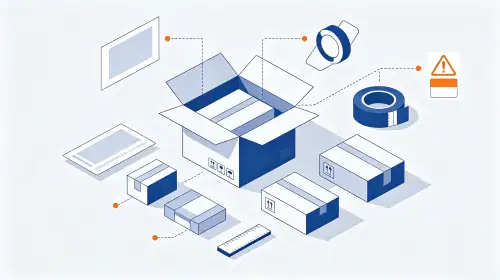
3.1 FNSKU labels
Every sellable unit must have a clear FNSKU barcode that ties it to your ASIN and seller account. As of March 31, 2026, the sticker‑less commingled inventory option is officially over – all FBA inventory must have FNSKU labels applied before reaching the FBA warehouse. If you’re not brand‑registered with Amazon Brand Registry, you must use FNSKU labels – manufacturer barcodes (UPC/EAN) are no longer accepted.
3.2 Carton labels
Each outer carton needs at least two FBA box labels (minimum 10cm × 10cm). It’s best to put them on two opposite sides of the box to prevent wear during transit.
3.3 Safety labels
Any carton over 50 lbs (about 22.7kg) must have “Team Lift” or “Heavy Package” safety labels – one on top and one on each of the four sides, so five in total.
Important: FNSKU labels and carton labels must all be applied before the goods leave China. Amazon no longer offers labeling services after arrival. Labels need to be clear, flat, and scannable – don’t put them over box seams or cover them with tape.
Step 4: Choose a Shipping Method and Book Space
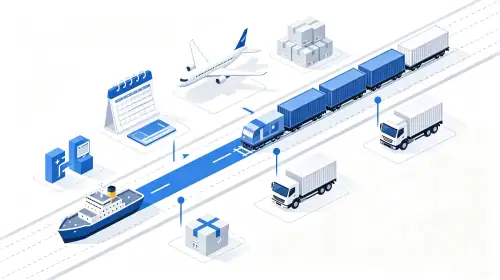
Based on your cargo volume, urgency, and budget, pick from the options below:
| Shipping Method | Door‑to‑Door Transit Time | Best For |
|---|---|---|
| Full Container Load (FCL) | 25‑35 days | Large volumes, heavy goods, cost priority |
| Less than Container Load (LCL) | 25‑40 days | Medium volumes, sharing container space |
| Air Freight | 7‑12 days | Time‑sensitive shipments, lightweight items |
| Express (DHL/FedEx/UPS) | 3‑5 days | Emergency restocks, samples |
| Rail (China‑Europe Railway) | 18‑25 days | Europe‑bound sellers, balancing cost and speed |
Contact your freight forwarder to book space and arrange delivery to their warehouse or a pick‑up. During peak seasons, book at least 7 days in advance to avoid being shut out. The choice isn’t about which is cheapest – it’s about your product value, margins, and how quickly you need to restock.
Step 5: Export Customs Clearance in China
Before your cargo leaves the country, you need to complete export customs declaration with Chinese customs.
5.1 Prepare customs documents
These include the commercial invoice, packing list, and customs declaration authorisation letter.
5.2 Extra documents for sensitive goods
If your shipment contains batteries, magnets, liquids, powders, or other sensitive items, you’ll need additional certifications like MSDS (Material Safety Data Sheet) and UN38.3 (lithium‑battery test report).
5.3 Make sure everything is accurate
The product descriptions, HS codes, and declared values on your commercial invoice must be correct. Wrong HS codes can lead to incorrect duty calculations or even seizure. Incomplete or inaccurate paperwork will get your shipment held at customs.
Step 6: Import Customs Clearance at Destination
Once your shipment arrives in the destination country, it needs to go through import customs clearance. This is one of the trickiest parts of the entire Amazon FBA Shipping process.
6.1 Required documents
These include the commercial invoice, packing list, bill of lading or air waybill, and import declaration forms. For US‑bound shipments, the ISF (Importer Security Filing) must be submitted at least 24 hours before the vessel departs.
6.2 Key 2026 updates
-
US CPSC eFiling is now mandatory: as of July 8, 2026, all CPSC‑regulated products must have electronic filings submitted through the CBP ACE system before they can be imported into the US.
-
New EU low‑value goods rules: as of July 1, 2026, low‑value B2C shipments from outside the EU face new clearance requirements.
6.3 The most important thing to remember
You – the seller – are the Importer of Record (IOR). The legal responsibility for customs clearance rests on you, not your forwarder, not Amazon. The importer information on your customs paperwork must match the legal entity registered with your Amazon store.

Step 7: Last‑Mile Delivery and FBA Warehouse Receiving
Once customs clearance is done, Amazon FBA Shipping enters its final leg – getting your goods from the port or airport to the FBA warehouse.
7.1 Booking a delivery appointment
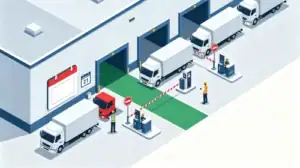
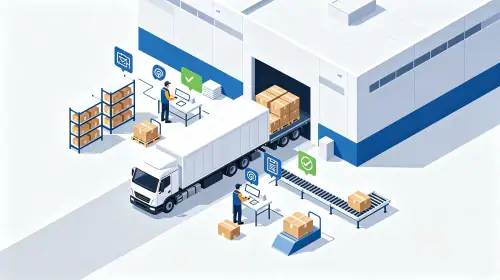
Your goods are trucked from the port or airport to the assigned FBA warehouse. The trucking company needs to book a delivery appointment through Amazon’s Carrier Central system in advance. Without an appointment – or if the truck shows up late – the slot is cancelled.
7.2 Warehouse receiving
When the shipment arrives at the FBA warehouse, Amazon scans the carton labels and FNSKU labels, verifies the quantities, and adds the inventory to your sellable stock. This process can take a few days. The shipment status will move from “Shipped” to “Receiving” to “Checked in.”
Three Major Policy Changes for Amazon FBA Shipping in 2026
Change 1: FBA prep and labeling services are gone
As of January 1, 2026, Amazon US fully discontinued its FBA prep and labeling service, which had been around for over a decade. On July 1, European and Canadian sites followed. Every shipment must now be fully labeled and packaged before it arrives at the FBA warehouse. Non‑compliant shipments will be rejected outright, and Amazon won’t compensate you.
At the same time, inbound defect fees have shot up. For standard‑size items, the fee went from a very low per‑unit cost to a much higher one – in some cases, an increase of over 700%. For oversized items, defect fees can be even higher.
Change 2: New FNSKU label rules are in effect
As of March 31, 2026, the sticker‑less commingled inventory option is officially over. All FBA inventory must have FNSKU labels applied before reaching the FBA warehouse. Sellers who are not brand‑registered must use FNSKU labels – manufacturer barcodes are no longer accepted.
Change 3: New EU customs duties on low‑value goods
As of July 1, 2026, B2C shipments from outside the EU valued at €150 or less are subject to a fixed customs duty of €3 per item.
5 Most Common Mistakes in Amazon FBA Shipping
Mistake 1: Label problems
FNSKU labels missing, placed incorrectly, or covered with tape so they can’t be scanned.
→ Check every carton before shipping. Give your supplier a visual guide showing exactly where and how to apply labels.
Mistake 2: Incorrect shipment information
Wrong quantities or carton counts entered in Seller Central, leading to receiving discrepancies.
→ Double‑check every number when creating your shipment plan. Before packing, confirm that the contents match the plan.
Mistake 3: Forgetting to confirm shipment in Seller Central
Cargo is sent out, but you never marked it as shipped in Seller Central.
→ As soon as your freight forwarder picks up the goods, go back to Seller Central and mark the shipment as shipped. Enter the carrier and tracking number.
Mistake 4: Non‑compliant packaging
Cartons overweight, oversized, or damaged.
→ Strictly follow FBA packaging rules – for US sites, no carton over 50 lbs (about 22.7kg) and no side longer than 63.5cm. Overweight cartons need “Team Lift” or “Mech Lift” warning labels. Every outer carton must clearly show “MADE IN CHINA.”
Mistake 5: Not understanding who the importer is
Assuming your forwarder automatically acts as the importer.
→ Make sure the importer information on your customs paperwork matches the legal entity registered with your Amazon store. You are the Importer of Record.
Shipping from China to Amazon FBA is a step‑by‑step process. Follow these 7 steps, avoid the common mistakes, and work with the right partners – and your goods will make it from the factory to the FBA shelf without a hitch. The 2026 rule changes have made compliance tighter than ever, but if you get each step right, Amazon FBA Shipping isn’t as complicated as it seems.
Find a logistics partner who knows FBA rules and explains costs clearly. For example, AMZ Shipper focuses on cross‑border logistics for Amazon sellers, offering end‑to‑end services from China to FBA warehouses – origin handling, international transport, destination clearance, and last‑mile delivery. But whoever you choose, the key is finding a team that knows Amazon FBA rules and is upfront about every step.