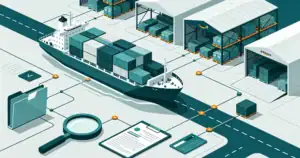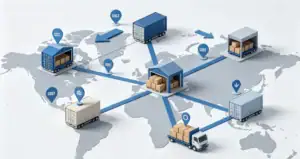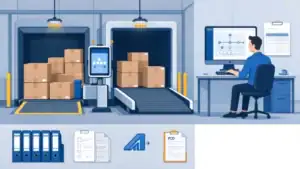
For new Amazon sellers who have just registered their seller account, the first time they prepare to ship, they always run into a question they cannot avoid: there are two options in the backend – FBA and FBM – and they have no idea which one to pick. In simple terms, FBA is Amazon shipping for you, and FBM is you shipping yourself. But the difference goes far beyond just “who ships.”
This article breaks down the key differences between Amazon FBA and FBM shipping across warehousing, delivery, cost, control, Prime eligibility, and more – to help new sellers find the fulfillment model that suits them best.
What Are FBA and FBM? The Basics Every Amazon Seller Should Know
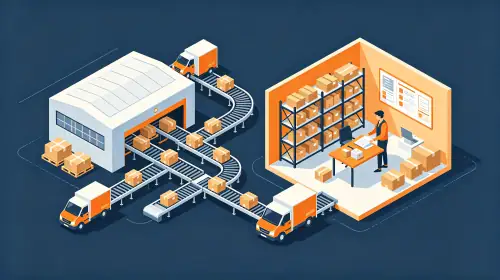
FBA (Fulfillment by Amazon) is a logistics service offered by Amazon. Sellers send their inventory to Amazon’s fulfillment centres, and Amazon handles storage, picking, packing, shipping, customer service, and returns. Listings that use FBA automatically get the Prime badge, reaching Amazon’s over 200 million Prime members.
FBM (Fulfillment by Merchant) means the seller manages inventory, packing, shipping, customer service, and returns themselves (or through a third‑party logistics provider). The seller has full control over the entire process but also has to handle all the operational work.
Amazon Seller Central explicitly states that regardless of whether you choose FBA or FBM, the referral fee charged by Amazon is exactly the same. The real cost difference comes from FBA’s fulfillment and storage fees versus the seller’s own shipping and handling costs under FBM.
Amazon FBA vs FBM Shipping: A Quick Comparison of Key Differences
The table below summarises the key differences between Amazon FBA and FBM shipping across critical dimensions:
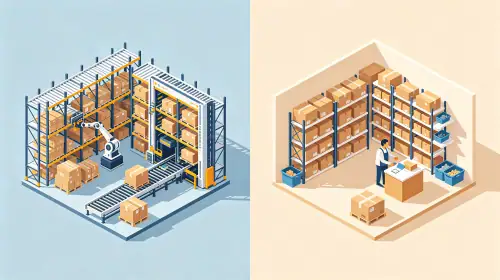
| Comparison Point | Amazon FBA | Amazon FBM |
|---|---|---|
| Storage location | Amazon fulfillment centres | Seller’s own warehouse or third‑party warehouse |
| Picking and packing | Handled by Amazon | Handled by the seller |
| Shipping service | Amazon’s logistics network | Seller’s chosen carrier |
| Customer service | Handled by Amazon | Handled by the seller |
| Returns handling | Handled by Amazon | Handled by the seller |
| Prime eligibility | Automatically granted | Must qualify via SFP or meet delivery speed requirements |
| Level of control | Lower (relies on Amazon) | Higher (full control) |
| Operational burden | Low (Amazon runs it) | High (seller runs it) |
Amazon FBA vs FBM Shipping: How Does the Cost Structure Differ?
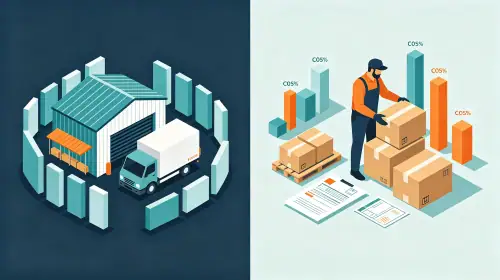
Amazon FBA has a relatively complex fee structure. Sellers pay storage fees (monthly storage fees, with higher long‑term storage fees), fulfillment fees (per‑unit fees covering picking, packing, and shipping), inbound placement fees, returns processing fees, and more. In 2026, Amazon made several adjustments to FBA fees: from January 15, 2026, the base fulfillment fee increased per unit on average; from April 17, a 3.5% fuel and logistics surcharge was added to FBA fulfillment fees in the US and Canada. Amazon also significantly increased inbound defect fees in 2026.
FBM has a completely different cost structure. Sellers bear warehousing costs (own warehouse or 3PL), packaging materials, carrier shipping costs, and labour costs. FBM does not have Amazon’s fulfillment and storage fees, but sellers have to manage every step themselves.
Amazon recommends that sellers use the FBA Revenue Calculator in Seller Central to run specific estimates before deciding. Sellers can log in to Seller Central, go to Inventory > Opportunities, and use the FBA registration opportunity tool to see which ASINs are good candidates for switching from FBM to FBA.
Amazon FBA vs FBM Shipping: Which One Has the Edge on Prime and the Buy Box?
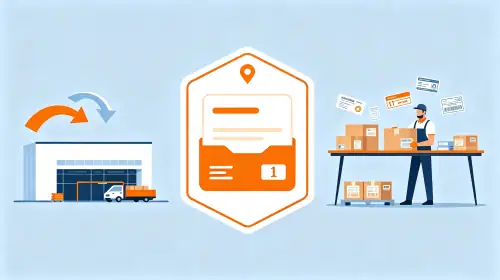
Prime eligibility is the single biggest advantage of FBA on the Amazon platform. Products using Amazon FBA automatically get the Prime badge, reaching over 200 million Prime members. Amazon data shows that FBA products typically have a conversion rate 15‑22% higher than FBM listings for the same ASIN.
When it comes to the Amazon Buy Box, FBA also has a clear edge. At the same price point, FBA listings win the Buy Box about 23 percentage points more often than FBM listings. Amazon’s Buy Box algorithm prioritises delivery speed and fulfillment reliability, and FBA has a natural advantage on both fronts.
FBM sellers can compete in these ways: lower their product price to offset slower delivery; offer faster in‑house shipping; or, if eligible, apply for Seller Fulfilled Prime (SFP), which grants the Prime badge while the seller handles shipping themselves. SFP requires a 99% on‑time delivery rate and 24‑hour handling time.
Amazon FBA vs FBM Shipping: When Should Sellers Choose Which?
Based on real Amazon seller experience, the choice depends on product type, profit margins, and business stage.
FBA is a better fit when:
-
Products are small, light, and fast‑turning
-
You do not have your own warehouse space or logistics team
-
You want the Prime badge and Buy Box advantage
-
You want Amazon to handle customer service and returns
-
You are scaling up and do not want logistics to hold you back
FBM is a better fit when:
-
Products are large, heavy, or slow‑turning (Amazon FBA long‑term storage fees can eat into profits)
-
Profit margins are thin and you need tighter cost control
-
You sell custom‑made, handmade, or made‑to‑order items
-
You already have warehousing and competitive carrier rates
-
You want full control over packaging and brand experience
For large or slow‑turning products, FBM often has a clear cost advantage.
The Hybrid Approach: More and More Amazon Sellers Use Both FBA and FBM
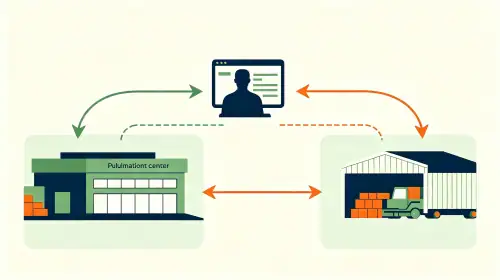
More and more successful Amazon sellers are using both models at the same time.
Data shows that 82% of Amazon sellers use FBA, making it the most popular fulfillment method on the platform. Among sellers who use FBA, 64% use FBA exclusively, 14% use FBM exclusively, and 22% use a mix of both. 22% of high‑volume sellers run both FBA and FBM simultaneously, while 35% of sellers have already adopted a hybrid FBA+FBM model on a per‑SKU basis.
On the Amazon platform, a typical hybrid strategy is: best‑sellers go through FBA to secure Prime delivery and conversion rates; custom, seasonal, test, or oversized products go through FBM for flexibility and cost control. In practice, Amazon sellers can start testing the hybrid model with their top 20 ASINs by revenue, rather than switching their entire catalogue at once.
Whichever fulfillment model you choose – FBA or FBM – shipping from China to Amazon involves complex first‑mile logistics. As a logistics provider focused on cross‑border ecommerce, AMZ Shipper helps sellers move their goods from Chinese factories to Amazon fulfillment centres or their own warehouses safely and efficiently – so that no matter which fulfillment model you pick, you can have peace of mind on the first leg of the journey.
ABout AMZ Shipper
AMZ Shipper has several years of experience for international logistics Freight Forwarding service. Our service is for importer and exporter, foreign freight forwarders, local and abroad business. Export of 1500 of 40HQ per year for FBA Amazon shipping, 15-30tons of air shipments per month.
Member of WCA. Our company is a professional Amazon freight forwarder that specializes in providing comprehensive and efficient services to customers.