
Global trade is in a strange place right now. On one hand, we keep hearing about geopolitical tensions and supply chain disruptions. On the other hand, trade flows between countries have turned out to be surprisingly resilient. DHL and NYU’s Stern School of Business recently released their “2026 Global Connectivity Report,” and the takeaway is pretty clear: even with all the uncertainty, the movement of goods, capital, and information isn’t shrinking. It’s adapting and growing in new ways.
But here’s the thing for cross-border sellers. What looks like “resilience” at the macro level doesn’t always feel that way on the ground. In fact, the global market is becoming more fragmented and multi-centered than ever before. Customer preferences change fast. Sales channels keep multiplying—Amazon, TikTok Shop, Temu, your own website. And compliance rules vary depending on where you’re shipping and which platform you’re using.
So how do sellers actually benefit from this resilient trade environment while dealing with all that fragmentation? Let’s break down what the report means for you and what you can do about it.

Ⅰ.
What the Report Says: Where Does This “Resilience” Come From?
The DHL report points out something that might seem counterintuitive: global connectivity isn’t declining. It’s just reaching a new balance in a different way. The resilience mainly comes from two major shifts:
| Old Way of Globalization | New Resilient Way |
|---|---|
| Long supply chains driven purely by cost | Regional or nearshore sourcing that balances cost and security |
| Most shipments moving through a few giant hubs (like China to West Coast US) | Multiple regional hubs (Southeast Asia, Eastern Europe, Latin America) |
| Just-in-time inventory with very low stock | Mixed inventory strategy with some safety stock |
| Digital tools as an afterthought | Digital tools as the backbone of supply chain visibility |
What this means is that resilience isn’t about going back to how things were. It’s about building a more adaptable system through regionalization, diversification, and digitalization. For sellers, that’s a mixed bag: new markets are opening up, but your supply chain needs to be much more flexible and smarter than before.
Ⅱ.
The Real Struggle for Sellers: Fragmentation Is Now Normal
The big-picture story from the report looks nice on paper. But sellers feel it differently. “Fragmentation” shows up as real, annoying problems every single day.
1. Channel Fragmentation – One Platform Is No Longer Enough
Not long ago, focusing on Amazon FBA covered most of your business. Now, to reduce risk and find growth, most sellers are spreading out across multiple channels:
-
Amazon and eBay for steady, predictable sales
-
TikTok Shop and Temu for viral, high-volume bursts
-
Your own independent site to build a loyal customer base
Each channel has completely different logistics needs. FBA wants full container loads. TikTok might need small, fast restocks. Your own site probably needs dropshipping support. The same inventory has to serve multiple delivery models.
2. Demand Fragmentation – Small Batches, High Frequency
Products don’t stay hot for long anymore. Sellers test new items more often, and nobody wants to send a full container of something that might flop. So you end up:
-
Sending a few dozen units by air to test the market
-
Deciding quickly whether to restock by sea based on early sales data
-
Sneaking in emergency air shipments during peak season when something suddenly takes off
This “small batch, high frequency” rhythm doesn’t fit well with traditional full-container logistics.
3. Compliance Fragmentation – Rules Change by Country and Platform
Compliance costs are becoming a real headache:
-
Different countries, different rules: US tariff changes, EU VAT and EPR requirements, Brazil’s new package clearance rules…
-
Different platforms, different expectations: Amazon has strict packaging and labeling rules. TikTok Shop penalizes slow delivery. Temu is super price-sensitive, so logistics costs have to be extremely lean.
Mess up one compliance detail, and your shipment gets held at customs, your listing gets pulled, or worse—your store gets suspended.

Ⅲ.
From Report to Action: Three Ways to Navigate a Fragmented Market
You need to turn DHL’s big-picture “resilience” idea into actual logistics strategies. Here are three steps that will help you build a supply chain that can handle both the opportunities of resilient trade and the chaos of fragmentation.
Strategy 1: Go Flexible – Move Beyond Full Containers
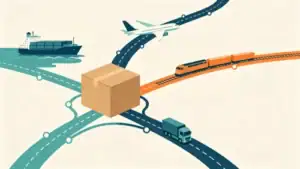
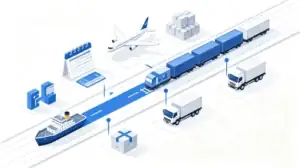
Resilient trade flows need adaptable supply chains. For sellers, that means dropping the old “full container only” mindset and building a mixed logistics model using sea, air, and small parcel shipping.
-
Regular restocking: Use LCL or FCL sea freight to balance cost and time. This is your main inventory.
-
Testing and emergency restocking: Use air freight or courier services to cut restock time from 30 days to 5–7 days.
-
Multi-channel fulfillment: Use overseas warehouse dropshipping for your website and social commerce orders. It’s often cheaper than paying FBA storage and split fees.
What this gives you: Your inventory management shifts from guesswork to dynamic adjustment. You tie up less cash and respond faster to winning products.
Strategy 2: Invest in Visibility – Fight Uncertainty with Data
The worst thing about a fragmented market is losing control. When your inventory is spread across different channels, different warehouses, and different trucks, real-time end-to-end tracking stops being a nice-to-have. It’s a must-have.
-
Pick a logistics partner that proactively tracks shipments. You don’t just want a tracking number. You want updates from pickup at your China warehouse, through export customs, across the ocean or sky, through import customs, and finally to the shelf.
-
Build a simple dashboard. Combine in-transit data from all your shipments. You should be able to answer: “How much inventory is on the way? When will it actually reach my FBA warehouse? Has that emergency air shipment cleared customs yet?”
Good visibility gives you faster decisions. If you see a delay happening, you can trigger an air backup plan instead of sitting there waiting until you run out of stock.
Strategy 3: Use Local Networks – Let Experts Handle What They Know Best
The DHL report talks about regionalization. That means the most successful supply chains will be built from local experts who know their own markets inside out. No single company can master every market’s rules. But a good logistics partner can connect you to the right local resources.
Here’s a quick checklist to see if your logistics partner actually has strong local networks:
-
Do they have their own or long-term partnered customs teams in your target markets (US, Germany, Japan, etc.)?
-
Do they have experience with local compliance requirements (CPSC, FCC, WEEE, etc.)?
-
Are their global partners certified by a trusted organization like WCA so accountability is clear?
-
Can they offer local services at destination ports, like trucking, short-term warehousing, and LTL delivery?
AMZ SHIPPER is a WCA member (ID: 150635). That means we use certified local partners from the WCA global network to handle overseas customs and delivery. You don’t have to go find agents in different countries yourself—we’ve already checked their credentials and service standards.

Ⅳ.
From Strategy to Execution: A Quick Decision Table for Your Shipments
To help you actually use these strategies on your next shipment, here’s a simple table to guide your logistics planning:
| Your Business Scenario | Recommended Logistics Mix | What You Need from a Logistics Partner |
|---|---|---|
| Testing new products, small first batch (<100kg) | Express or air freight direct to FBA/warehouse | Flexible pricing, fast booking and transit |
| Regular restock of proven products (>1CBM) | LCL or FCL sea freight | Competitive sea rates, reliable sailing schedules |
| Emergency restock for a sudden bestseller or promotion | Air freight + fast destination delivery | Quick response, priority customs clearance resources |
| Selling on multiple platforms (Amazon + TikTok + your own site) | Sea freight to warehouse + local dropshipping | Integration with different platforms, pick-and-pack services |
| First time entering a new market (like Brazil or Australia) | Full-process trial shipment | Compliance consulting for that country, local WCA-certified agents |
The DHL “2026 Global Connectivity Report” makes one thing clear: global trade isn’t going backward. It’s just reorganizing itself. For cross-border sellers, that strong trade flow is like a powerful current. It can lift your business, but you need better balance and agility to ride it.
“Fragmentation” isn’t some impossible obstacle. It’s just what the business environment looks like now. The key to dealing with it is turning your supply chain from a fixed cost into an agile system that can match your inventory to different channels and changing demand. And the first step toward building that system is finding a logistics partner who thinks the same way—someone with a reliable global network to handle the resilient side of trade, and personalized solutions to handle the fragmented side.

ABout AMZ Shipper
AMZ Shipper has several years of experience for international logistics Freight Forwarding service. Our service is for importer and exporter, foreign freight forwarders, local and abroad business. Export of 1500 of 40HQ per year for FBA Amazon shipping, 15-30tons of air shipments per month.
Member of WCA. Our company is a professional Amazon freight forwarder that specializes in providing comprehensive and efficient services to customers.