In 2026, something interesting is happening in the Amazon seller world.
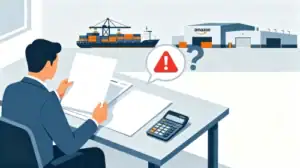
For years, the formula was simple: manufacture in China, ship by sea, send to FBA. It worked. But now, longer shipping times, unexpected fees, and changing risks are making many sellers ask: should I move production closer to my customers?
That’s the “nearshoring vs. offshoring” debate. And the answer isn’t as clear as many headlines suggest.

Let’s walk through what’s really changing, what’s still working, and how smart sellers are building flexible supply chains—without betting everything on one option.
1. Offshoring (Mostly China): Still the King of Efficiency, but With New Headaches
Offshoring means producing far from your main market—typically China for U.S. and Europe-based sellers. The benefits are hard to ignore:
-
Complete supply chains: every component, every service, is nearby.
-
Mass production expertise: you can scale fast without reinventing processes.
-
Mature logistics: from factory to FBA, the infrastructure is well-oiled.
But 2026 brings new pain points:
-
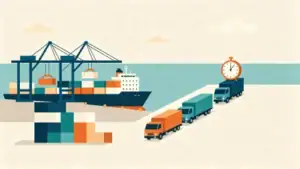
Longer lead times – 60–90 days from order to warehouse. One delay at the port, and you’re out of stock.
-
Bulky, low‑price items hurt more – for products like simple furniture or toys, the shipping cost eats into margins faster than before.
-
Unpredictable policy risks – without diving into politics, things like tariffs or rule changes can raise your landed cost without warning.
Real talk: Offshoring still works best for high-value, stable, long-lifecycle products. But if you sell fast-fashion, seasonal decor, or gadgets that change every few months, relying only on China is getting risky.
2. Nearshoring: Not a Magic Pill, But a Real Option for Some Products
Nearshoring means moving production closer to your end customer—think Mexico for the U.S., or Turkey/Eastern Europe for the EU. The main promise: cut shipping time from 60 days to 1–2 weeks.
That sounds great. But it’s not free.
| Factor | Nearshoring (e.g., Mexico, Eastern Europe) | Offshoring (e.g., China) |
|---|---|---|
| Minimum order quantity (MOQ) | Lower (hundreds to a few thousand) | Higher (often thousands+) |
| Local supplier ecosystem | Limited – many still import parts from China | Complete – every step is local |
| Labor skill & consistency | Varies – more training needed | Reliable and experienced at scale |
| Inventory cash tied up | Lower – you can restock often | Higher – need months of stock on water |
Beyond the table, there are hidden costs sellers often miss:
-
Fake nearshoring – some “local” factories just assemble Chinese parts. You still rely on the long supply chain, but pay twice for logistics.
-
Capacity issues – good factories in Mexico or Eastern Europe are booked by big companies. Small sellers may wait months for a production slot.
-
Quality control – you can’t easily fly over for a quick inspection. It takes more time and trust.
Real talk: Nearshoring makes sense for fast-turn, short-lifecycle, or easy-to-miss-stock items. Think pool floats in summer or holiday decorations. You pay a higher unit price, but you save on stockouts and markdowns.
3. The Smart Seller’s Move: A Hybrid Sourcing Strategy
After looking at how hundreds of mid-sized Amazon sellers operate, one pattern stands out: the winners don’t pick one side. They build a mix.
They sort their products into three buckets:

1. Core, stable best‑sellers
-
Keep production in China.
-
Use sea freight to fill FBA or your own warehouse.
-
Goal: lowest possible total cost, even if lead time is long.
2. Test products & short‑season items
-
Try nearshoring first, or use air freight from China.
-
Goal: speed to market. If it flops, you haven’t ordered thousands of units.
3. Safety buffer for high‑risk SKUs
-
Give 20–30% of the order to a nearshore supplier.
-
Goal: protect against sudden demand spikes or main supply chain breaks.
-
You pay a bit more per unit, but you buy insurance against stockouts.
Here’s a quick guide to help you decide:
| Product type | Sourcing lean | Why? |
|---|---|---|
| High price, small size, stable demand (e.g., good electronics) | Offshoring (China) + air/express | Saving on production cost matters most |
| Low price, bulky, unpredictable demand (e.g., seasonal home goods) | Nearshoring | Holding too much inventory is more expensive than a higher unit cost |
| Fast-changing designs (e.g., clothing, some toys) | Hybrid – first order nearshore, then scale in China | Launch speed first; cost control later |
| Parts tightly linked to China (e.g., special fabrics, magnets) | Chinese parts + nearshore assembly | Get the best of both, but manage two‑step shipping |
4. How a Logistics Partner Can Help (Without Telling You What to Do)
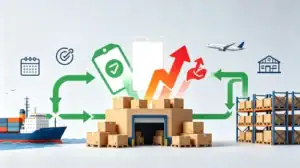
Here’s the practical problem with a hybrid strategy: you now have to manage two different logistics systems.
China-to-world involves ocean containers, export customs, and drayage trucks.
Nearshoring involves land freight, small parcels, maybe bonded zones. The paperwork, timing, and cost structures are totally different.
This is where a flexible logistics partner—like AMZ shipper—adds real value:

-
One dashboard for both – whether your goods leave from Shenzhen or Monterrey, you see the same tracking, billing, and support.
-
Optimized for China – with warehouses in China and thousands of containers moved yearly, AMZ shipper helps you:
-
Consolidate smaller loads (LCL – less than container load)
-
Hold shipments until you give the green light
-
Fast‑track to FBA once goods arrive
-
-
Hand‑holding for nearshoring tests – if you want to try a small nearshore order, they can:
-
Connect you with vetted local truckers
-
Compare total time and cost between China and nearshore options
-
Help you avoid obvious mistakes (like using the wrong incoterm)
-
The key point: no one should push you toward nearshoring or away from China. A good partner just makes both options easy to try, so you can let the numbers decide.
5. A Simple 4‑Step Plan to Start Your Own Hybrid Test
You don’t need to flip a switch. Most sellers should start small.
Step 1 – List your SKUs and split them into two groups
-
Group A: stable sellers, low surprise swings
-
Group B: high sales volatility + expensive to ship (size or weight)
Pick a few from Group B as your test subjects.
Step 2 – Find at least one nearshore supplier for those test SKUs
Don’t just compare prices. Ask for:
-
Their on‑time delivery record over the last 3 months
-
Where their raw materials come from (to catch “fake nearshoring”)
-
Samples and recent inspection reports
Step 3 – Run a small parallel test for 3 months
Give 20% of the volume to the nearshore supplier, keep 80% in China. Compare:
-
True landed cost (production + logistics + money tied up)
-
Stockout frequency and response speed
-
Any quality differences
Step 4 – Adjust based on real data
If the nearshore test group’s margin (after all hidden costs) is close enough to the China group – say within a few points – and your inventory turns much faster, then slowly raise the nearshore share to 40–50%.
If not, keep the China setup and try another product or supplier next time.

Final thoughts (no conclusion, just perspective)
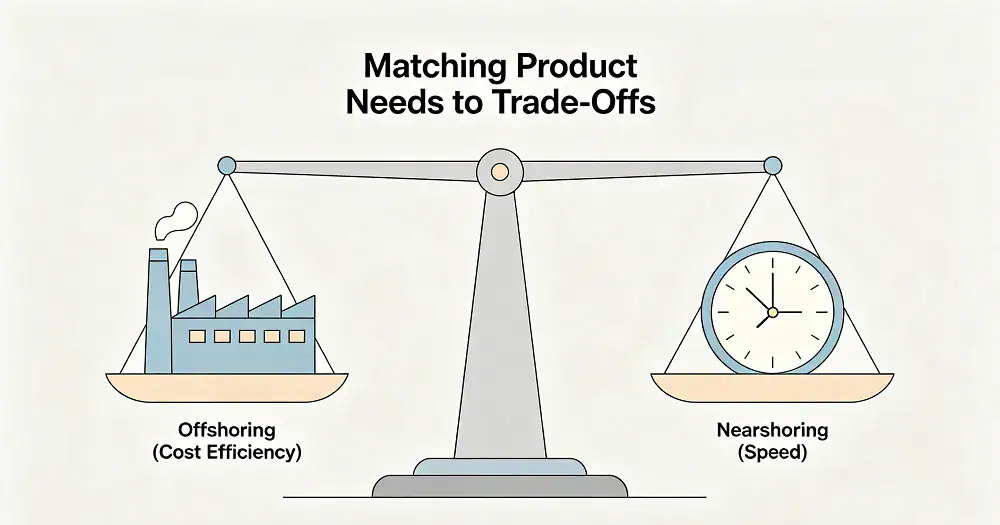
Supply chains aren’t about winning an argument. They’re about matching your product needs to the right trade-offs.
Offshoring (especially China) gives you depth and cost efficiency that’s hard to beat. Nearshoring gives you speed and flexibility for the right products.
Smart Amazon sellers aren’t asking “which is better?” – they’re asking “which part of my business should use which?”
ABout AMZ Shipper
AMZ Shipper has several years of experience for international logistics Freight Forwarding service. Our service is for importer and exporter, foreign freight forwarders, local and abroad business. Export of 1500 of 40HQ per year for FBA Amazon shipping, 15-30tons of air shipments per month.
Member of WCA. Our company is a professional Amazon freight forwarder that specializes in providing comprehensive and efficient services to customers.