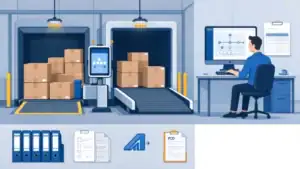
For cross-border e-commerce sellers and businesses involved in international trade, picking the right freight forwarder can make or break your operations for months to come. Yet many sellers, especially when working with a forwarder for the first time, focus almost entirely on price—ignoring critical details like service scope, responsibility boundaries, and contingency plans. Then problems hit: customs detains the shipment, the vessel gets delayed, or unexpected fees pile up—and they realize they should have asked a few key questions before signing.
This article lays out a checklist of questions to go through before you sign. It’s designed to help you assess whether a forwarder is truly reliable and professional, and to avoid costly surprises caused by information gaps.

1. Before You Sign, Make Sure You Cover These 5 Areas
Before putting pen to paper, it’s worth asking questions across five key dimensions. These touch on the core qualities you’d want in a trustworthy logistics partner:
-
Credentials and Reputation — Do you hold recognized industry certifications? How long have you been in business?
-
Service Scope and Responsibility Boundaries — Which parts of the process do you handle? Who manages customs clearance? What happens if goods get damaged?
-
Pricing and Hidden Costs — What exactly does your quote cover? What extra charges might come up?
-
Tracking and Communication — How do I know where my shipment is? How quickly will you respond if something goes wrong?
-
Contingency Capabilities — How do you typically handle things like cargo rollovers, delays, or customs holds?
Let’s walk through each area and the specific questions you should ask.
2. Credentials and Reputation
The freight forwarding industry has a low barrier to entry. You’ll find everything from well-established firms to solo operators with questionable credentials. Before committing, it’s important to verify who you’re actually dealing with.
Questions to ask:
-
“Does your company hold recognized industry certifications—like WCA, FIATA, or an FMC NVOCC license?”
-
WCA (World Cargo Alliance) is the largest global network of independent freight forwarders. Membership requires passing a rigorous vetting process and posting a security deposit, which translates to reliable global connections and a built-in dispute resolution mechanism.
-
An FMC NVOCC license is issued by the U.S. Federal Maritime Commission. Any forwarder handling shipments to the U.S. needs this to issue their own bills of lading—it’s a basic compliance requirement.
-
-
“How long has your company been operating? Can you share recent client references or case studies?”
-
Companies that have been around for years tend to have deeper experience handling unexpected situations and more stable partner networks.
-
Case studies help you gauge whether the forwarder has worked with products or routes similar to yours.
-
-
“Do you have a physical office and warehousing facilities?”
-
A real office and warehouse space (whether owned or long-term leased) are signs of an established operation—and a quick way to tell legitimate forwarders from middlemen working out of a shared desk.
-

3. Service Scope and Responsibility Boundaries
A lot of sellers assume their freight forwarder will “handle everything.” In reality, service coverage varies widely from one forwarder to another. Clarifying who is responsible for what—and where that responsibility begins and ends—is essential to avoid getting stuck when something goes wrong at a particular stage.
Questions to ask:
-
“Do you offer door-to-door, port-to-port, or door-to-warehouse service?”
-
Each model defines a different endpoint of responsibility. Door-to-door means the forwarder manages everything from the shipper’s warehouse to the consignee’s address. Port-to-port only covers the ocean or air leg between two ports; you’d need to arrange pickup and delivery separately.
-
-
“Who handles customs clearance? Do you have an in-house team, or do you outsource it?”
-
A forwarder with in-house clearance capabilities or a deeply integrated customs partner can usually handle inspections and filings more efficiently. It’s also wise to ask who pays for exam fees or demurrage if customs decides to inspect the shipment.
-
-
“What’s your policy on damaged or lost goods?”
-
Most forwarders follow standard terms (like those on the bill of lading) that set a relatively low limit for compensation—often well below the actual value of the goods. If you’re shipping high-value items, ask whether cargo insurance is recommended and whether the forwarder can help arrange it.
-
-
“Do you guarantee transit times? How do you handle delays?”
-
Find out how proactively the forwarder manages schedules and what their communication process looks like if a vessel or flight gets delayed.
-
The table below illustrates the difference between a forwarder who clearly defines responsibilities and one who keeps things vague:
| Service Stage | A Forwarder with Clear Boundaries Will… | A Forwarder with Vague Boundaries Will… |
|---|---|---|
| Pickup in China | Specify whether trucking is included and whether they use a regular carrier | Say something like “we’ll figure it out when the time comes” |
| Export Customs | Use an in-house team or a long-term partner with clear pricing | Subcontract to a random broker and provide unclear answers about inspection support |
| Clearance at Destination | Confirm whether clearance is handled through a WCA partner or in-house team | Claim “we have an agent abroad” but can’t provide details |
| Final Delivery | Clarify whether delivery is to an FBA warehouse or commercial address, and whether palletizing is included | Just say “we deliver” without explaining what that actually covers |
| Liability for Damage | Clearly state the compensation cap in the contract and recommend cargo insurance | Offer vague assurances like “we’ll take care of it” but nothing in writing |
4. Pricing and Hidden Costs
Low rates are often the bait. It’s common to see a forwarder offer a surprisingly cheap quote, only to add unexpected fees later.
Questions to ask:
-
“Can you break down your quote line by line?”
-
Ask for a detailed breakdown covering ocean/air freight, domestic trucking, customs clearance fees, documentation fees, terminal handling charges (THC), destination clearance, and delivery fees. Any item marked “to be confirmed” or “as incurred” could turn into an extra charge later.
-
-
“What additional charges might come up beyond the quote?”
-
Proactively ask about peak season surcharges, bunker adjustment factors, overweight fees, amendment fees, demurrage, and detention. Understand what triggers them and how they’re calculated.
-
-
“What are your payment terms? How much do I need to prepay?”
-
First-time clients usually need to prepay at least the freight portion. Clarify the payment schedule and accepted methods to avoid delays or holds due to payment issues.
-
Pre-signing quote checklist:
-
The quote provides a clear line-by-line breakdown with no vague items.
-
I’ve asked about peak season and fuel surcharge policies.
-
I understand the fees for overweight shipments, amendments, demurrage, etc.
-
Payment terms, including deposit amount and due dates, are clearly stated.
-
The quote is provided in writing, not just a verbal estimate.

5. Tracking and Communication
Once your shipment is on its way, easy access to updates and fast responses during disruptions are what separate a reliable forwarder from a frustrating one.
Questions to ask:
-
“Do you offer an online tracking portal? How often is it updated?”
-
Good forwarders provide a client portal or proactively push updates at key milestones: pickup, gate-in, vessel departure, arrival, customs clearance, and delivery. If their answer is “just ask us and we’ll check,” you’ll end up doing all the chasing.
-
-
“What’s your typical response time? Are you reachable outside normal business hours?”
-
Understand when you can expect replies and how urgent issues (like a customs hold notification after hours) are handled.
-
-
“How do you communicate unexpected issues?”
-
Ask whether the forwarder proactively alerts clients about delays, cargo rollovers, or inspections—or whether you’re expected to find out by following up yourself.
-
6. Contingency Capabilities
Things go wrong in international shipping. A forwarder’s true value shows up not when everything runs smoothly, but when something doesn’t.
Questions to ask:
-
“What do you do when a vessel rolls cargo?”
-
Find out if they have backup carrier options and whether they can quickly shift to the next sailing or an alternate port.
-
-
“If customs holds my shipment at the destination, how do you help?”
-
Ask whether they have a reliable local partner (ideally through the WCA network) who can provide hands-on support, guide you through documentation, and coordinate with customs.
-
-
“Can you share a recent example of a problem you handled?”
-
A forwarder who can describe real cases in detail is usually one with real experience. Vague answers often mean they haven’t dealt with much beyond the routine.
-
The table below shows how forwarders with strong contingency capabilities tend to respond differently in tough situations:
| Scenario | A Forwarder with Strong Contingency Capabilities Will… | A Forwarder with Weak Capabilities Will… |
|---|---|---|
| Cargo rolled by carrier | Offer backup carrier options within the same day and provide updated ETAs | Say “it’s up to the carrier—just wait for updates” |
| Customs inspection at destination | Work with the local agent to coordinate the exam, keep you posted, and assist with additional docs | Wait for you to ask before checking; no clear timeline on release |
| Port congestion causing delays | Warn you early, suggest alternatives (e.g., divert to a nearby port), and adjust delivery plans | Say “everyone’s in the same situation” with no actionable info |
| Goods damaged during delivery | Help document the damage, support the claim process, and encourage insurance to cover losses | Deflect responsibility—“we only handle transportation, not the cargo itself” |
ABout AMZ Shipper
AMZ Shipper has several years of experience for international logistics Freight Forwarding service. Our service is for importer and exporter, foreign freight forwarder, local and abroad business. Export of 1500 of 40HQ per year for FBA Amazon shipping, 15-30tons of air shipments per month.
Member of WCA. Our company is a professional Amazon freight forwarder that specializes in providing comprehensive and efficient services to customers.