With the rapid development of cross-border trade, freight forwarders serve as the core link connecting shippers with international transportation channels. Their legitimacy and qualifications are directly related to the safety, timeliness, and cost of goods transportation. The market is full of unqualified “shell companies” and “intermediaries” that often lure customers with low prices, ultimately leading […]
With the rapid development of cross-border trade, freight forwarders serve as the core link connecting shippers with international transportation channels.
Their legitimacy and qualifications are directly related to the safety, timeliness, and cost of goods transportation. The market is full of unqualified “shell companies” and “intermediaries” that often lure customers with low prices, ultimately leading to goods being detained, delayed, lost, or even the company absconding with money, bringing huge economic losses to shippers. Therefore, when choosing a cross-border freight forwarder, comprehensively and carefully verifying its legitimacy and relevant qualifications is a key prerequisite for avoiding cross-border logistics risks.
1. Basic Enterprise Information Check:
To verify the legitimacy of a cross-border freight forwarder, you should first check its basic enterprise information, which is the first step to determine whether it has the qualifications of a legal business entity. A legitimate freight forwarder must complete industrial and commercial registration and obtain a valid business license, which is the foundation for carrying out all business activities. Shippers can query the enterprise’s industrial and commercial registration information through official or authoritative third-party platforms such as the National Enterprise Credit Information Publicity System, Tianyanch, and Qichacha, focusing on verifying core information such as the enterprise name, registered address, legal representative, years of establishment, and business scope.
Business Scope
Among them, the business scope is the checkpoint. The business license of a regular cross-border freight forwarder must clearly include relevant categories such as “international freight forwarding”, “import and export of goods”, and “customs declaration and inspection services”. If such expressions are not included in the business scope, it means the enterprise does not have the legal premise to carry out cross-border freight forwarding business and should be directly excluded from cooperation. At the same time, it is crucial to check whether the enterprise has abnormal business records, administrative penalties, serious illegal and untrustworthy records, or has been included in the list of persons subject to enforcement for breach of trust by courts. Such enterprises have extremely poor risk resistance and high cooperation risks. In addition, the years of establishment are also an important reference. Enterprises established for more than 3 years and having experienced a complete industry peak and off-season cycle usually have more mature operation experience and more stable resources, with more controllable risks.
2. Industry-Specific Qualifications: Core Basis for Verifying Strength
In addition to basic industrial and commercial information, industry-specific qualifications are the core basis for verifying the strength and legitimacy of a freight forwarder. Different transportation methods correspond to different specific qualifications, and shippers need to conduct targeted checks according to their own goods transportation needs. The core specific qualifications of cross-border freight forwarders are mainly divided into three categories: sea transportation, air transportation, and land transportation. The verification channels and core requirements for each type of qualification are different, which can be referred to in the following table:
Transportation Method
Core Specific Qualifications
Verification Channel
Core Requirements
Sea Transportation
Non-Vessel Operating Common Carrier (NVOCC) Registration Certificate
Official Platform of the Ministry of Transport
Able to issue sea waybills and undertake sea booking business, with filing information consistent with the enterprise’s industrial and commercial information
Air Transportation
Air Cargo Sales Agent Qualification (CATA Certification), IATA Qualification
China Air Transport Association, IATA Official Platform
Able to cooperate directly with airlines for booking and have the ability to issue air waybills
Land Transportation (Cross-Border Highway/Railway)
Provincial Department of Transportation, General Administration of Customs Platform
Comply with bilateral transportation agreements and qualify as cross-border land transportation operations
It should be noted that some freight forwarders may only have qualifications for one or two of these transportation methods. If shippers have multiple transportation needs, they need to confirm whether the enterprise’s qualifications cover all business scopes. In addition, advanced qualifications can be used as an important reference. For example, enterprises that are members of international or domestic freight forwarding associations such as WCA and CIFA, and have ISO9001 quality certification and customs AEO certification, are not only compliant in qualifications, but also have stronger service capabilities and industry recognition, and their customs clearance efficiency will be greatly improved.
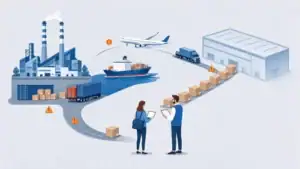
Multiple Modes of Transportation to Transport Goods
3. Practical Verification: Avoid “Qualified but Incompetent” Risks
After verifying the qualification documents, practical verification is indispensable, which can effectively avoid problems such as “complete qualifications but insufficient strength” and “false qualifications”. Shippers can carry out practical verification through the following aspects to ensure the safety and reliability of cooperation:
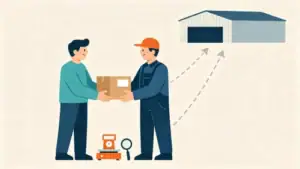
Verify the office space and operation team: Ask the freight forwarder to provide the real office address, which can be confirmed through video calls or on-site inspections. Regular freight forwarders have fixed office spaces, professional operation teams, and complete operation systems, rather than “shell companies” that only communicate online and have no fixed office address.
Verify route resources and cooperation channels: Ask the freight forwarder about its cooperative shipping companies/airlines on the target routes (such as China-US, China-Europe, Southeast Asia), and request copies of cooperation agreements or booking documents. You can check the authenticity of the shipping name, voyage, bill of lading number,r and other information provided by the freight forwarder through the shipping company’s official website, ship tracking network, and other platforms to confirm that it has stable space resources, especially focusing on the space guarantee capacity during peak seasons.
Check the transparency and compliance of quotations: Be alert to quotations that are more than 30% lower than the market price, as such quotations often hide hidden charges. The quotation of a regular freight forwarder will list all items separately, such as sea/air freight, customs declaration fee, document fee, destination port customs clearance fee, etc., clarify the party responsible for the fees and the change notification mechanism, without vague expressions or hidden traps.
Test service response and abnormal handling capabilities: Before cooperation, you can simulate putting forward problems such as customs declaration delays, goods inspection, and destination port customs clearance obstacles, and observe the freight forwarder’s response time and solutions. A regular freight forwarder can respond within 1 hour on working days and link up within 24 hours on non-working days, providing clear and implementable solutions instead of shirking responsibilities and only saying “wait for notification”.
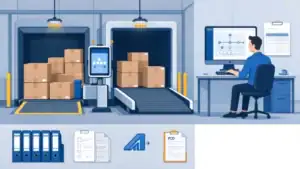
Office Space and Operation Team
4. Word-of-Mouth and Case Verification:
In addition, word-of-mouth and case verification are also important supplements, which can further confirm the service quality and compliance of the freight forwarder. Shippers can obtain real cooperation feedback through recommendations from peers in similar foreign trade enterprises, or query the freight forwarder’s reputation on industry forums, Zhihu, foreign trade WeChat groups,s and other platforms, focusing on checking for consistent negative issues such as hidden charges, sudden disappearance,ce, and shirking responsibilities, and frequent delays. At the same time, ask the freight forwarder to provide transportation cases of similar goods (such as general goods, sensitive goods, and large goods), focusing on understanding its process and results in handling emergencies. If the shipper is a cross-border e-commerce seller, it is also necessary to confirm that the freight forwarder has experience in Amazon FBA first-mile operations and is familiar with FBA warehousing specifications.
5. Special Requirements for Special Goods Transportation
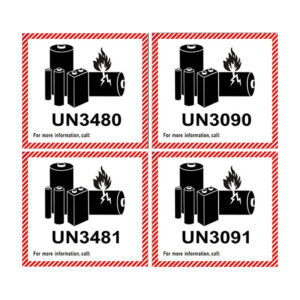
For the transportation of special goods (such as dangerous goods, food, electronic products, and medical devices), in addition to verifying the basic and specific qualifications of the freight forwarder, it is also necessary to verify whether it has the qualification for transporting special goods. For example, for transporting dangerous goods, check whether the freight forwarder has a Dangerous Goods Road Transportation License, Marine Dangerous Goods Code Certificate, and Air Dangerous Goods Identification Report, and whether the packaging and labels of the goods comply with the IMDG (marine) and IATA (air) dangerous goods transportation standards; for transporting food, check whether the freight forwarder has the filing for entry-exit inspection and quarantine, certificate of origin and other relevant qualifications to avoid goods being detained or fined due to lack of qualifications.
Finally, when signing a cooperation contract with a freight forwarder, shippers need to clearly write the qualification-related clauses, service standards, cost details, liability for breach of contract, and other contents into the contract to ensure that the rights and obligations of both parties are clear. At the same time, keep copies of all qualification documents, quotations, booking documents,s and other materials provided by the freight forwarder, which can be used as a basis for safeguarding rights in case of disputes. It is particularly important to note that you should not trust gray operations such as “double clearance and tax inclusive”. Such operations often reduce costs through illegal methods, such as falsely reporting the name of goods and underreporting the value of goods. Once investigated and punished by the customs, shippers will face serious consequences such as goods being detained and fined, and may even be included in the customs blacklist, affecting the development of subsequent cross-border trade.
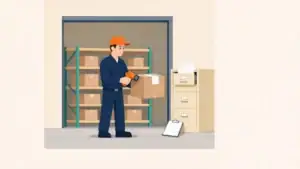
Special Cargo Transportation
With the increasingly strict supervision of cross-border trade, data from tax, customs, foreign exchange,e and other departments have realized penetrating comparison, and the living space for illegal freight forwarders is getting smaller and smaller. When choosing a cross-border freight forwarder, shippers must abandon the misunderstanding of “only focusing on price and ignoring qualifications”. Through multi-dimensional verification, such as basic information check, specific qualification verification, practical capability test, and word-of-mouth case verification, comprehensively confirm the legitimacy and qualifications of the freight forwarder, too effectively avoid logistics risks, ensure the safe and efficient delivery of goods, and lay a solid foundation for the smooth development of cross-border trade.
ABout AMZ Shipper
AMZ Shipper has several years of experience for international logistics Freight Forwarding service. Our service is for importer and exporter, foreign freight forwarder, local and abroad business. Export of 1500 of 40HQ per year for FBA Amazon shipping, 15-30tons of air shipments per month.
Member of WCA. Our company is a professional Amazon freight forwarder that specializes in providing comprehensive and efficient services to customers.