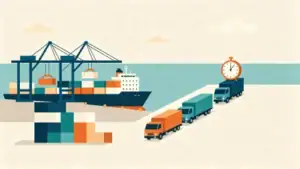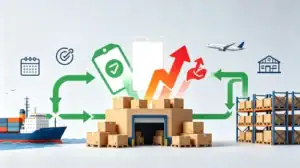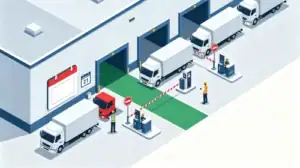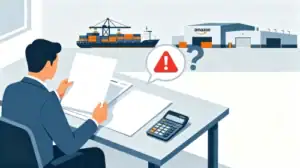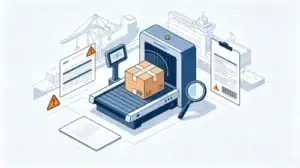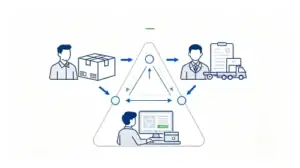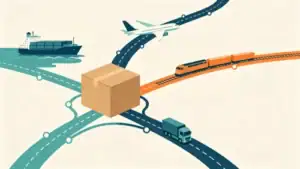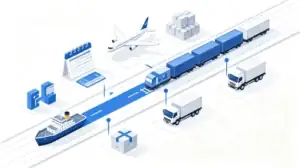
In the era of global digitalization, cross-border e-commerce has become a vital channel for sellers to expand their markets and reach consumers worldwide. However, customs clearance, as a core link in the cross-border logistics chain, often becomes a bottleneck for many sellers—even a small mistake can lead to goods detention, fines, or even destruction, resulting in huge economic losses and missed sales opportunities. This guide comprehensively covers all aspects of customs clearance for cross-border e-commerce sellers, from basic concepts to practical operations, common pitfalls to compliance strategies, helping sellers smoothly navigate the customs clearance process and achieve stable global business development.

1. Understanding Customs Clearance: Core Concepts and Significance
Customs clearance refers to the process of completing all legal procedures required by the importing and exporting countries’ customs for goods entering or leaving the country, including declaration, inspection, tax payment, and release. For cross-border e-commerce sellers, smooth customs clearance is not only a legal obligation but also a key factor affecting customer experience, inventory turnover, and brand reputation.
Unlike traditional trade, cross-border e-commerce customs clearance has the characteristics of small batches, multiple varieties, fast timeliness, and mostly B2C (Business-to-Consumer) transactions. This makes the customs clearance process more complex, involving multiple links such as commodity classification, document preparation, tax calculation, and compliance verification. The World Customs Organization (WCO) has established a framework of standards for cross-border e-commerce to promote the facilitation of legitimate trade while ensuring national security and security, providing a basic guideline for global cross-border e-commerce customs clearance.
For sellers, mastering customs clearance knowledge can help avoid unnecessary losses caused by non-compliance, shorten the time from goods departure to customer receipt, improve customer satisfaction, and lay a solid foundation for long-term development in the global market.
2. Pre-Customs Clearance Preparation: Lay the Foundation for Smooth Clearance
Adequate preparation before customs clearance is the key to avoiding risks. Sellers need to focus on three core aspects: commodity classification, document preparation, and compliance with the importing country’s regulations.
2.1 Accurate Commodity Classification (HS Code)
The Harmonized System (HS) Code is like the “ID card” of goods, which is uniformly formulated by the WCO with the first 6 digits being global unified, and the subsequent digits extended by each country to determine tariff rates and regulatory requirements. Accurate classification is the premise of legal customs clearance—incorrect classification will lead to incorrect tax calculation, goods detention, or even fines.
For example, a Dongguan clothing seller once misclassified 50% cotton and 50% polyester sweatshirts as all-cotton clothing when declaring to the US customs, resulting in a tariff difference of 800 US dollars, plus 500 US dollars in warehousing fees due to 12 days of detention, with a total loss of 1300 US dollars. To avoid such mistakes, sellers can follow these steps:
First, clarify the commodity attributes, including material, function, purpose, and specifications, which all affect classification. Second, query through official channels: domestically, you can use the “China International Trade Single Window”, and for the target country, check the local customs website (such as the US CBP website) to match the corresponding code. Third, cross-verify the code to ensure it is completely consistent with the goods and check the tariff rate and regulatory requirements. Fourth, for complex goods (such as clothing with electronic components), seek professional help from third-party customs clearance companies or pre-classification institutions to obtain a “Pre-Classification Opinion”. Finally, archive the query records for future reference in case of disputes. It should be noted that HS codes may be updated annually, and sellers need to keep abreast of the latest changes.

2.2 Complete and Standard Document Preparation
Documents are the basis for customs to verify the authenticity and legality of goods. Incomplete or non-standard documents are one of the main reasons for customs clearance delays. The core documents required for cross-border e-commerce customs clearance include:
Commercial Invoice: The core document, which must include the names and addresses of the buyer and seller, invoice number and date, commodity details (name, SKU, HS code, quantity, unit price, total price, material), declaration value explanation, and payment method. The declaration value must be true—deliberately underreporting the value to reduce tariffs will lead to severe penalties. A Shenzhen 3C seller once declared a tablet with an actual purchase price of 800 yuan/unit as 200 yuan/unit to Europe, which was verified by the German customs through Amazon Listing prices and purchase invoices. The seller had to pay a tariff difference of 3000 euros and a fine of 20% of the goods value, and the goods were detained for 20 days, missing the peak sales season.
Packing List: It must be consistent with the commercial invoice and the actual goods, including the waybill number, number of boxes, details of goods in each box, actual weight, volumetric weight, size, and seal number. A Foshan furniture seller once sent sofas to Canada, but the packing list missed the weight and size of each sofa, resulting in 15 days of detention and 800 Canadian dollars in port detention fees.
Other supporting documents: According to the product type and target country requirements, additional documents may be required, such as bill of lading/air waybill, certificate of origin, compulsory certification documents (CE for the EU, FDA for the US), and VAT tax certificate (for the EU). All documents should be printed in English (with local language translation if necessary), not handwritten, and double-checked to avoid inconsistencies.
2.3 Comply with the Import Country’s Regulatory Requirements
Different countries have different regulatory requirements for imported goods, and sellers must fully understand and comply with them to avoid customs clearance failures. For example, the EU requires non-EU sellers to register a local VAT tax number if the goods value exceeds 22 euros or are sent to Amazon FBA warehouses. A Hangzhou luggage seller once sent 500 backpacks to Amazon Germany FBA warehouse without registering a German VAT tax number, resulting in goods detention, a 19% import VAT payment, a 1000 euro fine, and a 20-day delay in customs clearance, missing the peak season.
In addition, the EU has compulsory certification requirements for specific goods (such as CE certification for lamps), the US requires FDA certification for food and medical devices, and Germany and France require EPR (Extended Producer Responsibility) registration for electronic products and packaging. Sellers should confirm the relevant requirements in the early stage of product development and complete the certification and registration procedures in advance.

3. Step-by-Step Customs Clearance Process: From Export to Import
Cross-border e-commerce customs clearance includes two main links: export customs clearance (in the seller’s country) and import customs clearance (in the target country). Each link has clear operational steps, and sellers need to cooperate closely with logistics providers and customs brokers.
3.1 Export Customs Clearance (China)
Step 1: Entrust a customs broker or logistics provider. Most sellers entrust professional customs brokers or logistics companies to handle export customs clearance, which can improve efficiency and reduce errors. Step 2: Prepare and submit documents. The seller provides true and complete documents to the customs broker, who fills in the customs declaration form and declares electronically through the “China International Trade Single Window”. Step 3: Customs inspection and review. The customs will review the declared information; low-risk goods will be released directly, while high-risk goods may be inspected. Step 4: Release and obtain tax refund documents. After passing the review or inspection, the customs will stamp and release the goods. If tax refund is applicable, the seller should timely obtain the customs declaration form (tax refund copy).
3.2 International Transportation
After export customs clearance, the goods are transported to the target country by sea, air, or international express. Sellers should choose a reliable logistics provider with strong local customs clearance capabilities, track the goods dynamics in real time, and promptly coordinate with the buyer and customs broker if there is an early warning (such as delay or port change).
3.3 Import Customs Clearance (Target Country)
Step 1: Arrival notification. The carrier notifies the local logistics provider or consignee of the goods’ arrival. Step 2: Document exchange. The consignee or its customs broker exchanges the original bill of lading for the delivery order (D/O) (for sea freight). Step 3: Electronic declaration. The local customs broker submits the declaration information (including HS code, commodity details, declaration value, consignee information, etc.) to the local electronic customs clearance system. Step 4: Customs risk control and inspection. The customs conducts risk assessment based on the declaration information; low-risk goods are released directly, while high-risk goods are subject to document or physical inspection. Step 5: Tax payment. The seller or consignee pays the corresponding tariffs and taxes according to the customs calculation. Step 6: Release and delivery. After paying the taxes and passing the inspection, the customs releases the goods, and the logistics provider delivers them to the designated address.
4. Common Customs Clearance Pitfalls and Solutions
Many sellers encounter customs clearance problems due to lack of experience. Mastering the following common pitfalls and solutions can help avoid unnecessary losses:
4.1 Incorrect HS Code
Pitfall: Classifying goods based on experience, ignoring subtle differences in commodity attributes (such as material ratio, function) or not updating the HS code in time. Solution: Follow the 5-step classification method mentioned earlier, and seek professional help for complex goods; regularly check the latest HS code updates.
4.2 False Declaration of Value
Pitfall: Deliberately underreporting or overreporting the declaration value to reduce tariffs or avoid inspection. Solution: Declare the value based on the real transaction price, with a reasonable profit margin of 5%-10% based on the purchase invoice; keep the purchase contract, invoice, and payment voucher for customs verification.
4.3 Incomplete or Inconsistent Documents
Pitfall: Missing core information in invoices or packing lists, or inconsistencies between documents and actual goods. Solution: Use standard document templates provided by logistics providers or e-commerce platforms; double-check the consistency of document information (commodity name, quantity, weight, amount) with the actual goods before submission.
4.4 Failure to Complete Compulsory Certification
Pitfall: Ignoring the compulsory certification requirements of the target country, resulting in goods detention or destruction. Solution: Confirm the certification requirements of the target country in advance, choose a qualified third-party certification institution to complete the certification, and attach the certification documents to the customs clearance documents; mark the certification logo on the goods or packaging.

5. Long-Term Compliance Strategy: Achieve Sustainable Development
Customs clearance compliance is not a one-time task but a long-term work that requires sellers to establish a sound compliance system:
First, establish a professional customs clearance team or cooperate with a reliable customs broker to keep abreast of the latest customs policies and regulatory changes in the target country. Second, standardize the document management system, establish a document archiving mechanism, and ensure that all customs clearance documents are true, complete, and traceable. Third, strengthen the training of employees related to customs clearance, improve their professional quality, and avoid operational errors. Fourth, conduct regular compliance inspections, check the rationality of commodity classification, the authenticity of declaration values, and the completeness of documents, and rectify potential risks in a timely manner.
In addition, sellers can use the tools and guidelines provided by the WCO, such as the E-Commerce Framework of Standards and Risk Management Compendium, to improve the standardization of customs clearance operations and reduce compliance risks.
ABout AMZ Shipper
AMZ Shipper has several years of experience for international logistics Freight Forwarding service. Our service is for importer and exporter, foreign freight forwarders, local and abroad business. Export of 1500 of 40HQ per year for FBA Amazon shipping, 15-30tons of air shipments per month.
Member of WCA. Our company is a professional Amazon freight forwarder that specializes in providing comprehensive and efficient services to customers.