For any Amazon seller targeting the US market, shipping from China to Amazon FBA is the most critical logistics step – and also the one where most mistakes happen. Many new sellers, when preparing their first shipment, feel completely lost facing all those label requirements, packing rules, and customs documents. And with Amazon’s multiple policy changes in 2026, the old shipping knowledge no longer fully applies.
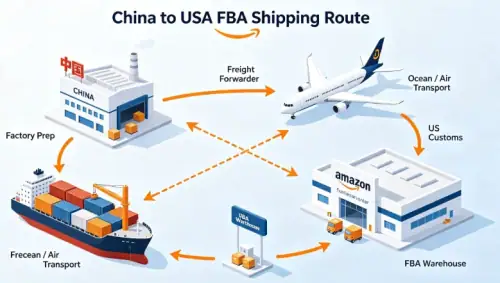
This guide walks you through the entire process – from prepping and labelling your products, creating your shipment plan, choosing a transport mode, handling customs clearance, to finally getting your goods checked into FBA. By the end, you’ll have a clear framework for your Amazon FBA shipping from China to USA.
What Is Amazon FBA Shipping From China to USA?
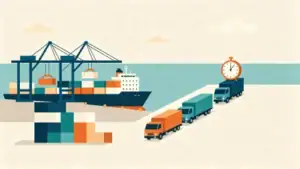
“Amazon FBA inbound shipping from China to the US” means the full transport chain that moves your goods from a factory or warehouse in China to an Amazon FBA fulfilment centre in the United States – by sea, air, or express courier.
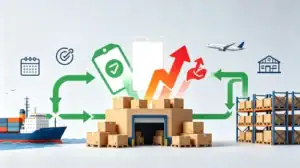
A complete Amazon FBA shipping from China to USA process includes:
-
Domestic product preparation, labelling, and packing in China
-
Delivery to the freight forwarder’s warehouse
-
Export customs declaration
-
Cross‑ocean transport (sea/air/courier)
-
US import customs clearance
-
Booking a delivery appointment with the FBA warehouse
-
FBA receiving and check‑in
In 2026, the compliance bar for Amazon FBA shipping from China to USA has been raised significantly. Sellers must complete all prep and labelling work before the goods leave China – there is very little room left to fix problems after they arrive in the US.
Step 1: Prepare Your Products for Amazon FBA Shipping
Product Compliance – The New 2026 Requirement
Not all products can be shipped to Amazon FBA without prior paperwork. Certain categories require specific certifications before you even book the freight:
-
Children’s toys and baby products: Need a CPC (Children’s Product Certificate). From July 8, 2026, CPSC‑regulated goods must also complete CPSC eFiling via the CBP ACE system before import.
-
Battery‑powered devices (including lithium batteries): Require FCC certification, UN38.3 test report, and MSDS (Material Safety Data Sheet).
-
Solid wood packaging: Must have an IPPC fumigation stamp, otherwise US customs may reject the shipment.
| Product Category | Required Certification / Document |
|---|---|
| Children’s toys, baby products | CPC certificate, CPSC eFiling |
| Battery‑powered, 3C electronics | FCC, UN38.3, MSDS |
| Solid wood packaging | IPPC fumigation mark |
| General non‑restricted goods | Commercial invoice, packing list |
Two Types of Labels – Both Are Mandatory
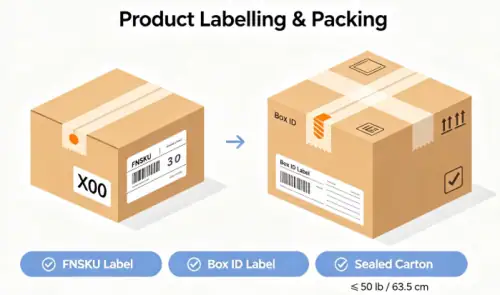
Product label (FNSKU): Every sellable unit must have an FNSKU label (starting with X00). From March 31, 2026, for sellers without brand registry, all new FBA inventory must use FNSKU labels – manufacturer barcodes (UPC/EAN) are no longer accepted. The label must be clear, flat, not wrinkled, and must not cover the barcode area.
Outer carton label (Box ID Label): Each carton needs an Amazon box label that exactly matches the shipment plan in Seller Central. It is a good idea to put one on both the front and back of each carton, in case one gets worn off during transit.
Packing Specifications
Each carton must not exceed 50 pounds (about 22.7 kg) , and the longest side must not exceed 63.5 cm. Cartons must be fully sealed with tape – do not use strapping bands or metal buckles. These materials can be hazardous on Amazon’s sorting lines and will get your shipment rejected.
Step 2: Create Your FBA Shipment Plan in Seller Central
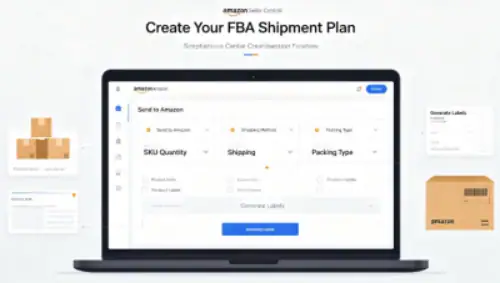
Log in to Amazon Seller Central and use the “Send to Amazon” workflow to create your shipment plan. The system will automatically assign FBA warehouse addresses based on Amazon’s inventory placement strategy – common West Coast warehouses like ONT8 and LGB8, or East Coast ones like ABE2 and MDW2.
When creating the plan, you will need to provide:
-
Quantities and SKUs
-
Shipping method (SPD – small parcel delivery, or LTL – less‑than‑truckload)
-
Packing type (case‑packed or mixed)
The most critical step: generate your FNSKU labels and carton labels directly from Seller Central. You must use the label files provided by the system – do not copy, modify, or reuse old labels from previous shipments. Each shipment plan has unique labels; using the wrong ones will prevent your goods from being received.
Step 3: Choose Your Shipping Mode – Sea, Air, or Express?
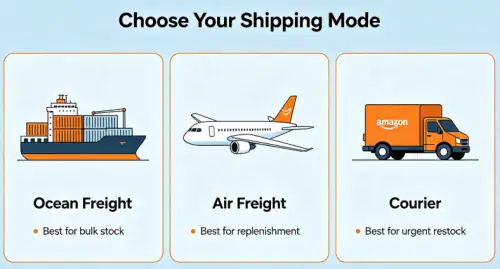
From China to the US, Amazon FBA shipping offers three main transport modes, each suited to different situations:
| Transport Mode | Best For | West Coast Reference Timing |
|---|---|---|
| Ocean freight (FCL/LCL) | Large regular inventory, pre‑peak season stock‑up | 28‑38 days |
| Air freight (air express) | Regular replenishment, time‑sensitive | 5‑7 days |
| Commercial courier (UPS/FedEx/DHL) | Samples, emergency restocking | 3‑5 days |
Ocean freight is the most common choice for Amazon FBA shipping from China to USA. Bulk shipments go via full container load (FCL) or less‑than‑container load (LCL), giving the best cost efficiency. FCL works for larger volumes – your goods stay in one dedicated container, with fewer handling points and better security. LCL is for smaller volumes, where multiple sellers share a container – it involves more transhipment and tends to have less stable transit times.
Air freight is the go‑to for regular replenishment. It is much faster than ocean and cheaper than courier – the best cost‑time balance. It suits sellers who need steady inventory turnover and have regular restocking cycles.
Commercial courier is the fastest option, ideal for samples or urgent stock‑out rescue. But it is also the most expensive, so it is not recommended for routine shipping.
Market context in 2026: After the sharp swings of previous years, ocean freight rates have largely stabilised, but fuel surcharges and seasonal demand still affect final costs. When planning your shipments, it is wise to build in a buffer for the peak season (July‑October).
Step 4: Work With a Freight Forwarder for Customs Clearance
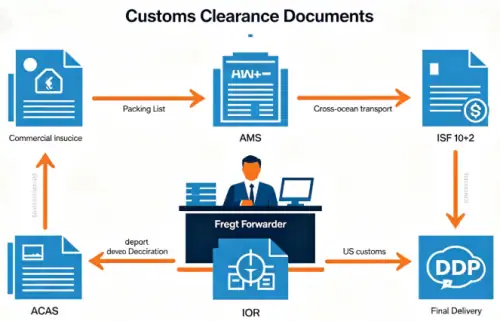
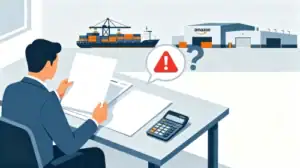
This is the most overlooked yet most troublesome part of Amazon FBA shipping from China to USA.
Export customs declaration: Your forwarder will handle this on your behalf. Product names, quantities, and values must be declared truthfully – do not take shortcuts.
US import customs clearance: Once the goods arrive at the US port, they need to clear US Customs. For sea freight, you must file AMS (US Customs manifest) and ISF 10+2 (Importer Security Filing) in advance. For air freight, ACAS filing is required. The manifest information must exactly match your commercial invoice and packing list – any discrepancy, even a small one, can cause clearance delays or hold your shipment.
Who is the Importer of Record (IOR)? This must be clarified before you ship. When goods enter the US, there must be a legal entity acting as IOR – responsible for paying duties, signing the customs bond, and complying with all import regulations. Amazon is not the IOR, and your supplier is usually not willing (or able) to act as one. You need to arrange the IOR yourself, or use your forwarder’s US agent to handle it.
DDP (Delivered Duty Paid): Confirm with your forwarder exactly what their DDP service covers – does it include duty payment, customs clearance, and final delivery? Different forwarders define DDP differently. Getting clarity upfront prevents unpleasant surprises when the goods arrive at the port.
Step 5: Book a Delivery Appointment and Get Your Goods Checked Into FBA
After customs clearance, the final step is delivering to the FBA warehouse.
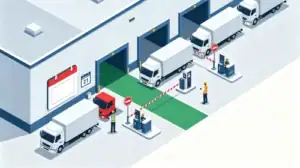
FBA warehouses require an appointment for delivery. West Coast warehouses (like ONT8) are relatively easier to book, but East Coast and Midwest warehouses often need 7‑10 days’ notice. During peak seasons, appointment slots can be even tighter.
Truck delivery vs. courier delivery: Large shipments usually go by truck (requires appointment), while smaller ones can be sent via UPS/FedEx directly (no appointment needed, but subject to carrier size and weight limits).
FBA receiving and check‑in: Once the goods arrive, Amazon’s warehouse team receives, scans, and inspects them. Check‑in typically takes 2‑7 days, but may take longer during peak periods.
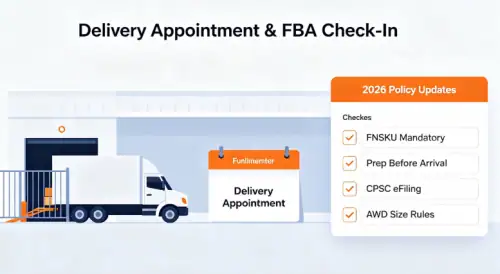
2026 Amazon FBA Policy Changes – Five Things You Must Know Before Shipping
In 2026, Amazon FBA shipping from China to USA faces multiple significant policy updates. Here are five changes to be aware of before you send your next shipment:
Change 1: FBA Prep and Labelling Service discontinued (effective January 1, 2026)
Amazon has fully ended its FBA prep and labelling service, which had been in place for over a decade – including all paid options. Under the new rule, all FBA shipments to US fulfilment centres must be properly packed, sealed, and labelled by the seller or their partner before arrival. If a shipment is rejected for non‑compliance, Amazon will not provide any compensation. This applies to all FBA inbound channels, including AWD, AGL, and other official logistics routes.
Change 2: Commingled inventory ended; FNSKU becomes mandatory (effective March 31, 2026)
From March 31, 2026, Amazon officially discontinued its commingling (shared inventory) program. For sellers who have not completed brand registry, all new FBA inventory must use Amazon barcodes (FNSKU starting with X00). Shipments without FNSKU labels will be treated as defective, delaying check‑in and losing eligibility for reimbursement protection. Brand‑registered sellers can still use manufacturer barcodes (UPC/EAN).
Change 3: FBA inbound placement service fee adjusted (effective January 15, 2026)
The inbound placement service fee for standard‑size items has been adjusted per unit on average. Amazon has also introduced new weight tiers for small standard‑size items and for large standard‑size items between 3 and 20 pounds.
Change 4: AWD restriction on large items (effective July 31, 2026)
Amazon Warehousing & Distribution (AWD) in the US will only accept standard‑size items – those smaller than 18×14×8 inches and under 20 pounds. For items exceeding these dimensions, you must create a direct FBA shipment; they can no longer be sent through AWD.
Change 5: CPSC eFiling becomes mandatory (effective July 8, 2026)
For CPSC‑regulated products (around 600 HTS categories, including children’s toys and baby items), you must complete CPSC eFiling via the CBP ACE system before importing into the US. The seven required data elements must be submitted in advance – you cannot add them later after customs clearance.
Common Mistakes in Amazon Shipping From China to USA
Based on real seller experiences, these are the most frequent pitfalls:
-
FNSKU labels stuck wrong or poorly – labels that are wrinkled, covered by tape, not covering the original manufacturer barcode, or simply unreadable – leading to rejection by Amazon
-
Not booking an FBA delivery appointment in advance – the goods arrive in the US but the warehouse has no available slot, forcing rescheduling or paying extra storage fees
-
Non‑compliant packing – cartons over the weight or size limits, or using strapping bands and metal buckles, resulting in refusal at the warehouse
-
Missing certification documents – no CPC, FCC, or other required certificates for regulated products, causing customs holds
-
Manifest details not matching the invoice – any discrepancy in product name, quantity, or weight can delay customs clearance
-
No designated IOR – no one takes responsibility as the importer when the goods land, so they cannot clear customs
-
Underestimating the 2026 policy changes – still assuming Amazon will do the labelling, only to find the shipment rejected or disposed of upon arrival
As a logistics provider focused on cross‑border e‑commerce, AMZ Shipper offers end‑to‑end shipping services from Chinese factories to Amazon FBA warehouses – covering transport mode selection, export declaration, US customs clearance, and final delivery. We help sellers navigate the complex international logistics landscape and make every Amazon FBA shipping from China to USA a smooth experience.
ABout AMZ Shipper
AMZ Shipper has several years of experience for international logistics Freight Forwarding service. Our service is for importer and exporter, foreign freight forwarders, local and abroad business. Export of 1500 of 40HQ per year for FBA Amazon shipping, 15-30tons of air shipments per month.
Member of WCA. Our company is a professional Amazon freight forwarder that specializes in providing comprehensive and efficient services to customers.