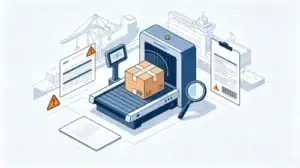
You found a product on Alibaba – the price is right, the supplier responds quickly, and the sample passed inspection. Now there is just one question left: can I have the supplier ship this order straight to an Amazon FBA warehouse?
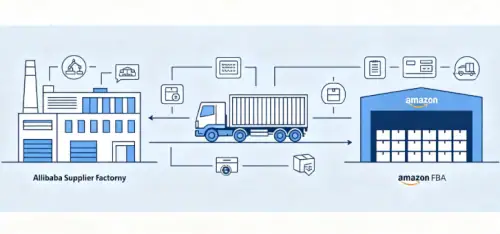
The short answer is: yes. Technically, it can be done.
But the more important question is: should you? And that answer is a lot more complicated.
This article walks you through the entire process of shipping directly from Alibaba to Amazon FBA, the hidden risks, the major policy changes Amazon introduced in 2026, and the pros and cons of having your supplier handle everything versus using a professional freight forwarder. The goal is to help Amazon sellers make a decision that actually fits their situation.
What Does “Shipping Directly from Alibaba to Amazon FBA” Actually Mean?
“Shipping directly from Alibaba to Amazon FBA” – also called FBA direct or factory‑to‑FBA – means that the supplier completes production, packing, and labelling in China, and then ships the goods straight to an Amazon FBA fulfilment centre, without passing through the seller’s own address or a third‑party warehouse in between.
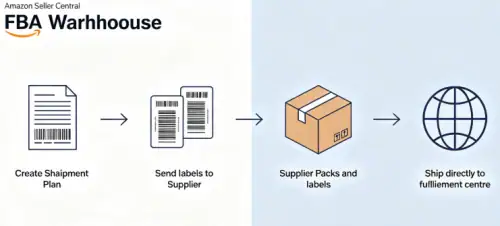
The basic workflow looks like this:
-
Create an FBA shipment plan in Amazon Seller Central and get the designated FBA warehouse address.
-
Send the FNSKU labels and carton labels from your shipment plan to your Alibaba supplier.
-
The supplier packs and labels everything according to Amazon’s requirements.
-
Either the supplier or a freight forwarder you arrange handles international shipping (by sea or air) and customs clearance.
-
The goods arrive directly at the Amazon FBA warehouse and wait to be checked in.
The key feature of this model is that the supplier takes on more work than just “manufacturing” – they are not only boxing up the goods, but also need to understand and follow Amazon’s complex inbound rules.
Why Shipping Directly from Alibaba Sounds So Attractive
On the surface, the benefits seem clear:
-
Skip intermediate steps – you avoid sending goods to your own address or a third‑party warehouse first, saving one round of transport and storage.
-
Theoretically faster time to shelf – goods go straight from the factory, with no extra stopovers.
-
Simpler operations – you only deal with one supplier, without coordinating multiple parties.
For new Amazon sellers placing a test order, that kind of “one‑stop” simplicity is especially appealing.
But “simple” often comes with a price.
The Hidden Risks of Direct Shipping – Why “Can” Does Not Mean “Should”
Quality control black hole. Goods go straight from the factory to Amazon, and the seller never gets a chance to inspect them before they ship. If there are quality issues, non‑compliant packaging, or the supplier sends the wrong items, you will not find out until FBA rejects the shipment – and by then, the damage is already done, with no opportunity to mitigate it.
All compliance requirements rest on the supplier. Amazon has very strict rules for FBA inbound packaging, labelling, carton size, and weight limits. Not every Alibaba supplier is familiar with these rules – most factories are good at “making stuff”, not “compliance labelling”. Asking a supplier who is not familiar with Amazon’s rules to handle labelling and packing is a risky bet.
Unclear who is the Importer of Record. When goods enter the destination country, there must be a legal entity acting as the Importer of Record (IOR) – responsible for paying duties, signing customs bonds, and complying with all import regulations. Amazon is not the IOR, and suppliers are usually not willing (or able) to act as one. If the seller does not clearly designate an IOR and arrange customs clearance properly, the shipment can be held at customs.
Supplier labelling errors are extremely costly. If an FNSKU label is stuck on wrong, crooked, uses the wrong barcode format, or fails to cover the manufacturer’s original barcode – FBA will reject the entire shipment. If the problem is discovered only after the goods arrive in the US, the cost of fixing it is many times higher than catching it in China.
Two Paths: Supplier Direct vs. Professional Freight Forwarder
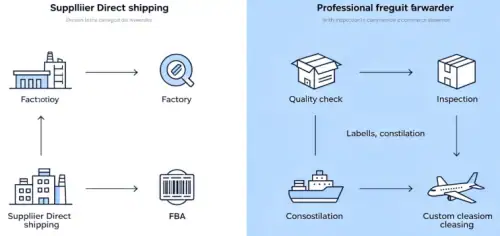
For sellers shipping from Alibaba to Amazon FBA, there are two main routes:
| Comparison | Supplier Direct | Professional Freight Forwarder |
|---|---|---|
| Operational complexity | Low | Moderate |
| Freight cost | Usually higher (includes markup) | Usually lower (can consolidate) |
| Quality control | Almost none | Can inspect before shipping |
| FBA compliance guarantee | Depends on supplier’s capability | Forwarder has professional expertise |
| Consolidating multiple factories | Not possible | Possible |
| Best for | Very small trial orders (e.g., under 20kg) | Normal and larger shipments |
Path 1: Let the supplier arrange shipping directly – you pay the supplier one invoice that includes both product cost and shipping, and the supplier ships via DHL, UPS, or a forwarder. The upside is simplicity – one invoice covers everything. The downsides: suppliers usually add a markup to the freight; if you buy from multiple factories, you cannot combine them; and suppliers rarely double‑check packaging quality before dispatch.
Path 2: Use a professional freight forwarder – you find your own forwarder, who picks up the goods from the factory, inspects them, labels them (if needed), packs them, and then ships to FBA. The upsides: you choose the carrier (fast vessel, standard vessel, or air); you can combine goods from multiple factories into one shipment to save cost; and professional forwarders know Amazon’s labelling and packing rules inside out. More importantly – the forwarder can inspect and label the goods in their warehouse before they leave China, which is your last chance to catch and fix problems.
The 2026 Amazon Policy Changes – Why This Year Is Different
In 2026, Amazon introduced two major policy changes that directly affect “shipping directly from Alibaba to Amazon FBA”.
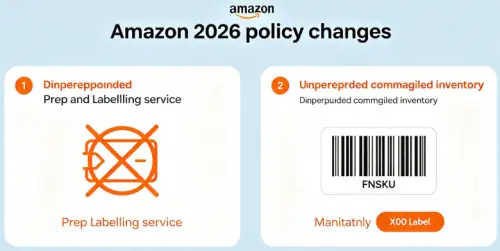
Change 1: FBA Prep and Labelling Service officially discontinued
From January 1, 2026, Amazon ended its FBA prep and labelling service, which had been running for over a decade. This includes all paid options – the entire support is gone. The change applies to all inventory sent to US FBA fulfilment centres, including goods sent directly by sellers, as well as stock coming through AWD, AGL, and other official logistics channels.
With this new rule, all FBA shipments to US fulfilment centres must be properly packed, sealed, and labelled by the seller or their partner before they arrive at the warehouse. If a shipment is rejected for non‑compliance, Amazon will no longer offer any compensation.
What this means: before, sellers could rely on Amazon’s labelling service as a safety net. That safety net is now completely gone. If your supplier labels something wrong, the problem is only discovered after the goods reach the US – and the cost of handling it is huge, with no fix‑it service from Amazon.
Change 2: Commingled inventory discontinued; FNSKU becomes mandatory
From March 31, 2026, Amazon officially ended its commingling (shared inventory) program. For sellers who have not completed brand registry (distributors and resellers), all new FBA inventory must have an Amazon barcode (FNSKU starting with X00). If not, it will be flagged as defective, delaying check‑in and losing eligibility for any reimbursement protection.
What this means: manufacturer barcodes (UPC/EAN) are no longer accepted for inbound identification by unregistered sellers. Every single unit shipped from Alibaba to Amazon FBA must have an FNSKU label, and it must completely cover the manufacturer’s original barcode.
The combined effect of these two changes is that the compliance bar for shipping directly from Alibaba to Amazon FBA has been raised significantly. Your supplier must not only know how to manufacture – they also need to understand Amazon’s labelling and packaging rules, with absolutely no “we will fix it when it arrives” margin for error.
What Your Alibaba Supplier Must Get Right (and What They Often Miss)
If you decide to have your Alibaba supplier ship directly to Amazon FBA, these compliance requirements must be met 100%:
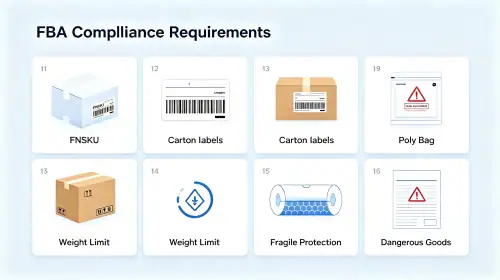
FNSKU labels – each sellable unit must have a scannable FNSKU barcode (starting with X00), and it must completely cover the manufacturer’s original UPC/EAN barcode. The label must be generated from Seller Central – you cannot use a “close enough” substitute.
Carton labels – each outer carton needs an Amazon box ID label, which must exactly match the shipment plan in Seller Central.
Poly bag requirements – soft goods and loose items must be packed in poly bags; bags with an opening larger than 5 inches must have a suffocation warning label.
Carton weight limits – for most categories, cartons must not exceed 50 pounds (about 22.7 kg); overweight cartons need “Team Lift” handling labels.
Fragile item protection – fragile goods must be individually wrapped in bubble wrap.
Dangerous goods and battery documentation – products with lithium batteries need UN38.3 test reports and safety data sheets submitted in advance.
| Common Mistake | Consequence |
|---|---|
| FNSKU label stuck wrong or unreadable | FBA rejects the entire shipment |
| Carton exceeds 50 lb weight limit | Warehouse rejects; extra handling fees |
| No poly bag or missing suffocation warning | Non‑compliance notice; shipment flagged |
| Carton label doesn’t match shipment plan | Goods cannot be received; storage fees while stuck |
| Dangerous goods documentation not pre‑submitted | Cargo cannot clear customs or enter warehouse |
The One Question You Must Answer Before You Ship
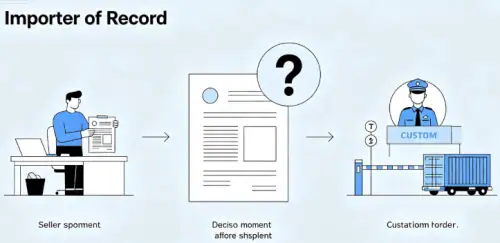
Before you send any shipment from Alibaba, you must answer this question: “Who is the Importer of Record (IOR)?”
This is the most overlooked yet most important question in direct shipping. When goods enter the US, there must be a legal entity acting as IOR – responsible for paying duties, signing customs bonds, and complying with all import regulations. Amazon is not the IOR, and suppliers are usually not willing (or unable) to act as one.
If you do not clearly designate an IOR and arrange customs clearance properly, your shipment can be held at US customs – and nobody else will step in to handle it.
So, Should You Ship Directly from Alibaba to Amazon FBA?
“Can” and “should” really are two different things.
Direct shipping makes sense when:
-
The supplier has solid experience with FBA shipments (ask for examples of past FBA orders)
-
Your product value is low enough that even a total loss is manageable
-
You have worked with this supplier multiple times and trust them
-
It is a very small trial order (under 20kg), so your exposure is limited
Direct shipping is NOT recommended when:
-
This is your first time working with the supplier – strongly recommend shipping to your own address or a third‑party warehouse for inspection first
-
Your products are high‑value – the risk of a big loss is too great
-
The supplier is not familiar with FBA rules – most factories are good at production, not compliance labelling
A practical compromise: use a local prep centre or freight forwarder in China. The goods are picked up from the factory and taken to the forwarder’s warehouse, where a professional team inspects, labels, and packs them before shipping to FBA. This keeps the cost advantage of shipping from China, while adding a critical quality control step – and it gives you one last chance to catch and fix problems before they reach Amazon.
For high‑value Amazon sellers, this “compromise” is not an extra cost – it is insurance.
As a logistics provider focused on cross‑border e‑commerce, AMZ Shipper helps Amazon sellers evaluate the best shipping options from Alibaba to FBA – whether you choose direct shipping or a professional forwarder, we help you find the right balance between cost, speed, and compliance.
ABout AMZ Shipper
AMZ Shipper has several years of experience for international logistics Freight Forwarding service. Our service is for importer and exporter, foreign freight forwarders, local and abroad business. Export of 1500 of 40HQ per year for FBA Amazon shipping, 15-30tons of air shipments per month.
Member of WCA. Our company is a professional Amazon freight forwarder that specializes in providing comprehensive and efficient services to customers.