
In the international logistics industry, “size” is often seen as the same thing as “reliability.” Many small and medium sellers naturally lean toward those big, well-known traditional freight forwarders when choosing a logistics partner. They assume that bigger means more stable and more dependable. But in actual practice, many sellers discover that being big often comes with rigid processes, slow responses, high communication costs, and sometimes even being ignored simply because your shipment volume is “not big enough.”
We are a logistics company that focuses on serving cross-border e-commerce sellers. In this article, we want to be honest about what we’ve observed in the industry: for small and medium sellers who ship anywhere from dozens to hundreds of containers per year, a flexible, transparent, and responsive service provider often delivers more real value than a giant player with inflexible workflows.
Part One: The “Big” Problems with Traditional Large Forwarders – Why They Don’t Fit Small and Medium Sellers
The strength of traditional large forwarders lies in their economies of scale and standardized operating procedures – which are designed to handle massive volumes of homogeneous cargo. However, this system often struggles when faced with the flexible and ever-changing needs of small and medium sellers.
LCL Shipping: A Passive Waiting Game
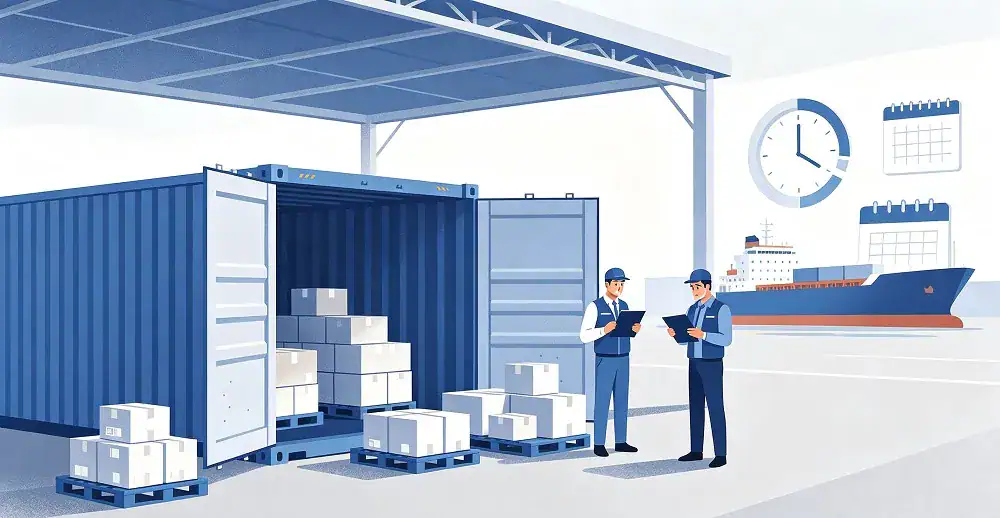
For small and medium sellers whose cargo volume isn’t enough to fill an entire standard container, Less-than-Container-Load (LCL) is the primary shipping method. But in many large forwarders’ standard processes, the biggest headache with LCL service is the high level of uncertainty around departure times. To maximize profit per container, the forwarder needs to consolidate shipments from multiple sellers into one full container before dispatching it. During this “waiting-to-fill” process, you have no idea how long it will take – it could be two days, or it could be a week or even longer.
The real impact of this uncertainty on small and medium sellers is that inventory planning gets disrupted and restocking rhythms become hard to control. For cross-border e-commerce that relies on fast turnover, every extra day your cargo sits in a warehouse means one more day of delayed listing and sales, which directly affects cash flow and product rankings. Reports from Shanghai Customs have also pointed out that traditional ocean freight exports operate on a “full container” basis, lacking an LCL model that fits the “fragmented” order patterns of cross-border e-commerce. Small-batch, high-frequency orders often end up in a situation where neither cost nor efficiency can be properly balanced.
Communication and Response: The Hidden Cost Nobody Talks About
When something goes wrong with your cargo in transit – like customs inspection, missing documents, or schedule changes – whether you can reach the right decision-maker and get useful information quickly directly determines how efficiently the problem gets resolved.
In a large forwarder with multiple layers of hierarchy, frontline customer service staff often have limited authority. Getting information usually requires escalating the request up the chain. A simple question might go through a long chain of “seller → customer service → supervisor → operations → overseas agent,” with potential delays at every step. For small and medium sellers, waiting hours for a response in an emergency could mean missing the only vessel sailing that week, leading to stock-outs. This communication cost doesn’t show up on your invoice, but it hits your business stability in a very real way.
Pricing Transparency: The “Quotation vs. Final Bill” Gap Game
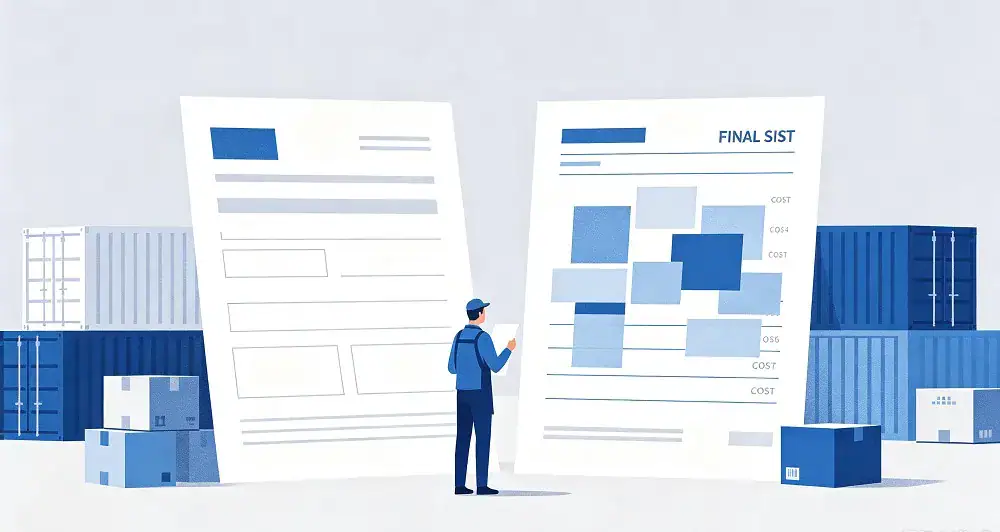
Cost is the most sensitive concern for small and medium sellers. The pricing structure of traditional large forwarders is often complicated, including ocean freight, various surcharges, documentation fees, customs clearance fees, destination port charges, and more. In the initial quotation stage, some complex fee items may not be clearly listed, which leads to final bills that end up significantly higher than the original quote.
This “lowball-then-add-on” pricing approach leaves sellers in the dark when calculating final logistics costs, making it hard to control profit margins accurately. For small and medium sellers who already operate on thin margins, unexpected extra charges can eat up the entire profit of a shipment.
Where Small and Medium Sellers Fit in Large Forwarders’ Priorities
It’s worth acknowledging that large forwarders naturally allocate their resources toward their core big clients. For clients shipping thousands of containers a year, large forwarders will assign dedicated teams, offer customized solutions, and prioritize space allocation. But small and medium sellers’ orders make up a tiny fraction of their overall business volume, so they often get lumped into a standardized “public pool” with little differentiated attention or service. This isn’t a matter of attitude – it’s just the natural business logic of resource allocation in large organizations. Recognizing this reality is the first step for small and medium sellers to find a partner that truly works for them.

Part Two: Our Service Approach – Four Ways We Match Small and Medium Sellers’ Needs
After observing these common industry pain points, we’ve made targeted adjustments to our service structure. At the core is “flexibility” – offering small and medium sellers a more controllable and transparent service experience.
1. LCL Process: From “Passive Waiting” to “Active Coordination”
Our approach to dealing with LCL uncertainty isn’t about making absolute time promises – because factors like shipping line capacity, port congestion, and weather conditions are beyond our full control. Instead, our adjustment is about changing the operating logic itself.
We’ve set up dedicated LCL coordination roles that continuously monitor cargo arrival status at our consolidation warehouses. Based on historical data and current cargo profiles, we proactively adjust consolidation plans. When we see that cargo for a particular route is getting close to a full container load, we prioritize coordinating that shipment. For cargo that’s been waiting longer than usual, we evaluate whether expedited consolidation or other options can speed up the flow.
At the same time, through our global network, we maintain real-time data exchange with destination agents. This means we can often learn about port congestion or customs policy changes earlier than others, and we pass that information to sellers so they can adjust their restocking plans ahead of time. Our goal is to turn “waiting to fill a container” – a completely passive state – into a manageable, predictable process with active coordination, minimizing unnecessary warehouse dwell time for your cargo.
2. Communication Efficiency: Dual-Time-Zone Coverage and Dedicated Account Managers
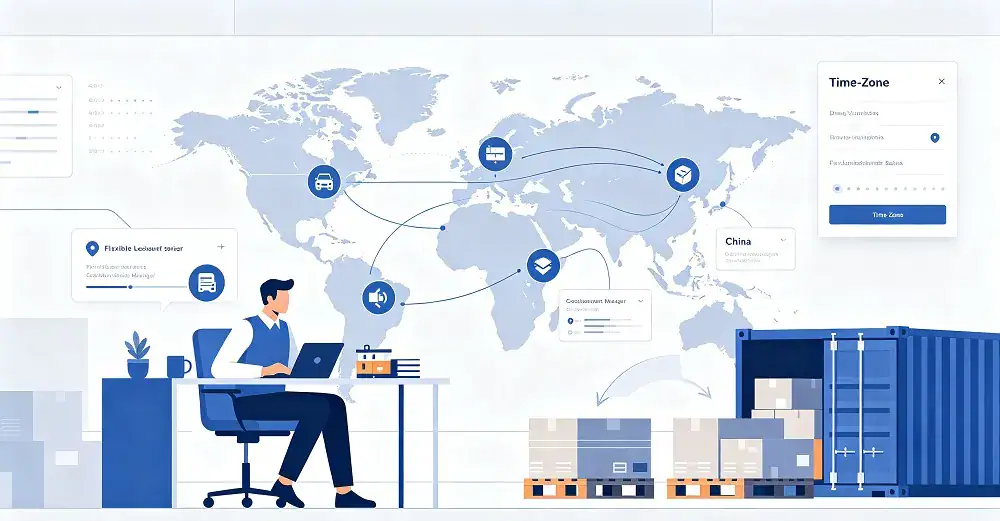
To eliminate the inefficiency caused by time zone gaps and layered communication, we’ve restructured our customer service team’s schedules to achieve online coverage across both China and major destination countries’ time zones. This means that whether it’s daytime in China or working hours overseas, client inquiries can be addressed promptly, and urgent issues don’t get left hanging due to time differences.
In addition, every signed client is assigned a dedicated account manager. This person is responsible for tracking the full status of all your shipments, understands your business characteristics and shipping preferences, and provides regular shipment summary reports. When issues come up, you’re communicating with someone who knows your entire business context, not a stranger who needs to get up to speed from scratch. This “one-to-one” relationship dramatically reduces information loss and waiting time.
3. Cost Transparency: From “Vague Quotes” to “Itemized Written Quotes”
To address pricing transparency, we insist on providing itemized written quotations before shipment. These quotes clearly break down ocean freight, customs clearance fees, destination trucking charges, and all optional service fees, with clear explanations for every line item.
We commit that, unless you actively change cargo type, shipping terms, or service scope, there will be no unexpected charges on your final bill. We believe that clear cost expectations are the foundation of long-term trust – not luring clients in with low prices and then making up profits through various add-on fees.“‘/’’”
4. Adapting to Industry Changes: Seamless FBA Preprocessing Services
Starting January 1, 2026, Amazon officially stopped providing FBA preprocessing services (such as bubble wrap packaging, poly bagging, and kit assembly) and labeling services. Sellers now need to handle these operations themselves – and non-compliant cargo may be directly disposed of with no compensation.
For many small and medium sellers who lack professional operating experience and packaging production lines, this directly increases operational complexity, along with extra costs and hiring pressures. In response, we’ve rolled out a standardized pricing structure for preprocessing services based on SKU type and operational complexity, helping sellers smoothly transition this new compliance work into our service chain. You don’t need to build your own packaging team to ensure your cargo arrives at Amazon fulfillment centers in full compliance with their requirements.
Part Three: Our Attitude Toward Uncertainty and How We Manage It
If traditional large forwarders tend to use standardized processes to “filter out” the individual needs of small and medium sellers, our philosophy runs in the opposite direction – we help sellers manage the external uncertainties that are simply unavoidable through more proactive information sharing, more flexible LCL coordination, and earlier problem alerts.
We can’t control the weather, but we can let you know in advance about voyages that might be affected. We can’t change customs inspection rates, but we’ll prepare the most complete documentation for you in case of random checks. We can’t decide how shipping lines allocate their space, but we’ll advocate for better scheduling on your behalf based on our direct booking relationships with multiple carriers. This effort to create certainty within an uncertain environment is exactly what we mean by “flexibility.”
Here’s a table comparing traditional large forwarder models with our service approach:
| Dimension | Traditional Large Forwarder Model | Our Service Approach |
|---|---|---|
| LCL Management | Waiting to fill containers, uncertain departure timing | Active coordination to minimize unnecessary dwell time |
| Communication & Response | Layered escalation, information lags | Dedicated account managers with dual-time-zone coverage |
| Pricing | Complex quotes with potential hidden fees | Itemized written quotes before shipment, no surprise charges |
| Client Priority | Resources tilted toward big clients; small/medium sellers get standardized treatment | Dedicated account management for all clients, attention to individual needs |
| FBA Preprocessing | Usually not included or requires third-party coordination | Standardized pricing by SKU type, seamless service integration |
Part Four: Our Service Capabilities and Foundation
We’re able to offer the flexible services described above not just as a concept, but based on our concrete operational network and industry credentials:
-
Warehouse Network Covering China’s Major Manufacturing Hubs: We operate four consolidation warehouses in Shenzhen, Yiwu, Guangzhou, and Qingdao, covering South China, East China, and North China, allowing us to receive and process cargo close to where it originates. For sellers with stable shipping volumes who value efficiency, we also offer free warehousing at our consolidation centers, making it easier to arrange shipments according to your production schedules.
-
Stable and Predictable Business Volume: We handle over 1,500 40HQ containers of FBA-related ocean freight annually, with monthly air freight volume ranging from 15 to 30 tonnes. This allows us to maintain direct booking relationships with shipping lines and airlines, securing space and rate stability, and enabling us to pass the benefits of our bargaining power across different routes on to small and medium sellers.
-
Global Network Credentials: We are a member of the World Cargo Alliance (WCA), which means we have access to a vetted global network of reliable agents, ensuring that destination customs clearance, last-mile delivery, and overseas warehousing are executed dependably.
-
Service Extension Capabilities: Our services aren’t limited to Amazon FBA head hauls. For sellers using platforms like TikTok Shop, Temu, and Walmart, we can also deliver cargo directly to these platforms’ designated warehouses, supporting your multi-channel fulfillment strategies.
ABout AMZ Shipper
AMZ Shipper has several years of experience for international logistics Freight Forwarding service. Our service is for importer and exporter, foreign freight forwarders, local and abroad business. Export of 1500 of 40HQ per year for FBA Amazon shipping, 15-30 tons of air shipments per month.
Member of WCA. Our company is a professional Amazon freight forwarder that specializes in providing comprehensive and efficient services to customers.


