
For many cross-border sellers, when the shipment isn’t large enough to fill an entire container, LCL (Less than Container Load) shipping becomes the go-to choice. It’s perfect for testing new markets, launching products, or handling mid-sized orders. However, the way LCL freight is calculated is completely different from FCL (Full Container Load). It’s not simply based on the actual weight of your goods. Instead, it introduces a key concept—chargeable weight. If you don’t fully grasp this rule, you could end up paying a significant amount of freight for, quite literally, “shipping air.”
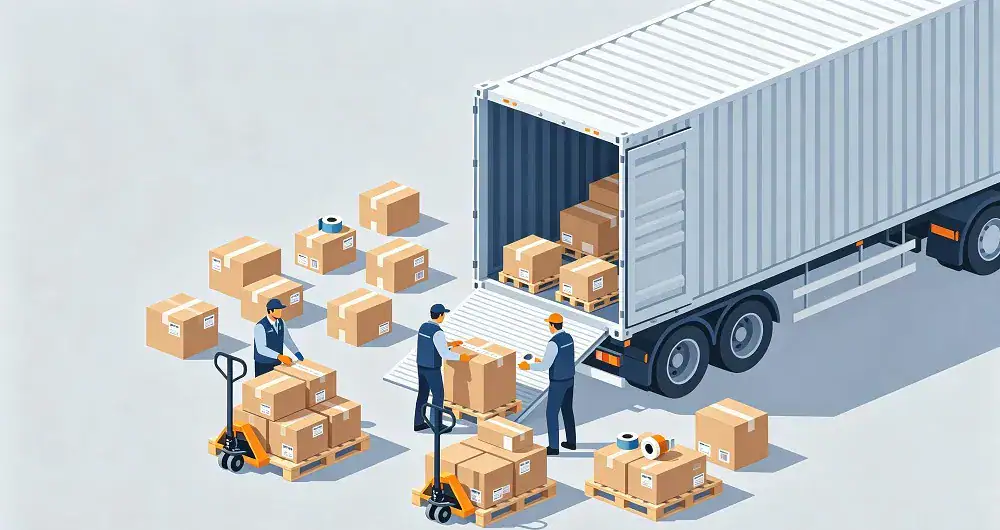
Understanding how LCL billing works, and actively optimizing your package volume and weight mix, is a must-have skill for any seller who wants to keep logistics costs under control.
The Core Logic of LCL Billing: Getting to Know “Chargeable Weight”
Before you can optimize costs, you need to understand how they’re calculated. LCL freight rates follow the “whichever is greater” principle. This means your final shipping cost depends on the larger of two numbers: the actual gross weight and the volumetric weight of your cargo.
-
Actual Gross Weight: This is simply the physical weight of your goods, including all inner and outer packaging, measured on a scale.
-
Volumetric Weight: This is a “theoretical weight” calculated from the space your cargo occupies. For ocean freight LCL, the industry standard is 1 cubic meter (CBM) = 1000 kilograms (kg). The formula is:
Volumetric Weight (kg) = Length (cm) × Width (cm) × Height (cm) ÷ 1000 (Use this for a single carton; for multiple, calculate the total CBM and multiply by 1000).
Here’s a quick example: a carton measuring 50cm × 40cm × 30cm equals 0.06 CBM. Its volumetric weight is 60 kg. If the actual weight of that carton is only 40 kg, then the chargeable weight will be the larger number—60 kg.
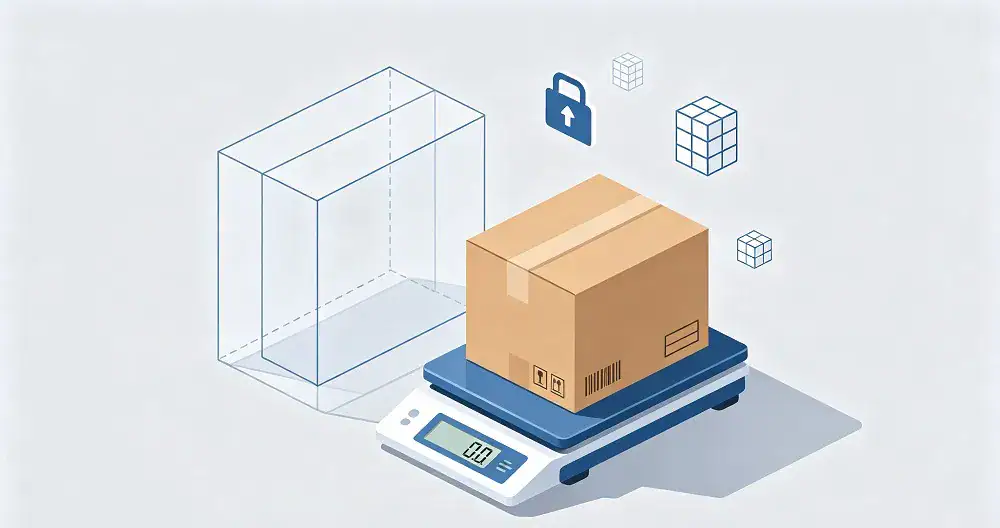
The table below clearly shows how this rule applies to different types of cargo:
As the table shows, for bulky, lightweight goods, reducing volumetric weight is the most direct path to lowering costs.
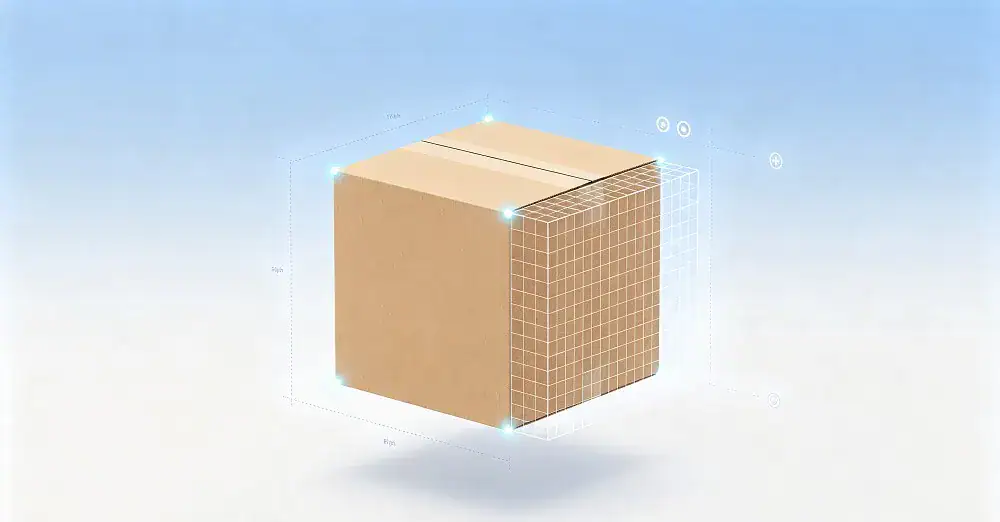
Strategy 1: Streamline Your Packaging to Shrink Every Inch of “Air”
For light cargo, rethinking your packaging is the quickest win. The goal is simple: “Fit the most product into the smallest protective package.”
-
Use Vacuum Compression for Fluffy Items: For apparel, bedding, plush toys, and similar items that trap a lot of air, vacuum-sealed bags are a game-changer. They can reduce volume by 30% to 50% almost instantly. A batch of T-shirts that originally takes up 1.2 CBM might only need 0.6 CBM after compression. That’s a 50% cut in your chargeable volume.
-
Try Nested Packaging to Kill Empty Space: For products that come in sets, like cookware or toolkits, or items with different sizes, use “nesting”—place smaller items inside larger hollow spaces, or stack bowls and containers neatly. Combined with custom-fit padding, this can easily eliminate 30% or more of wasted internal space.
-
Choose Lightweight, Slimmer Materials: Whenever it’s safe to do so, switch to corrugated boxes that are just as strong but made from thinner material. Replace bulky solid foam with air pillows or thin foam sheets. These small adjustments can sometimes shrink your outer box dimensions and, for heavy cargo, might even shave off a bit of actual weight.

Strategy 2: Master the Art of Container Packing—Mix to Balance Density
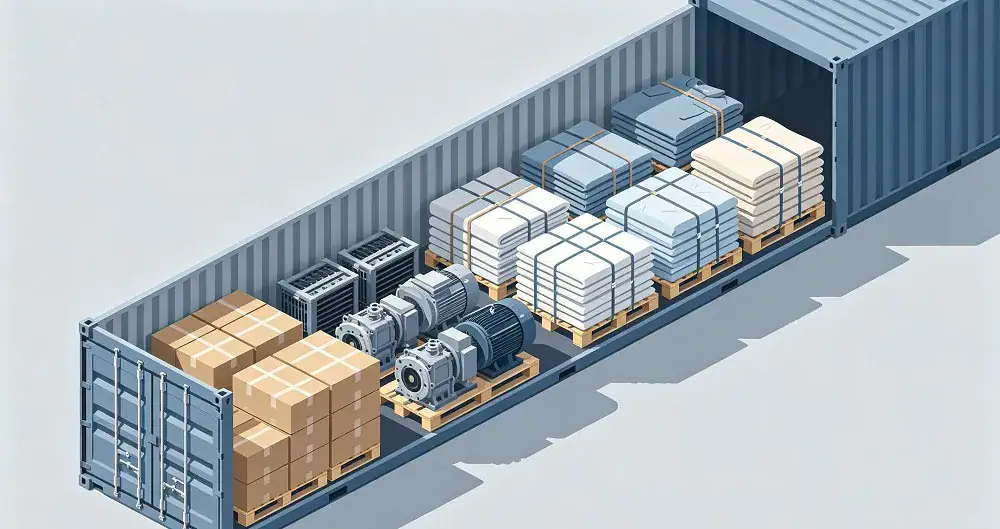
If you ship a variety of products, or if you can coordinate with other sellers, mixing “heavy” and “light” cargo together is a smart way to achieve a better overall density and improve cost efficiency.
An entire LCL shipment’s chargeable weight is determined by comparing the total actual weight against the total volumetric weight. So, if you combine bulky, light items with dense, heavy ones, the shipment’s average density gets closer to the 1 CBM : 1000 kg standard. This helps you avoid being penalized by the “whichever is greater” rule on either extreme.
For instance, consider sending 0.6 tons of heavy goods together with a light shipment that takes up exactly 0.5 CBM. The total volume is 1 CBM, making the total volumetric weight 1 ton. The actual combined weight is 1.1 tons. In this case, the chargeable weight is 1.1 tons. Compared to shipping them separately (where the light one might be charged at 1 ton even if it weighs less), the combined cost is much fairer and closer to the real weight.
Also, keep in mind that some trade lanes have a minimum chargeable weight (like 1 CBM or 1 ton). If your shipment often falls below this, consider consolidating multiple small orders to reach that threshold and improve your cost-per-unit.
Strategy 3: Accurate Data Speaks Volumes—Collaborate Efficiently with Your Freight Forwarder
Providing precise cargo data is the foundation for avoiding surprises and controlling costs. Before your goods arrive at the warehouse, make sure to:
-
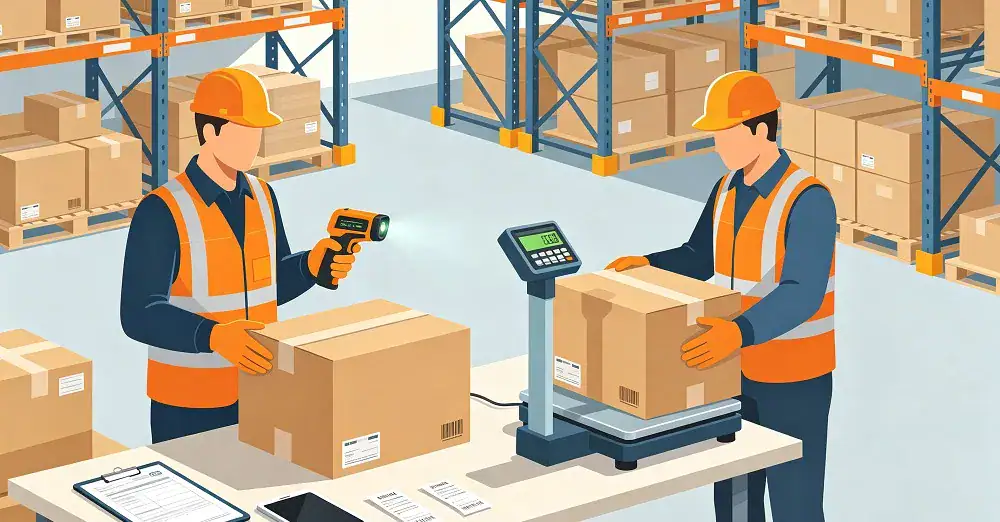
Measure and Record Accurately: Use a laser distance measurer and an accurate scale to measure the outer length, width, and height (in cm) and weight of every single carton. Write it all down carefully.
-
Calculate and Confirm in Advance: Based on your measurements, calculate the total CBM and total volumetric weight. Proactively share these numbers with your freight forwarder to confirm the chargeable weight. This way, you’ll have a clear estimate of your freight cost before it’s finalized.
-
Leave a Small Safety Margin: Remember, cartons need a little breathing room in the container to prevent damage from friction or crushing. It’s wise to add a 5% to 10% buffer to your total volume calculation. This prevents a tiny, unexpected increase in real-world volume from pushing you into a higher cost bracket.
A clean, detailed, and accurate cargo manifest shows you’re a professional and makes it much easier for your forwarder to plan the best packing solution for you.
Watch Out for These Hidden Traps in LCL Shipping
Besides optimization, staying clear of common billing pitfalls is just as important.
-
Trap 1: Different Conversion Factors: While 1 CBM = 1000 kg is the standard for ocean LCL, some specific trade routes or services might use a different factor (e.g., 1 CBM = 800 kg or 1200 kg). Always get the conversion factor in writing from your forwarder before you book a shipment.
-
Trap 2: The Overlooked “Minimum Charge”: Many services have a minimum charge, meaning you’ll be billed for at least 1 CBM or 1 ton even if your cargo is smaller. If your typical shipment is 0.3 to 0.8 CBM, you’re effectively paying a higher unit rate. Grouping several smaller orders into one larger one (say, over 1 CBM) can be a more economical approach.
-
Trap 3: Unclear Allocation Rules: LCL shipments come with fixed costs like customs clearance fees and documentation charges. How these are split among different shippers varies. To avoid confusion, choose a forwarder who provides a clear, itemized quote and a detailed breakdown of costs. Transparency here is key.
Choosing the Right Partner for a Smoother LCL Experience
Learning these tricks puts you in the driver’s seat for your LCL shipments. And having a professional, transparent, and trustworthy logistics partner makes the entire process much less stressful.
At AMZ Shipper, we understand the importance of cost control and clear communication for cross-border sellers. We operate consolidation warehouses in Shenzhen, Yiwu, Guangzhou, and Qingdao, right in the heart of China’s manufacturing hubs. For our LCL service, we’ve set internal benchmarks—for example, we aim to complete the consolidation and vessel loading for major US West and East Coast routes within five business days of cargo arrival, reducing your waiting time. Our support team, available across China and US time zones, strives to respond to your inquiries within four hours.
When it comes to pricing, we believe in offering transparent, line-by-line quotes. You’ll always know what you’re paying for and why. Thanks to our direct contracts with various shipping lines and our WCA (World Cargo Alliance) global network, we can secure reliable space for your cargo and ensure dependable service at the destination.
LCL shipping is a game of smart calculations and clever combining. When you refine your packaging, balance your cargo density wisely, and work closely with a reliable logistics partner, you’ll truly master the art of saving money through “mixing” your shipments.


