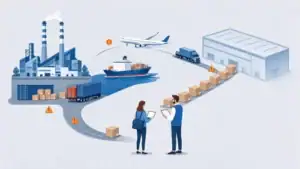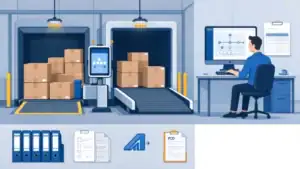
For many ecommerce sellers who are just starting out in cross‑border trade, finding a great product and securing a supplier often feels like the hard part. But then they hit the same wall – logistics. Ocean freight, air freight, customs declaration, import clearance, duties, warehousing… a pile of unfamiliar terms, and no idea where to begin.
That is exactly what international freight forwarding is designed to solve.
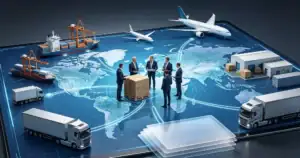
Simply put, freight forwarding is the service that moves your goods from point A to point B safely and efficiently. A freight forwarder does not own ships, planes, or trucks. Instead, they act like the “logistics commander” – coordinating and managing the entire transport process. For ecommerce sellers, freight forwarding turns a messy web of shipping tasks into a single point of contact. You do not need to talk to shipping lines, customs brokers, or trucking companies yourself – the forwarder handles it all.
What Is International Freight Forwarding?
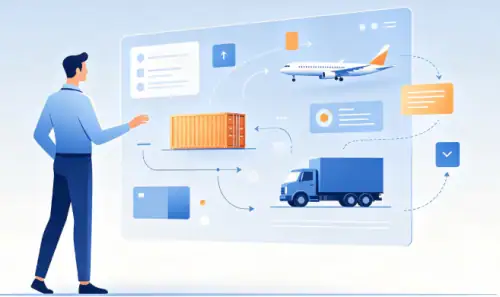
According to the classic definition from FIATA (the International Federation of Freight Forwarders Associations), a freight forwarder is the entity that facilitates international trade by ensuring goods move from origin to destination. The core of freight forwarding is coordination and management – not the actual movement of cargo.
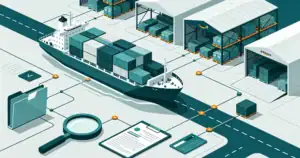
In plain language: freight forwarding turns a pile of disconnected logistics tasks into one smooth process. A freight forwarder typically takes care of:
-
Booking space with shipping lines or airlines
-
Preparing and reviewing all import/export documents (bills of lading, commercial invoices, packing lists, certificates of origin, etc.)
-
Arranging export customs declaration and import clearance at the destination
-
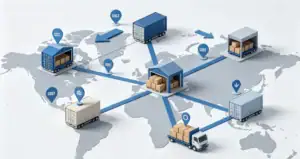
Coordinating multi‑leg transport connections (sea plus road, air plus road, etc.)
-
Providing warehousing, consolidation, and de‑consolidation services
-
Helping arrange cargo insurance
The core idea behind freight forwarding is: you do not need to become a logistics expert – you just need to find a forwarder you can trust.
Why Ecommerce Sellers Need International Freight Forwarding
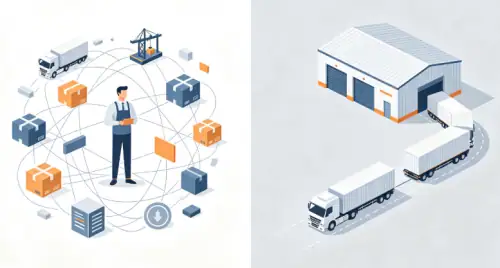
Many ecommerce sellers start out shipping small parcels via DHL or UPS, and it feels straightforward. But as your business grows – more orders, larger volumes, and moving to ocean freight – logistics quickly becomes far more complex.
Cross‑border shipping involves a range of specialised tasks that are way beyond most ecommerce sellers’ daily expertise:
-
Choosing and combining different transport modes (sea, air, road, intermodal)
-
Navigating complex export and import customs procedures
-
Complying with different countries’ trade regulations and requirements
-
Coordinating the handover between multiple carriers
-
Managing cargo insurance and risk
For Amazon FBA sellers, freight forwarding became even more important in 2026. From January 1, 2026, Amazon fully ended its FBA prep and labelling service – all FBA shipments must now be labelled and packed before they reach the warehouse. A professional forwarder can inspect, label, and pack the goods before they leave China – which is your last chance to catch and fix problems before they hit Amazon.
| Comparison | Ecommerce Seller Handling It Themselves | Using International Freight Forwarding |
|---|---|---|
| Number of contacts | Shipping line + customs broker + trucker + … (at least 3‑5) | Just one forwarder |
| Compliance risk | High (unfamiliar with different countries’ rules) | Low (handled by professionals) |
| Transport mode selection | You research and compare yourself | The forwarder recommends the best option based on your cargo and budget |
| Problem resolution | You coordinate across multiple parties | The forwarder follows through and handles everything |
For ecommerce sellers, the value of freight forwarding is simple: it packages all those complex steps into one service, with one person to talk to.
Freight Forwarding vs. Freight Broker – What Is the Difference?
Many people use “freight forwarder” and “freight broker” interchangeably, but in the freight forwarding industry, they play very different roles.
A freight broker acts as a middleman between you and the carrier – they help you find a suitable carrier, but they do not physically handle your cargo and do not take responsibility for it. Brokers are mostly used in domestic trucking scenarios – they are the “matchmaker” type.
A freight forwarder, on the other hand, is the “commander” of the whole logistics process. They not only arrange transport but also handle warehousing, packing, customs clearance, insurance, documentation, and more. A forwarder actually touches and takes custody of your goods, and they bear responsibility for the cargo while it is in transit.
Here is a quick comparison:
| Dimension | Freight Broker | Freight Forwarder |
|---|---|---|
| Role | Middleman – connects you to a carrier | Commander – manages the entire process |
| Handles cargo? | No | Yes – physically handles and takes responsibility |
| Scope | Mostly domestic transport matching | Full international logistics (warehousing, clearance, insurance, etc.) |
| Liability | Does not take cargo liability | Takes liability while cargo is in their care |
For ecommerce sellers involved in cross‑border trade, freight forwarding is the service you actually need – not freight brokering.
What Does International Freight Forwarding Include?
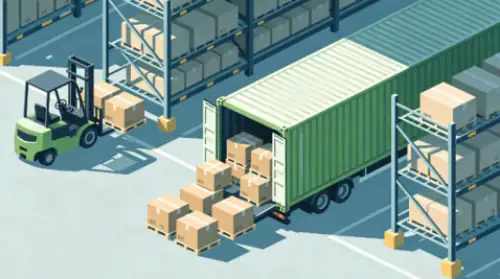
A full‑scope freight forwarding service goes far beyond just “moving goods from A to B”. Here are the core services forwarders provide to ecommerce sellers:
-
International transport arrangement – choosing sea, air, road, or intermodal options based on cargo type, urgency, and budget
-
Customs clearance – preparing all import/export documents (bills of lading, invoices, packing lists, certificates of origin, etc.) and ensuring smooth clearance
-
Consolidation and de‑consolidation – combining small shipments from multiple suppliers into one container (LCL) to save freight costs
-
Warehousing and distribution – providing temporary storage, handling, and final delivery services
-
Cargo insurance – helping ecommerce sellers arrange insurance so they can recover losses if goods are damaged in transit
-
FBA prep services (for Amazon sellers) – applying FNSKU labels, checking packaging compliance, palletising, and more
How Does International Freight Forwarding Work?
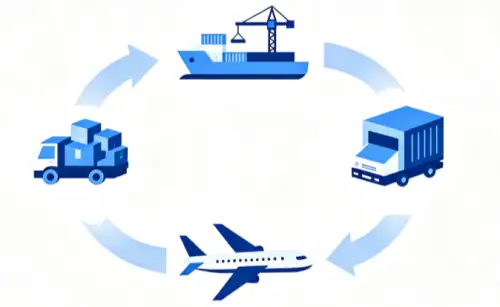
The freight forwarding process typically follows five core stages:
Step 1: Quotation and booking – the ecommerce seller provides cargo details (product name, weight, volume, destination), the forwarder suggests a transport plan and gives a quote, and then books space with the shipping line or airline once confirmed.
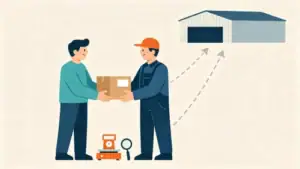
Step 2: Pick‑up and cargo preparation – the forwarder arranges to collect the goods from the factory or warehouse, checks that packing and labelling meet requirements, and prepares the export customs documents.
Step 3: International transport – the goods move via sea, air, or other modes, with the forwarder tracking the shipment and providing status updates.
Step 4: Destination customs clearance – when the goods arrive at the destination port, the forwarder arranges import clearance and handles duty payment (where applicable).
Step 5: Final delivery – after clearance, the forwarder arranges delivery to the final destination, such as an FBA warehouse or the ecommerce seller’s own overseas storage.
How Ecommerce Sellers Can Choose the Right International Freight Forwarding Partner
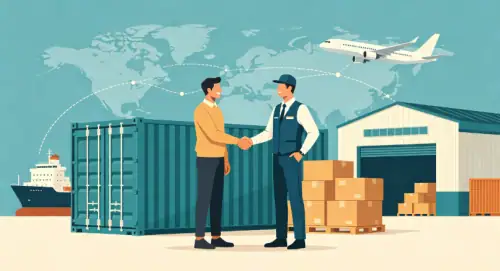
Choosing the right forwarder is just as important as choosing the right product. Here are some key factors to evaluate:
-
Experience – look for a forwarder with experience serving ecommerce clients and familiarity with your target market (e.g., the US or Europe)
-
Service scope – do they offer end‑to‑end service (pick‑up → transport → clearance → delivery), or only cover certain legs?
-
FBA experience (if you are an Amazon seller) – are they familiar with Amazon’s labelling rules, carton size limits, and FBA warehouse appointment processes?
-
Transparency – do they provide real‑time tracking and a clear breakdown of costs without hidden fees?
-
Responsiveness – can they solve problems quickly when issues arise?
-
Avoid price as your only decision factor – ecommerce sellers should compare multiple sources, check the forwarder’s reputation and compliance record, and look beyond the cheapest quote.
For ecommerce sellers, freight forwarding is not about picking the cheapest option – it is about picking the right option. A reliable forwarder makes your life much easier; a poor one can hurt your sales rhythm and even your store ratings.
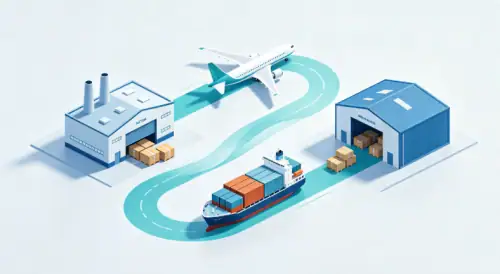
As a logistics provider focused on cross‑border ecommerce, AMZ Shipper offers end‑to‑end international freight forwarding services for ecommerce sellers – from Chinese factories to overseas FBA warehouses, covering transport mode selection, export customs, destination clearance, and final delivery. We help sellers leave the complex logistics to the professionals.
ABout AMZ Shipper
AMZ Shipper has several years of experience for international logistics Freight Forwarding service. Our service is for importer and exporter, foreign freight forwarders, local and abroad business. Export of 1500 of 40HQ per year for FBA Amazon shipping, 15-30tons of air shipments per month.
Member of WCA. Our company is a professional Amazon freight forwarder that specializes in providing comprehensive and efficient services to customers.