For Amazon FBA sellers, every little detail in the logistics chain matters—it directly affects how fast your inventory gets checked in, your account health, and your bottom line. Many sellers keep running into the same issues over and over: messed-up shipment plans, sloppy labeling, missed delivery appointments, poor inventory management, and disputes over missing units. These errors can lead to check-in delays, unexpected charges, or even outright refusal of service. Here’s a rundown of the five most common FBA logistics pitfalls, based on real-world experience, along with practical fixes that actually work.

Mistake #1: Mismatch Between Shipment Plan and Actual Shipment Details
What usually goes wrong
A lot of sellers ship quantities that don’t match what they declared in the plan—sometimes off by more than 5%. Or they mess up the SKU details inside the boxes, leaving something out or entering it wrong. Amazon’s receiving system checks everything against your plan, and if something doesn’t line up, your shipment gets flagged for “receiving issues” or pushed into manual review. Another common headache: when you have multiple SKUs mixed in one box but didn’t clearly spell out what’s inside each carton, the warehouse staff can’t sort things quickly.
What happens as a result
Your shipment sits there waiting, you get hit with extra service fees, and your inventory takes forever to go live. In serious cases, your shipment performance metrics could take a hit.
How to fix it
-
Go through every box carefully in the Send to Amazon workflow—double-check that the quantities and SKUs match your plan exactly. Setting up a simple checklist procedure before you ship can catch most of these errors.
-
If you’re mixing SKUs in a single box, use Amazon’s reusable case-pack templates to pre-record what goes where, so you’re not typing everything out manually every time.
-
It’s smart to build in a 3-5% buffer for quantity variations based on past experience, but make sure your total shipped amount still falls within what the plan allows.
Mistake #2: Non-Compliant Labels and Packaging
What usually goes wrong
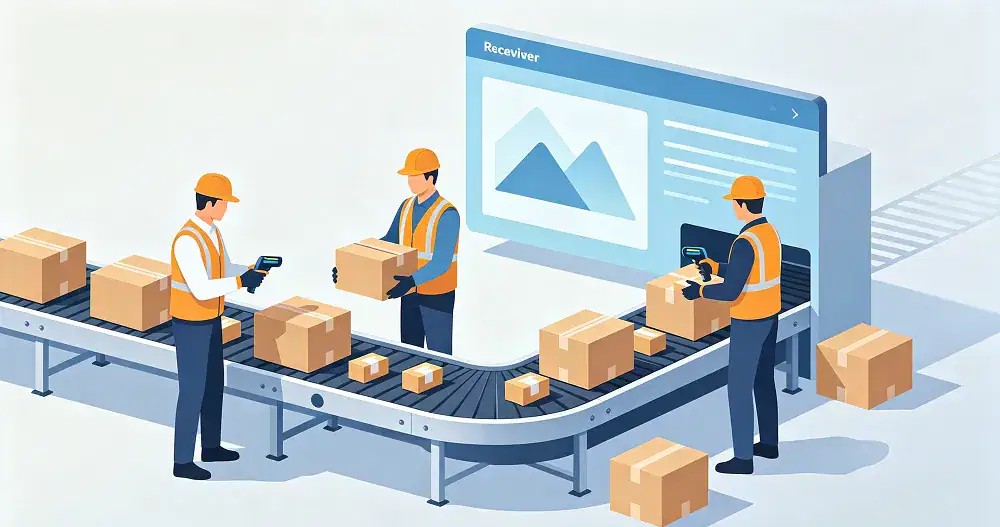
This is probably the number one reason shipments get held up. You see all sorts of things: FNSKU labels that are missing, blurry, or covered by shiny tape that makes them unscannable; labels stuck in weird spots like corners or over seams; old barcodes left uncovered on the outer carton; or packaging that doesn’t meet Amazon’s crush-resistance or tamper-evident standards. According to Amazon’s 2023 data, something like 17% of inbound delays trace back to labeling mistakes.
What happens as a result
Your items get marked as “Unfulfillable,” Amazon may charge you an extra fee (typically $0.50 to $2 per unit) for their prep services, and in extreme cases, the whole shipment gets sent back to you.
How to fix it
-
Always print labels using thermal printers or laser printers with at least 300 DPI resolution—on non-reflective, adhesive-backed paper. Make sure the barcode is crisp and scannable.
-
Stick the FNSKU label on a flat surface of the package, at least 1.25 cm from any edge, and cover up any existing UPC/EAN barcode underneath. The carton label should go on the top right corner of the side panel, about 5 cm from both the top and right edges.
-
Use a black marker or opaque tape to completely cover any old labels or barcodes on the outside box—otherwise, the scanners might grab the wrong one.
| Label Type | Correct Placement | Common Mistakes |
|---|---|---|
| FNSKU (product label) | Flat surface, ≥1.25cm from edges | Stuck on corners, covered by glossy tape, blurry print |
| Carton label (Shipment ID) | Top right corner of side panel, 5cm from edges | Placed over seams, left next to old barcodes |
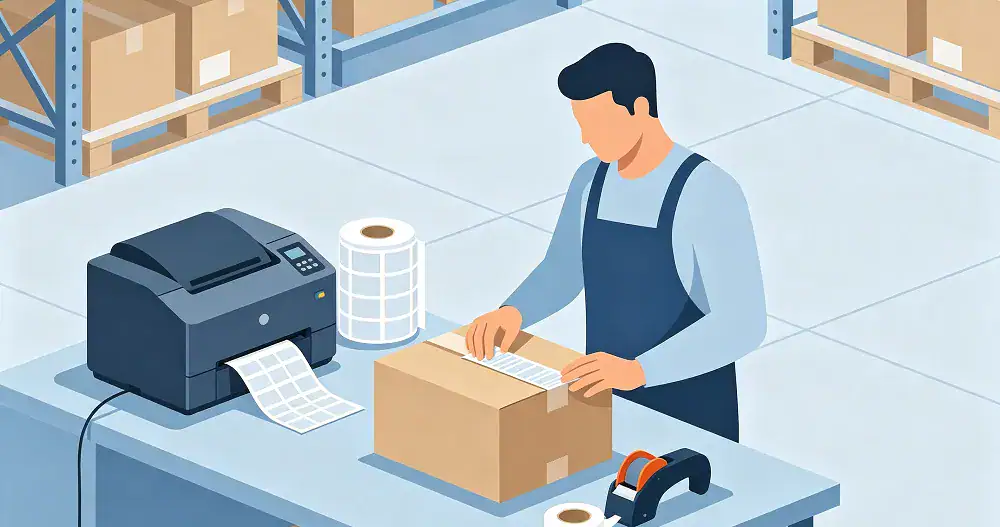
Worker applies labels correctly at packaging station.
Mistake #3: Underestimating Transit Times and the Delivery Appointment Process
What usually goes wrong
Sellers often have unrealistic expectations about how long ocean or rail freight actually takes—they forget to factor in customs delays, weather issues, or container rollovers. Meanwhile, many aren’t familiar with how Less-Than-Truckload (LTL) or Full-Truckload (FTL) deliveries work: the carrier needs to book a timeslot in Amazon’s Carrier Central system ahead of time. If they don’t, the truck shows up at the warehouse and gets turned away.
What happens as a result
You miss the receiving deadline, and your shipment gets automatically closed (for US shipments, international ones that don’t arrive within 75 days get canceled). Your stock runs out, you lose sales momentum, or you end up paying extra to have your freight rerouted or stored elsewhere.
How to fix it
-
Work with a freight forwarder who actually knows how FBA inbound works—they can give you much more realistic ETAs and help you build in a 7- to 14-day buffer in your ordering cycle.
-
If you’re shipping by LTL or FTL, confirm that your carrier has an active Carrier Central account and has made a delivery appointment at least 48 to 72 hours in advance. The booking should include: FBA shipment ID, number of cartons, pallet count, destination warehouse code, and all that.
-
For urgent restocks, express couriers like UPS or DHL don’t require appointments, but they’re pricier—worth it if you’re about to run out.

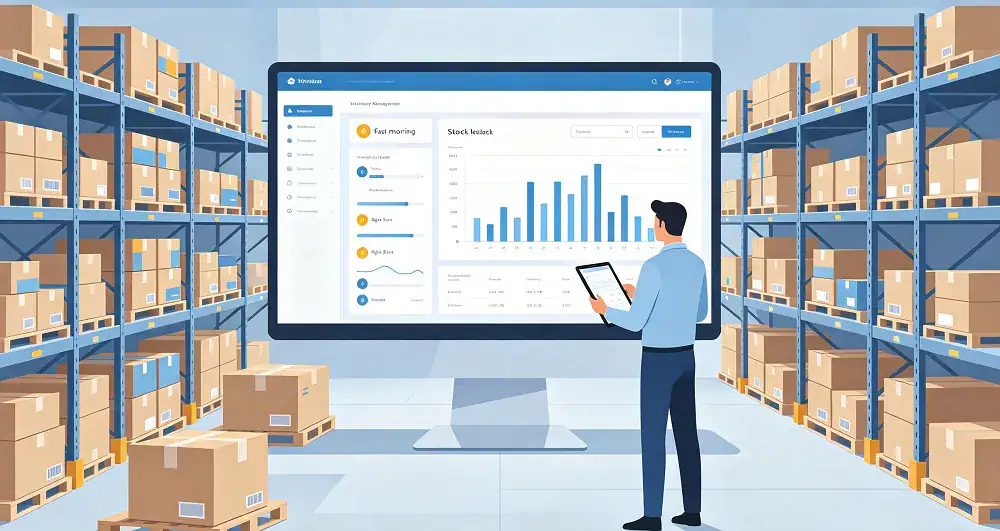
Mistake #4: Poor Inventory Management—Running Out or Overstocking
What usually goes wrong
Some sellers don’t have a solid restock plan. They order too late and go out of stock, tanking their rankings. Or they order way too much, leaving cash tied up in slow-moving goods that eat away at storage fees. Data suggests over 40% of FBA sellers lose money at some point because of stockouts or excess inventory. Units that sit for more than 180 days cost you more each month, and once they hit 365 days, you’re hit with an extra long-term storage fee.
What happens as a result
If your listing is out of stock for more than a week, your search ranking can drop by as much as 50%, and your PPC momentum disappears. On the flip side, excess inventory costs you $6.90 per cubic foot per month in storage fees, drags down your Inventory Performance Index (IPI) score, and can even reduce your available storage capacity.
How to fix it
-
Use a simple formula to figure out when and how much to reorder: Reorder Quantity = (Average Daily Sales × Lead Time in Days) + Safety Stock – Units in Transit – Units in FBA. A good rule of thumb: set your safety stock to about 7 days’ worth of sales.
-
If you’re shipping from China, ocean freight takes around 45 to 60 days; air freight is faster but costs more. Combining both—using air for urgent restocks and ocean for bulk—gives you flexibility.
-
Keep an eye on your inventory age report. For SKUs over 90 days old, consider running a deal, a coupon, or bundling them with popular items to clear space.
Mistake #5: Ignoring Shipment Discrepancies and Not Preparing for Claims
What usually goes wrong
Sometimes, Amazon’s receiving count doesn’t match what you actually sent. This could be due to mislabeled items that didn’t scan properly, errors on Amazon’s side during check-in, or loss in transit. A lot of sellers don’t keep good records, so when they file a dispute with Amazon, they don’t have the evidence to back it up and get rejected.
What happens as a result
Your inventory just “disappears,” costing you money. The dispute process is tedious, and if you can’t provide solid proof—like photos of your packed cartons, purchase invoices, or delivery receipts—you’ve got almost no shot at getting reimbursed.
How to fix it
-
Document everything during packing: take photos of each carton before sealing—show how the units are arranged, close-ups of FNSKU labels, and the sealed carton itself. These photos are your best ammunition if you need to open a case later.
-
Keep all your purchase invoices, packing lists, and Proof of Delivery (POD) from the carrier. When you open a case with Seller Support, include all of these at once: state your shipment ID, affected SKUs, quantity sent, and quantity received, and ask them to investigate.
-
If Amazon finds the error was on their end, you can request reimbursement or inventory adjustment.
| Common Mistake | Major Consequence | Key Fix |
|---|---|---|
| Plan vs. actual quantity mismatch | Shipment held, extra fees | Double-check each box, use templates, build in small buffer |
| Labeling/packaging violations | Rejection, prep fees charged | Use thermal printing, place labels properly, cover old barcodes |
| Underestimating transit & appointment issues | Stockout, shipment closed | Use experienced forwarders, book appointments 48h early |
| Unbalanced inventory | Ranking drop or high storage costs | Apply restock formula, clear aging stock over 90 days |
| Discrepancy without evidence | Claim denied, inventory loss | Take packing photos, keep POD and invoices |
FBA logistics is really a system—everything from the moment you create your shipment plan to labeling, transportation, inventory control, and handling discrepancies needs to be done right. For sellers, the key is having a solid pre-shipment check routine, partnering with logistics providers who know their stuff, and keeping proper documentation throughout the process. Get these basics down, and you’ll avoid most of the headaches that trip other sellers up.

ABout AMZ Shipper
AMZ Shipper has several years of experience for international logistics Freight Forwarding service. Our service is for importer and exporter, foreign freight forwarders, local and abroad business. Export of 1500 of 40HQ per year for FBA Amazon shipping, 15-30tons of air shipments per month.
Member of WCA. Our company is a professional Amazon freight forwarder that specializes in providing comprehensive and efficient services to customers.