If you’re new to Amazon and trying to figure out how to get your products to an Amazon FBA warehouse, there’s a common trap a lot of first‑timers fall into—they treat air freight as just “ocean freight but faster,” assuming the only difference is speed and price.
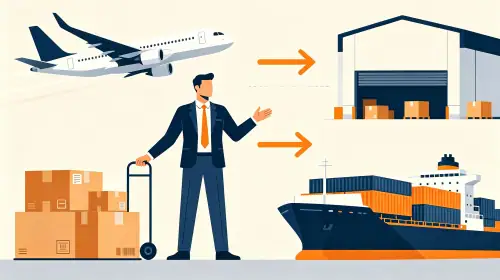
But the reality is, air freight and ocean freight run on completely different logic. The way they charge, the paperwork involved, the compliance rules, even the types of products that make sense for each—they’re worlds apart. If you don’t understand those differences before your first air shipment to Amazon FBA, you could end up overpaying, or worse, getting your cargo rejected at the door.
This isn’t a piece telling you whether to choose air or ocean. It’s here to help you figure out what air freight is actually good for, how it works, what it costs, what’s changed in 2026, and where the hidden traps are.
1. When Does It Actually Make Sense to Use Amazon FBA Air Freight?
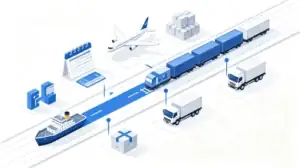
Air freight has one big advantage: speed. From China to an Amazon FBA warehouse in the US, door‑to‑door transit usually takes 7‑12 days. Ocean freight? That’s more like 25‑45 days.
But speed doesn’t automatically mean “better”—it comes at a cost. Air freight per kilo can be several times more expensive than ocean. So air freight to Amazon FBA really only makes sense in a few specific situations:
1. New product test runs
You want to see if a product sells without waiting over a month for the data. Air freight gets your inventory listed, your ads running, and your sales numbers coming in within 1‑2 weeks.
2. Emergency restocking (saving your best‑seller)
Your hot item is running out, and ocean freight won’t make it in time. Air freight is the only way to protect your ranking and conversion rate.
3. High‑value, lightweight products
If your product has a healthy margin and doesn’t weigh much, air freight costs stay manageable. A good rule of thumb: if air freight eats up more than 15‑20% of your selling price, it’s probably not worth it.
4. Seasonal items or promo events
Prime Day, Black Friday, Christmas—you can’t miss these windows. Air freight gets your stock there when it matters.
For new sellers, sending your very first shipment to Amazon FBA by air is actually pretty common. You don’t know yet if the product will take off, so you’re not ready to commit to a full container of inventory. Air freight lets you test the waters with a smaller batch.
2. Amazon FBA Air Freight vs. Ocean Freight – A Quick Comparison
| Metric | Ocean (LCL) | Air Freight |
|---|---|---|
| Door‑to‑door transit time | 25‑45 days | 7‑12 days |
| Typical cargo volume | 1 CBM and up (around 150‑200kg) | 45kg‑500kg |
| Best suited for | Bulk restocking, thin‑margin products | High‑value items, urgent restocks, product testing |
| How you’re charged | By volume (CBM) | By chargeable weight (actual weight vs. volumetric weight, whichever is higher) |
The choice isn’t about which is cheaper—it’s about your product value, your margin, and your restock timeline.
3. How Amazon FBA Air Freight Costs Are Calculated – New Sellers Must Understand “Volumetric Weight”
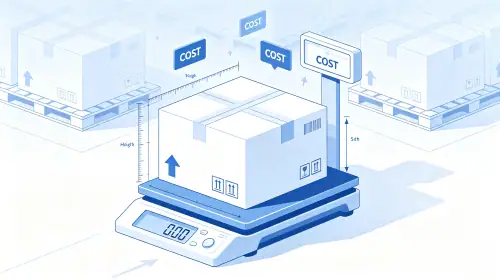
Air freight isn’t priced simply by “per kilo.” It’s based on chargeable weight, which is the greater of two numbers: the actual weight and the volumetric weight (also called dimensional weight).
Here’s the formula:
Length (cm) × Width (cm) × Height (cm) ÷ 6000 = Volumetric Weight (kg)
Say you have a carton that actually weighs 20kg, but the box measures 60×50×40cm. The volumetric weight is 60×50×40÷6000 = 20kg. Same as the actual weight—so you’re charged for 20kg.
But if the box is 80×60×50cm, the volumetric weight becomes 80×60×50÷6000 = 40kg. Even though the actual weight is still only 20kg, you’re paying freight on 40kg.
What does this mean for you? Light but bulky products—think inflatable toys, cushions, lamps—get very expensive to ship by air to Amazon FBA. Optimising your packaging and reducing box size is the single most effective way to cut your Amazon FBA air freight costs.
Also worth noting: 2026 industry rules now require chargeable weight to be rounded to the nearest 0.5kg—under 0.5kg rounds down, over rounds up. So even small packaging differences can shift your final cost noticeably.
4. 2026 Changes That Affect Amazon FBA Air Freight – 4 Things New Sellers Must Know
Several policy and regulatory updates took effect in 2026 that directly impact air shipments to Amazon FBA. Pay attention to these:
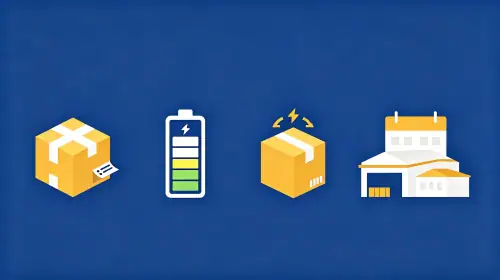
1. Amazon FBA prep and labeling service is gone
As of January 1, 2026, Amazon no longer offers FBA prep and labeling services for US sellers. You used to be able to send in unpackaged goods and have Amazon label them for you—not anymore. Every shipment to Amazon FBA must arrive with FNSKU labels already applied and packaging fully compliant. As of July 1, 2026, the same change took effect for European sites.
2. Mandatory lithium‑battery air shipping rules (effective January 1, 2026)
This is the biggest operational shift. Under new ICAO regulations, any package containing a lithium‑ion battery with a watt‑hour rating above 2.7Wh must have its state of charge (SOC) at 30% or below before air transport. Amazon has aligned its FBA requirements with this rule—you now need to declare battery SOC information for relevant ASINs in Seller Central under the Safety & Compliance section. Shipments without proper SOC declarations, or with batteries exceeding the charge limit, will be rejected by carriers and forced into ground transport instead.
3. New air freight size and weight limits
The 2026 global air transport rules now classify any single piece weighing 100kg or more, with any side longer than 2 meters, or with volume reaching 1 cubic meter, as an oversized item. Standard passenger airline cargo channels will generally not accept these anymore.
4. FBA delivery appointment and packaging restrictions tightened
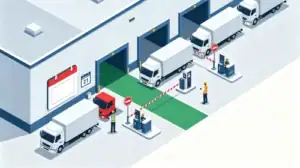
Amazon no longer allows third‑party brokers to book delivery appointments—only official, Amazon‑approved carriers can schedule FBA deliveries for air shipments. Once an appointment is confirmed, the truck must arrive within a 4‑hour window, or the slot is voided. Repeated rejections can lead to restrictions on future appointment bookings.
5. Amazon FBA Air Freight – The Complete Process from China to Warehouse
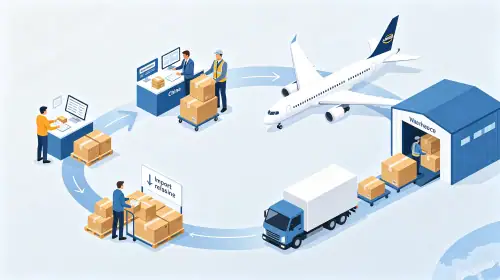
Here’s what actually happens when you ship an air freight consignment to Amazon FBA:
Step 1 – Pre‑shipment preparation
Log into Seller Central, go to Inventory → Shipments → Send to Amazon, and select the SKUs and quantities you’re shipping. Enter accurate carton dimensions and weights. The system will generate a unique SHIPMENT ID and assign a destination Amazon FBA warehouse. Make sure FNSKU labels are on each unit and FBA box labels are on every carton.
Step 2 – Booking and cargo handover
Contact your freight forwarder to book air cargo space—during peak seasons, book at least 7 days ahead to avoid being shut out. Deliver your goods to the forwarder’s warehouse or arrange a pick‑up.
Step 3 – Export customs clearance in China
Your forwarder prepares the commercial invoice, packing list, and customs declaration forms, and files the export paperwork with Chinese customs.
Step 4 – International transport
Your cargo gets loaded onto the aircraft and flies to the destination country—typically landing at major air hubs like Los Angeles, New York, or Chicago for US‑bound shipments.
Step 5 – Import customs clearance in the destination country
Upon arrival, a licensed customs broker or your forwarder handles import clearance. You’ll need to provide the Amazon PO number and the importer’s EIN/Tax ID. This step is where most delays happen, so make sure your documentation is complete and accurate.
Step 6 – Last‑mile delivery and warehouse appointment
Amazon FBA warehouses do not accept unscheduled deliveries. Your forwarder must book an appointment slot through Amazon’s Carrier Central system at least 48 hours in advance. Once confirmed, the cargo is trucked to the designated FBA warehouse.
Step 7 – FBA warehouse receiving
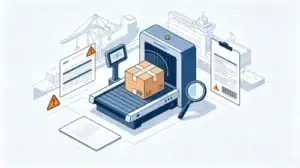
The Amazon warehouse scans the FBA box labels, verifies quantities against the shipment plan, and checks for compliance. Once accepted, inventory is marked as received. Typical receiving time is 1‑3 days, but can stretch to 5‑7 days during peak periods.
6. 6 Common Mistakes New Sellers Make with Amazon FBA Air Freight
1. Not understanding who the importer of record is
A lot of new sellers assume the forwarder handles everything. But legally, you—the seller—are the Importer of Record (IOR). That means customs liability rests on you, not the forwarder, not Amazon. The importer information on your customs paperwork must match the legal entity registered with your Amazon store.
2. Ignoring volumetric weight and getting surprised by the bill
You ask for “the rate per kilo,” but never check the dimensional weight. Then your carton turns out to be a bit bigger than expected, and your chargeable weight doubles.
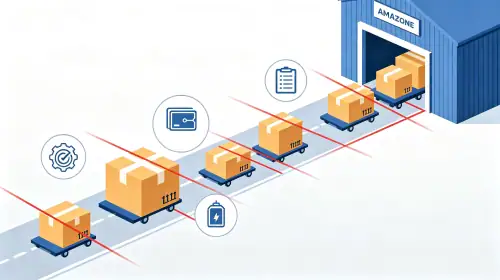
3. Label errors
FNSKU labels placed wrong, covered by tape so they can’t be scanned, or missing box labels altogether. Amazon FBA warehouses are unforgiving about this. Every carton needs two FBA box labels (at least 10×10cm), placed on adjacent sides to prevent wear. Unit‑level FNSKU labels must be at least 3.8×1.5cm. Also, every outer carton must clearly show “MADE IN CHINA.”
4. Skipping lithium‑battery compliance
The new SOC rule for lithium‑battery products is in full effect. If your ASIN is fulfilled through Amazon FBA and you haven’t provided the required compliance info, it won’t be eligible for air delivery—Amazon will default it to ground transport only. You’ll also need UN38.3 test reports and an aviation transport condition certificate.
5. Packaging that doesn’t meet air freight standards
The 2026 oversize and overweight restrictions are strict. A carton that’s too heavy or too large may not even be accepted for booking on passenger aircraft.
6. Not booking the FBA delivery appointment early enough
Amazon FBA requires at least 48 hours’ notice for delivery appointments. During peak season, book 3‑5 business days ahead—or even 7+ days. Show up late or without a confirmed slot, and your appointment is automatically cancelled.
7. How to Choose an Air Freight Partner for Amazon FBA
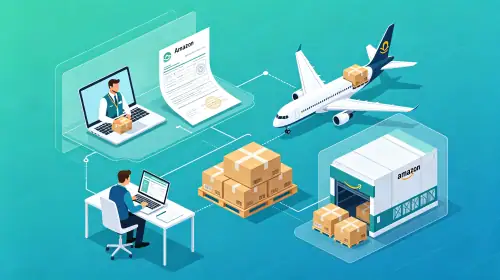
For new sellers, picking a reliable logistics partner matters way more than hunting for the cheapest rate. A good forwarder doesn’t just “move your boxes”—they help you avoid the pitfalls above.
When it comes to air freight to Amazon FBA, a solid partner should:
-
Explain how volumetric weight works and show you exactly how your chargeable weight is calculated
-
Flag 2026 regulatory updates (prep service ending, lithium‑battery SOC rules, size/weight limits)
-
Help you confirm whether your product certifications and customs documents are complete
-
Offer destination‑side customs clearance to get your goods through smoothly
Take AMZ Shipper, for example—a logistics provider focused on cross‑border solutions for Amazon sellers. They offer end‑to‑end air freight services from China to Amazon FBA warehouses, covering origin handling, export clearance, international transport, destination customs clearance, and last‑mile delivery. But whichever partner you go with, what really matters is finding a team that knows Amazon FBA inside out, explains costs transparently, and doesn’t just throw a “one‑price‑fits‑all” number at you.
Air freight is often a new seller’s first real test in the Amazon game. Get it right, and you’re off to a smooth start. Get it wrong, and your very first shipment to Amazon FBA could lose money before it even hits the shelf. Take the time to understand the rules—it’s more valuable than rushing to ship.
ABout AMZ Shipper
AMZ Shipper has several years of experience for international logistics Freight Forwarding service. Our service is for importer and exporter, foreign freight forwarders, local and abroad business. Export of 1500 of 40HQ per year for FBA Amazon shipping, 15-30 tons of air shipments per month.
Member of WCA. Our company is a professional Amazon freight forwarder that specializes in providing comprehensive and efficient services to customers.