If you’ve been running a cross‑border business over the past six months, you’ve probably felt the pressure from rising freight costs. It’s not just a one‑off spike on a single route or a seasonal blip—in 2026, global logistics costs are going through a broad, systematic upward shift. From ocean to air, from fuel surcharges to peak‑season add‑ons, nearly every link in the transport chain is getting more expensive.
And this time, it feels different.
1. Freight Costs Are Rising Across the Board – and It’s Not Just Seasonal
The scale and breadth of the freight cost increases in 2026 have caught many ecommerce sellers off guard.
Take ocean freight. On July 3, the Shanghai Containerized Freight Index (SCFI) closed at 3,326.87 points, marking ten consecutive weeks of gains. Compared to the year‑low of 1,875.26 on April 24, that’s a cumulative jump of 77.4%, with core long‑haul routes to the US and Europe nearly doubling. The spot rate for a 40‑foot container from Shanghai to Los Angeles has climbed 87% year‑to‑date, while the Shanghai‑New York route is up over 70%. On June 4, Drewry’s World Container Index showed a single‑week surge of 23% for a 40‑foot box globally.
Air freight is under pressure too. Global air cargo spot rates hit $3.40 per kilo in June, up 38% year‑on‑year. On China‑US and China‑Europe lanes, air freight rates have climbed well above RMB 35/kg from earlier this year, with some sellers reporting rates approaching RMB 50/kg—compared to what used to be below RMB 30/kg for larger volumes.
Express isn’t immune either. UPS’s fuel surcharge went from 32% in early March all the way to 48.5% by mid‑April. DHL’s fuel surcharge hit 47.75% in the week of April 20‑26, nearly double the 28.75% seen in February. All four major carriers—FedEx, UPS, DHL, and USPS—implemented a 5.9% general rate increase for 2026.
This isn’t just your typical seasonal swing. It’s a full‑on reset of freight costs across ocean, air, and parcel delivery.
2. Four Big Drivers Pushing Freight Costs Higher
Why are freight costs surging all at once in 2026? Several factors are working together:
Fuel costs are soaring
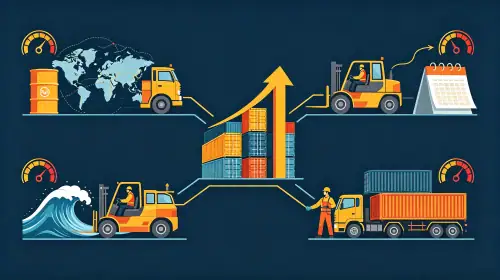
Fuel is the most fundamental input in logistics. For ocean shipping, bunker fuel accounts for 30‑40% of total operating costs. International marine fuel surcharges have risen over 25% year‑on‑year in 2026. The impact on air freight is even more direct—jet fuel makes up 40‑50% of air cargo costs, and prices have climbed 12‑15% sequentially. Bunker costs have jumped nearly 70% within the year. Every tick upward in fuel eventually lands on your freight cost per shipment.
Capacity is tightening, and routes are being rerouted
Disruptions in the Middle East have forced many vessels to take the longer route around the Cape of Good Hope, adding 7‑14 days to each voyage and effectively shrinking global capacity by 15‑23%. Global air cargo capacity has also dropped by roughly 18%. That supply crunch has pushed up the baseline for freight costs across the board.
Peak‑season surcharges are arriving earlier and hitting harder
In 2026, peak‑season surcharges came earlier and steeper than usual. Maersk started charging a peak‑season surcharge from June 17 on all Far East to US West Coast, East Coast, and Canada routes, at $2,000 per 40‑foot container. CMA CGM followed with a $4,000 per 40‑footer on Asia‑US/Canada lanes from July 10. Multiple carriers rolled out several rounds of rate hikes between June and July. Surcharges are no longer a Q4‑only affair—they’re becoming a year‑round norm.
Operating costs are rising everywhere
Port congestion, chassis shortages, and higher labor costs are making every mile from dock to warehouse more expensive. The risk of “rolling” – your booked container getting bumped off a vessel – has also gone up significantly. That means your restock schedule gets thrown off, and popular items could go out of stock while your cargo sits at the port.
3. How Higher Freight Costs Hit Your Ecommerce Business
Higher freight costs aren’t just numbers in a news headline—they flow directly into every corner of your ecommerce operations.

Margins get squeezed hard
Logistics is one of the biggest variable costs for online sellers. In 2026, logistics costs as a percentage of revenue for cross‑border ecommerce businesses have gone from 20‑25% to 30‑35%. For small and mid‑sized sellers, that spike has eaten straight into profitability. One apparel seller on Amazon reported that freight accounted for over 20% of their operating costs, and with current increases, their net margin dropped by 10%. Low‑margin sellers feel it the most—when ocean freight jumps, the logistics cost per unit can swallow up most of the profit.
Pricing decisions get painful
Raising prices could hurt conversion rates; not raising prices means shrinking margins. Some sellers are holding off on price hikes, hoping freight costs will come back down, but that window is closing fast. A Temu womenswear seller in Shenzhen saw shipping costs per garment rise by $1, so they bumped up the selling price by $2 to protect their margin—and immediately saw sales slip.
Inventory planning becomes a maze
Higher freight costs mean each replenishment is more expensive, but running out of stock is also costlier than ever. When to reorder, how much to order, whether to use air or sea—every decision now involves a new set of trade‑offs. One seller in Ningbo decided to ship only urgent orders during the peak rate period, waiting for rates to stabilise before resuming normal restocking. But that “wait and see” approach might not work in 2026—freight costs aren’t showing signs of cooling down; they might just keep climbing.
Cash flow takes a hit
Pricier freight means you need more working capital to move the same volume of inventory. If you’re selling on DDP or all‑in‑one delivered terms, you’ve usually quoted prices to customers upfront, and after rates go up, it’s hard to go back and ask for more—the extra cost just eats into your cash reserve.
Low‑value products are under threat
For a top weighing 300‑400 grams, air freight can now account for 60% of total cost. When freight cost as a share of product value keeps rising, the whole “high volume, thin margin” model starts to crack. China’s low‑cost ecommerce exports have already posted year‑on‑year declines for several consecutive months in 2026.
4. Smart Ways Ecommerce Sellers Can Cope with Rising Freight Costs
Faced with relentless freight cost increases, here are some practical steps you can take to keep them under control:
Re‑evaluate your shipping mix
The gap between ocean and air freight has widened, but their roles haven’t changed. Use ocean for big, non‑urgent restocks; keep air for emergency fill‑ins. The key is to recalculate the cost‑trade‑off under today’s rates. Smart sellers usually maintain base inventory with ocean and save air for crisis mode—combining both helps balance cost and safety when freight costs are high.
Optimise packaging to reduce dimensional weight
Air freight charges by dimensional weight—shrink your box size and you directly lower your chargeable weight and freight cost. This is one of the few things you can control without waiting for the market to change.
Plan ahead to avoid peak‑season surcharges
In 2026, peak‑season surcharges started earlier and last longer. If you can ship before they kick in, you can save a noticeable chunk. Industry insiders suggest that 2‑3 months before the peak season is the critical window to lock in rates.
Consider forward stocking in overseas warehouses
Send your inventory to a third‑party warehouse in the destination country ahead of time, then ship to FBA or directly to customers from there. It adds some storage cost upfront, but it helps you sidestep the peak‑season premium on international transport. Overseas warehousing is expected to overtake direct shipping as the dominant model in 2026 for the first time.
Work closer with your logistics partner
Find a partner that offers transparent pricing and flexible solutions. For instance, AMZ Shipper specialises in cross‑boundary logistics for Amazon sellers, helping optimise costs across transport mode selection, destination clearance, and last‑mile delivery. Whichever partner you choose, make sure they understand your business rhythm and cost sensitivities—not just move boxes from A to B.
5. What to Keep an Eye on in the Coming Months
Capacity additions ahead
2027 and 2028 are set to see a wave of new vessel deliveries, with projected capacity increases of 9.1% and 12.7% respectively. If that capacity materialises, ocean freight costs could gradually ease. But until then, rates are likely to stay elevated.
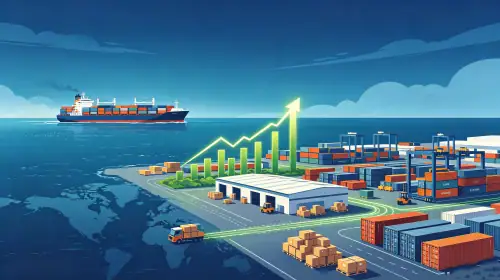
Peak‑season surcharges stacking up
The Q4 2026 peak‑season surcharges will be layered on top of an already‑high freight cost base. Ecommerce sellers need to factor that into their budget and restocking plans well in advance.
A structural shift is under way
Tariff adjustments and persistently high freight costs are pushing more sellers to move from direct‑to‑consumer shipping to overseas warehousing. That shift itself will reshape the freight cost structure—moving the cost centre from international transport to warehousing and local delivery.
Rising freight costs in 2026 aren’t a “nice‑to‑know” topic anymore—they’re a “must‑deal‑with” reality. From ocean to air to express, from fuel surcharges to peak‑season add‑ons, every link is getting pricier. For ecommerce sellers, understanding what makes up freight costs, planning your shipping strategy ahead, and optimising inventory turns are no longer optional extras—they’re survival skills.
6. ABout AMZ Shipper
AMZ Shipper has several years of experience for international logistics Freight Forwarding service. Our service is for importer and exporter, foreign freight forwarders, local and abroad business. Export of 1500 of 40HQ per year for FBA Amazon shipping, 15-30 tons of air shipments per month.
Member of WCA. Our company is a professional Amazon freight forwarder that specializes in providing comprehensive and efficient services to customers.