If you’re an Amazon seller looking to break into the UK market, shipping your goods from China to an Amazon FBA warehouse isn’t as simple as just calling a freight forwarder and waving goodbye to your cargo. Since Brexit, the UK has built its own customs framework, tax rules, and product standards that are completely separate from the EU—and they’re strict. Fast forward to 2026, and if you’re still relying on the old playbook, your shipment is way more likely to get held up at customs or turned away at the FBA door.
Shipping to Amazon FBA in the UK involves a whole chain of steps: getting your paperwork right, choosing the right shipping mode, handling customs clearance properly, and making sure your last‑mile delivery goes smoothly. Every link in that chain has its own compliance requirements. In this guide, we’ll walk through the entire process from factory floor to FBA shelf, so you can avoid the most common traps.
1. Four Things You Must Have in Place Before You Ship to UK Amazon FBA
Before your cargo even leaves the factory, there are four critical items you need to check off. Miss any of them, and your goods could be stuck at customs or rejected by Amazon FBA before they even get a chance.
UKCA certification
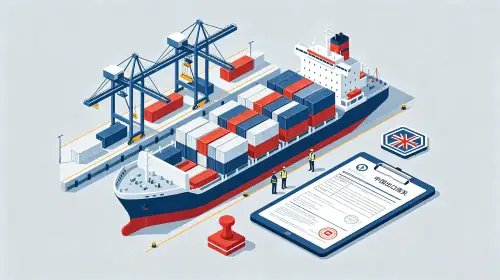
This is the first big hurdle for any shipment heading to UK Amazon FBA in 2026. As of this year, CE marks are no longer valid in Great Britain. Everything from electronics to toys to cosmetics now needs UKCA certification. According to a UK cross‑border e‑commerce industry report from January 2026, nearly 37% of Chinese sellers had their shipments detained at customs between June 2025 and January 2026 because they didn’t have UKCA in place. For electronics, you’ll also need RoHS test reports to go with it.
EORI number and UK VAT registration
Your EORI number is the key to clearing goods through UK customs. Every commercial shipment from China needs a valid GB‑starting EORI for customs clearance. You can’t get an IEN without an EORI, and you usually need to register for UK VAT before you can get an EORI. If you’re using Amazon FBA in the UK, you have to register for VAT—it’s not optional. The whole registration process takes about 4‑8 weeks, so start at least two months before your first shipment leaves China. Non‑UK sellers storing inventory in the UK (including FBA stock) are required to register for VAT from the very first sale—there’s no threshold to hide behind.
IEN (Import Entry Number)
Under the UK’s FHDDS (Flexible Handling of Data and Documentation for the UK Customs Declaration Service) compliance rules, every shipment entering an Amazon FBA fulfilment centre in the UK must have an IEN. This is a unique reference number—format “GB” followed by digits and letters—generated by HMRC after customs clearance. Each shipment has its own IEN; you can’t reuse them or make them up. HMRC cross‑checks these numbers electronically, and if you don’t provide them, Amazon will restrict your ability to create new shipment plans.
UK Responsible Person
Since January 6, 2026, any non‑UK goods entering Amazon FBA (or other UK storage facilities) must have a UK Responsible Person declared during the pre‑clearance stage. If you don’t have one, the whole container can be sent back. Chinese manufacturers can’t hold technical documentation themselves—you need to appoint a UK authorised representative or make sure your UK importer acts as the responsible party.
2. The End‑to‑End Journey: From China to UK Amazon FBA
Here’s what actually happens, step by step, when you ship a pallet or container from a Chinese factory to an Amazon FBA centre in the UK:
Step 1 – Pre‑shipment preparation
Confirm your products are UKCA compliant and you have a UK Responsible Person. Get your FNSKU labels ready. Make sure your box sizes and weights meet Amazon FBA requirements. Double‑check that your EORI and VAT registration are active.
Step 2 – Export clearance in China
Your freight forwarder handles the export customs paperwork, and your cargo leaves the Chinese port or airport.
Step 3 – Main transit
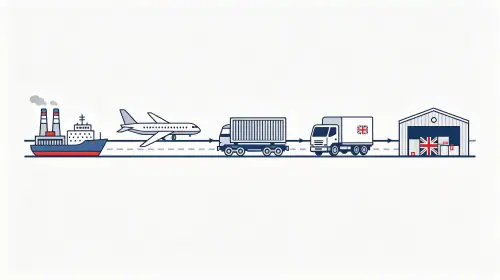
Your goods travel via sea, air, rail, truck (the China‑UK road option), or express courier, depending on which shipping method you chose.
Step 4 – UK import clearance
Once your shipment arrives in the UK, it goes through customs via the CDS (Customs Declaration Service). Key documents include the commercial invoice, packing list, bill of lading or air waybill, and customs declaration forms. Using PVA (Postponed VAT Accounting) is the smartest way to handle VAT here—more on that below.
Step 5 – Last‑mile delivery to Amazon FBA
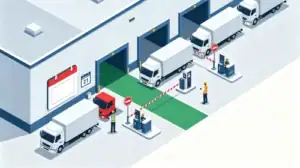
After customs gives the green light, your cargo gets trucked or couriered to the specific UK FBA fulfilment centre assigned by Amazon—like BHX4 in Birmingham, LTN7 in Luton, or MAN1 in Manchester. Note that all UK FBA warehouses require delivery appointments at least 72 hours in advance.
Step 6 – IEN upload
Once customs clearance is done, your carrier gives you the C88 document with the IEN. You then need to upload that number to Seller Central without delay.
3. Five Shipping Methods Compared – Transit Times and Best Uses
You have five main options for moving goods from China to UK Amazon FBA. Which one you pick depends on your restock cycle, cargo size, and cash flow:
| Shipping Method | Door‑to‑Door Transit Time | Best For |
|---|---|---|
| Ocean (LCL or FCL) | Fast boat 22‑25 days / Slow boat 30‑45 days | Bulk restocking, heavy/large items, cost priority |
| Air Freight | 5‑12 days | Emergency top‑ups, high‑value light goods, new product trials |
| Rail (China‑UK) | 18‑25 days | Mid‑range urgency, bulky but not time‑sensitive goods |
| China‑UK Road Truck | 15‑22 days | Faster than rail, about half the cost of air |
| Express Courier | 3‑7 days | Small samples, urgent small‑batch restocks |
Ocean freight is the go‑to for most Amazon FBA sellers—as long as you have 6‑8 weeks of inventory buffer to work with. Fast boats from Yantian usually take around 22‑25 days, great for regular replenishment. Slow boats take 30‑35 days, better for off‑season or low‑value, high‑volume products. Rail takes 18‑22 days and offers a middle ground between air and sea, with more consistent timing than slow boats. The China‑UK road truck option has been gaining traction recently—15‑22 days, at about half the price of air.
The classic Amazon FBA restocking strategy is simple: use ocean for your base inventory, and keep air for emergency saves. Using both in combination gives you cost control and stock safety at the same time.
4. UK Customs and VAT – Four Concepts Every Seller Must Understand
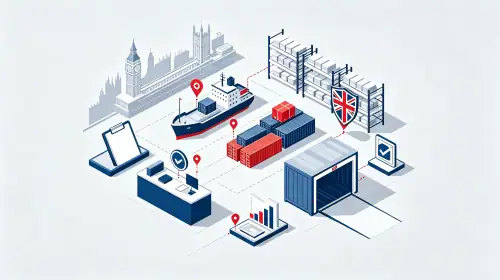
Customs clearance is where most China‑UK Amazon FBA shipments run into trouble. Here are four things you absolutely need to wrap your head around:
EORI number
You can’t clear goods into the UK without a valid UK EORI, and that EORI must match the legal entity on your VAT registration. Even if your VAT application is still pending, you can apply for an EORI separately—so don’t wait.
VAT (Value Added Tax)
The standard UK VAT rate is 20%. If you’re using Amazon FBA, you have to register for VAT and upload your VAT number to Seller Central before shipping. If you don’t, your shipment may be rejected. VAT returns are due quarterly—late filings can trigger HMRC penalties and even suspend your selling privileges.
PVA (Postponed VAT Accounting)
This is the most compliant and cash‑flow‑friendly way to handle VAT for UK FBA shipments in 2026. Here’s how it works: you use your own EORI and VAT number to clear the goods, but you don’t actually pay the 20% import VAT at the border. Instead, you defer it to your regular VAT return, where you can claim it back as input tax. You stay compliant, and you don’t tie up cash in VAT payments.
DDP vs DAP
Before you book your shipment, decide whether you’re shipping DDP (Delivered Duty Paid) or DAP (Delivered at Place). Under DDP, the seller or forwarder takes full responsibility for customs clearance and paying all duties and VAT. Under DAP, the buyer handles import clearance and tax payments. For most Chinese Amazon FBA sellers, DDP is the less stressful option—but make sure your quotation clearly spells out who’s acting as the importer of record and how duties and VAT are being handled.
5. Amazon FBA Packaging and Labeling – 2026 Updates
Amazon FBA has very specific packaging and labeling rules. And 2026 brought some important changes you need to know about:
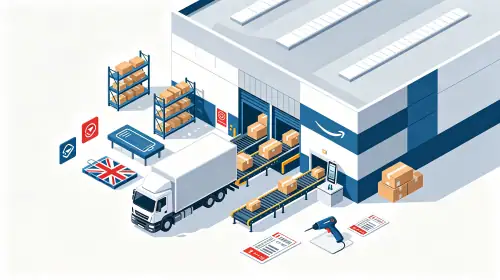
FNSKU labels
As of March 31, 2026, Amazon has fully discontinued sticker‑less commingled inventory for FBA. Every unit must have its own Amazon barcode (FNSKU) to be accepted. If you’re not brand‑registered, manufacturer barcodes are no longer allowed. Attach the label to a flat surface on the product, away from folds or edges where it could rub off.
Box size and weight limits
Amazon FBA requires that no side of an outer box exceed 63.5 cm, and the maximum weight is 23 kg. Any box over 15 kg must have “Team Lift” and “Heavy Package” warning labels—one on the top and one on each of the four sides, so five in total.
Carton labels
Each outer carton needs the Amazon FBA shipment barcode, the destination warehouse address, and your seller info. Use a 10×10 cm label and place it on two sides of the box to reduce the chance of wear during transit. Starting June 15, 2026, all newly generated FBA carton labels will use 2D Data Matrix barcodes instead of the old 1D format.
Poly bag requirements
If you use poly bags for individual units, Amazon FBA requires them to be at least 1.5 mil (about 0.0254 mm) thick.
6. Six Common Pitfalls That Trip Up UK Amazon FBA Shipments
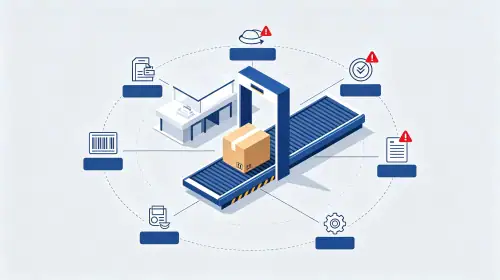
Missing UKCA certification
This is the number‑one compliance mistake among Chinese sellers in 2026—nearly 37% have had shipments held because of it. Electronics, toys, cosmetics—get your UKCA sorted well in advance.
Failing to upload IEN
Amazon UK requires every FBA inbound shipment to have an IEN on file. If you don’t upload it, you’ll lose the ability to create new shipment plans. And remember: you need an EORI to get an IEN, so that whole chain has to be working before you ship.
Labeling errors
FNSKU labels that are too small, stuck in the wrong spot, covered with tape, or smudged—Amazon FBA warehouses are picky about this stuff. Non‑compliant labels can get your shipment returned.
Consignee name doesn’t match the store entity
Since 2026, Amazon has been linking Seller Central data with UK customs systems in real time. If the VAT number on your customs entry doesn’t match the legal entity registered on your Amazon store, your shipment gets held at the port, and clearance can take at least 15 extra days.
Not booking delivery appointments early enough
All UK Amazon FBA warehouses require appointments at least 72 hours in advance. Once you submit an appointment, you can’t change it—and if you cancel, you can’t book another one for the same warehouse for seven days.
Using someone else’s VAT number for clearance
UK customs is cracking down hard on “low declarations” and reverse audits in 2026. If you use a forwarder’s shared VAT number and that number gets flagged, every shipment linked to it could be held. Plus, Amazon now checks that the importer of record matches your store’s legal entity—using a third‑party tax number can easily trigger a second review of your account.
Shipping from China to UK Amazon FBA isn’t just about moving boxes—it’s about moving them through a gauntlet of rules and regulations. UKCA, EORI, VAT, IEN, PVA, FNSKU—every letter matters. And 2026 has made the compliance bar higher than ever.
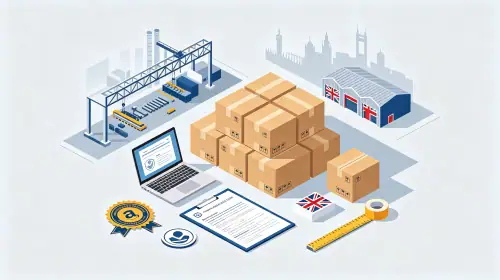
Knowing these rules is step one. Actually getting your goods into a UK FBA warehouse without drama requires execution at every stage—from pre‑shipment prep to transit choice to customs strategy to appointment booking. A logistics partner who knows UK FBA inside out can save you from a lot of headaches. For instance, AMZ Shipper specialises in cross‑border first‑mile solutions for Amazon sellers, offering end‑to‑end services from China to UK FBA centres, including customs clearance, PVA deferment, and final‑mile delivery. But whoever you choose, make sure they can clear your goods using your own EORI and VAT numbers—that’s the baseline for UK FBA compliance in 2026.
ABout AMZ Shipper
AMZ Shipper has several years of experience for international logistics Freight Forwarding service. Our service is for importer and exporter, foreign freight forwarders, local and abroad business. Export of 1500 of 40HQ per year for FBA Amazon shipping, 15-30 tons of air shipments per month.
Member of WCA. Our company is a professional Amazon freight forwarder that specializes in providing comprehensive and efficient services to customers.