
In the early days of selling on Amazon, picking the right product and running good ads was often enough to make money. Today, the same playbook delivers much thinner margins. Products can be copied, ad creatives can be imitated, and price wars can break out at any moment. So what is left that others cannot simply replicate?
The answer is the supply chain. On Amazon, the last real moat is not your product and not your advertising – it is supply chain efficiency. At the same price point, the seller who can move goods to Amazon warehouses faster, more reliably, and at lower cost is the one who survives longer.
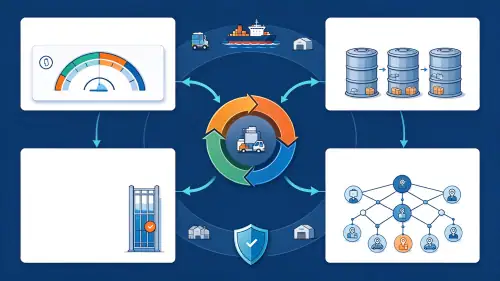
This article makes the case across four dimensions – cost, inventory, compliance, and scalability – for why efficient supply chain management is the final competitive barrier for Amazon sellers.
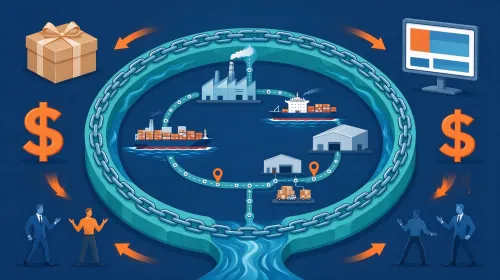
Why Product and Advertising Advantages Are No Longer Moats for Amazon Sellers
Product advantages are shrinking. Once a bestseller appears, copycats and followers move in faster than ever. Product research tools and supply chain information are more transparent, and the first‑mover window is getting shorter.
Advertising advantages are being diluted. Ad performance increasingly depends on platform algorithms and budget scale, and smaller sellers struggle to sustain an edge.
Price wars compress margins. When products become commoditised, price wars become the norm – and a price war is really a contest of supply chain efficiency. Only those who can protect their margins at the same selling price are in a position to keep fighting.
On Amazon, products and advertising can be copied. A stable, efficient, low‑cost supply chain, however, takes time and professional capability to build – and it is very hard to replicate in the short term.
Layer One of the Amazon Supply Chain Moat: Cost Efficiency
Logistics costs are one of the largest controllable costs for Amazon sellers. With the same product and the same selling price, sellers with higher supply chain efficiency simply have more room to profit.
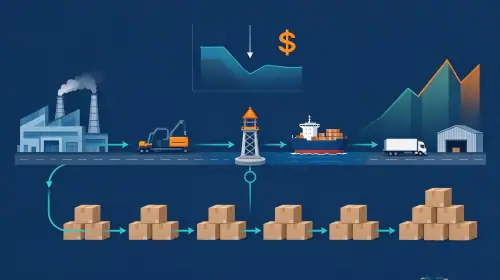
Cost advantages come from structure, not from squeezing a single quote. It is not about finding the cheapest forwarder. It is about optimising total landed cost through a combination of transport modes (ocean freight as the base plus air freight for emergencies), the right choice between LCL and FCL, and shipment consolidation. LCL suits smaller, more flexible replenishments, while FCL offers a lower unit cost when volume is sufficient – the break‑even point is typically around 15 to 20 cubic metres.
Cost predictability is itself an advantage. Sellers whose logistics costs are unpredictable are forced into reactive pricing and promotion decisions. Sellers with predictable costs can plan for the long term with confidence. The DDP (Delivered Duty Paid) model bundles duties, clearance, and final delivery into one calculable landed cost, giving sellers a solid basis for pricing.
For Amazon sellers shipping from China, choosing a logistics partner with stable routes and guaranteed space is the foundation for building a cost advantage.
Layer Two of the Amazon Supply Chain Moat: Inventory Reliability
Stock‑outs are one of the most expensive mistakes an Amazon seller can make. Rankings drop, the Buy Box is lost, and ad conversions fall to zero – the hidden costs of a stock‑out far exceed the surface loss.
Inventory reliability depends on the stability of your replenishment rhythm. Behind that lies the stability of transit times, the certainty of customs clearance, and the responsiveness of your logistics partner. A channel with highly variable transit times forces sellers to hold very high safety stock – which ties up capital and drives up storage fees.
An efficient supply chain lets sellers carry less stock without running out. By using more precise replenishment cycles and more stable transit times, sellers can lower safety stock levels and free up cash flow. This matters especially for growing Amazon sellers – cash flow determines how many SKUs you can carry and how many markets you can enter.
Peak season is the ultimate test of supply chain capability. During peak periods, space is tight and FBA warehouses are congested. Sellers with stable logistics resources can keep inventory flowing; those without can only wait.
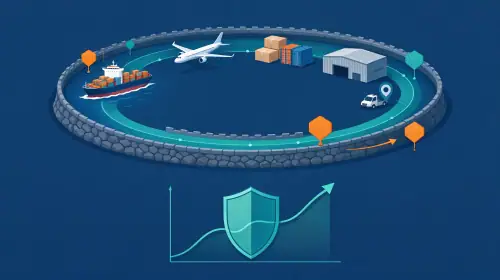
Layer Three of the Amazon Supply Chain Moat: Compliance and Risk Control
Compliance costs are becoming a dividing line for Amazon sellers. Labelling, packaging, customs documents, certification requirements – any non‑compliance can lead to rejection, fines, or delays.
Take the changes in 2026 as an example. Amazon has fully discontinued its FBA prep and labelling service, so all FBA shipments must be labelled and packed before they reach the warehouse. The delivery window for non‑partnered carriers has been cut from 14 days to 7 days. Sellers who have not completed brand registry must use FNSKU labels. Together, these rules mean the compliance burden has shifted entirely to the shipping stage.
Sellers with efficient supply chains face lower compliance risk – because their logistics partners know the rules and catch problems before the goods leave, rather than discovering a labelling error after the shipment reaches the US and getting the whole batch rejected.
Risk management capability is part of the moat. Sellers who can handle transport delays, customs inspections, and warehouse rejections are the ones who stay stable through competition. Compliance is not a cost – it is the foundation of long‑term operations.
Layer Four of the Amazon Supply Chain Moat: Scalability
For many Amazon sellers, the growth bottleneck is not the product – it is the supply chain. When sales grow from dozens of orders a day to hundreds, and from a single marketplace to multiple marketplaces, logistics complexity rises exponentially.
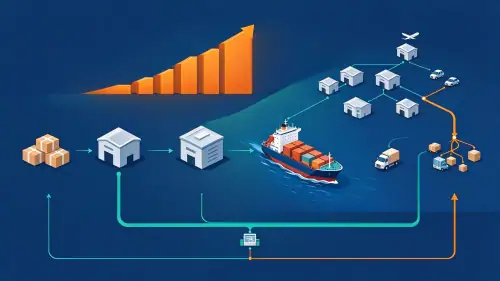
A scalable supply chain means three things: transport modes can be upgraded as volume grows (LCL to FCL); the warehousing footprint can expand with your markets (single warehouse to multiple warehouses); and service capability can be adjusted as needs change.
Multi‑marketplace expansion requires supply chain coordination, not each market fighting its own battle. The US, UK, Germany, Canada, Mexico – if every marketplace has its own separate logistics setup, management costs quickly spiral out of control. A supply chain system that integrates first‑mile transport, customs clearance, and last‑mile delivery across multiple marketplaces is the real source of scale advantage.
The essence of a moat is simple: it holds up when you grow. Amazon sellers who can keep their supply chain stable while scaling are the ones who can truly turn growth into profit.
Comparing the Four Dimensions of the Amazon Supply Chain Moat
The table below summarises how the four dimensions look for sellers with and without a moat:
| Dimension | Amazon Sellers Without a Moat | Amazon Sellers With a Moat |
|---|---|---|
| Cost efficiency | Single‑point haggling, unpredictable costs | Structural optimisation, calculable landed cost |
| Inventory reliability | High safety stock to hedge uncertainty | Stable replenishment, lower safety stock |
| Compliance and risk | Firefighting, frequent rejections and fines | Compliance built in upfront, problems solved before shipping |
| Scalability | Separate solutions per market, management chaos | Multi‑market coordination, upgrades as you scale |
How Amazon Sellers Can Start Building Their Supply Chain Moat
Upgrade logistics from a cost line to a strategic function. Do not focus only on the per‑shipment freight rate – evaluate your logistics partner’s stability, compliance capability, and scalability.
Build cost predictability. Ask your logistics partner for a clear cost structure instead of a vague all‑in quote. Understand how much goes to freight, handling, destination charges, duties, and last‑mile delivery.
Optimise your replenishment rhythm. Design safety stock around the stability of transit times, rather than hedging uncertainty with more inventory.
Prepare for compliance in advance. Move compliance work to before the shipment leaves – labels, packaging, documents, and certifications should all be confirmed before the goods leave China.
Choose a logistics partner that can grow with you. From LCL to FCL, from a single marketplace to multiple marketplaces – your supply chain capability needs to keep pace with your business.
As a logistics provider focused on cross‑border ecommerce, AMZ Shipper helps Amazon sellers build supply chain advantages across cost, inventory, compliance, and scalability through Amazon FBA shipping with AMZ Shipper and cross‑border logistics with AMZ Shipper.


