
When FBA sellers get an “account information verification” notice from Amazon, their first instinct is to go to the backend and upload more documents. But the reason verification gets stuck often isn’t in the backend – it’s on the logistics side.
What Amazon compares isn’t just what you filled in. It’s whether your backend information, tax records, bank details, and shipping documents all line up. If the company name on your commercial invoice doesn’t match the backend, or customs clearance uses the forwarder’s entity instead of your store entity, or supplier invoices are missing – those logistics-side issues will keep your FBA account verification stuck at the document review stage.
This article doesn’t explain the legal text. It helps you understand the connection between FBA account verification and shipping documents, and how to prepare on the logistics side so verification goes through the first time.

1. What the INFORM Consumers Act Actually Means for FBA Sellers
Let’s start with what this law actually requires of FBA sellers.
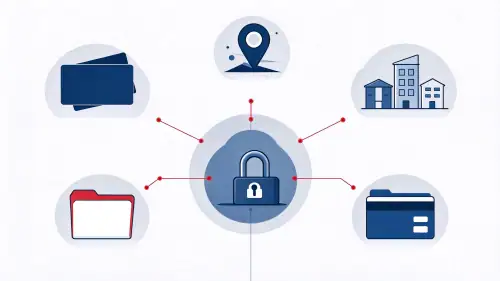
The INFORM Consumers Act requires high-volume third-party sellers to provide and keep updated business information to Amazon, including bank account details, company address, contact information, tax identification number, and government-issued ID. Amazon enforces this through account information verification in Seller Central, and sellers who don’t pass may face account suspension or payment withholding.
The key insight for FBA sellers: verification doesn’t fail because you “didn’t fill it in fast enough.” It fails because the information doesn’t match. Amazon compares consistency across backend information, tax records, bank details, and shipping documents. Shipping documents are the part of the verification chain that gets overlooked most often.
If the commercial invoices, customs documents, and supplier invoices you use day to day don’t tell a consistent story, it will surface during verification. Getting document consistency right in advance is far less painful than fixing it after the notice arrives.
2. The Five Places FBA Account Verification Gets Stuck
Here are the common sticking points, with a focus on logistics-related ones.
Sticking point 1: Company name mismatch
The company name registered in the backend, the shipper name on the commercial invoice, and the importer name on customs documents – if these three don’t match, verification can get flagged. FBA sellers need to pay special attention: if your supplier ships on your behalf, the shipper on the commercial invoice should be the supplier, but you need to be able to clearly explain the relationship to your store entity.
Sticking point 2: Address mismatch
The company address in the backend doesn’t match the address on supplier invoices, the receiving address, or the address on customs documents. Overseas warehouse receiving records and FBA receiving addresses can also serve as evidence of genuine operations – provided the address information corroborates itself.
Sticking point 3: Importer of record isn’t the store entity
Customs clearance uses the forwarder’s IOR or a third-party company instead of the seller’s own company. Verification treats this as an unclear operating entity. Clearing under your own entity gives you the cleanest information chain.
Sticking point 4: Missing supplier invoices
Amazon may request supplier invoices during verification, and the company name, address, and product information on them must match the backend. If you haven’t been archiving supplier invoices and purchase orders by shipment, digging them up on short notice is painful.
Sticking point 5: Bank account doesn’t match the company entity
The receiving account is a personal account or a third-party account, not matching the registered entity. This isn’t on the logistics side, but it follows the same logic as the company name on shipping documents – all information should point to the same operating entity.
At least three of these five sticking points are directly related to shipping documents. Verification isn’t purely a backend exercise – consistency on the logistics side matters just as much.
3. How Logistics Documents Support FBA Account Verification
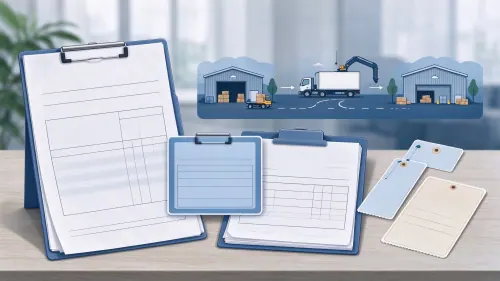
Here’s which shipping documents affect verification, and how to keep them consistent.
Commercial invoice
The shipper name should match the company name registered in the backend, or the relationship should be clearly explainable. Product descriptions, quantities, and values should match the actual goods. The invoice header, company address, and contact details should be complete. If you regularly use China to the USA freight services, commercial invoice consistency matters even more, because US customs checks documents more closely.
Import customs documents
The importer should use the seller’s own company entity wherever possible. If the forwarder’s IOR is used, you should be able to explain the relationship between the clearing entity and the store entity. EORI, VAT, and EIN information should match the backend.
Supplier invoices
Supplier name, address, and product information should be complete. Invoice dates and order numbers should be traceable and match the commercial invoice and backend product information. If you handle supplier pickup and shipment consolidation before shipping, the supplier invoices and consolidated shipping records form a more complete evidence chain.
Receiving and warehousing records
FBA receiving addresses and overseas warehouse receiving records can serve as evidence of genuine operations. Tracking numbers and proof of delivery should be verifiable. If you use warehousing in China services, the warehousing records are also part of the operating evidence.
Shipping documents aren’t just for customs. They’re also the evidence chain for genuine operations. What Amazon is confirming during verification is that “there’s a real business behind this account” – and shipping documents are key material for proving that. If you want to organise document preparation systematically, the shipping document checklist and freight quote checklist on the site can help you connect verification prep with your day-to-day shipping process.
4. FBA Account Verification and Logistics Document Consistency – A Comparison Table
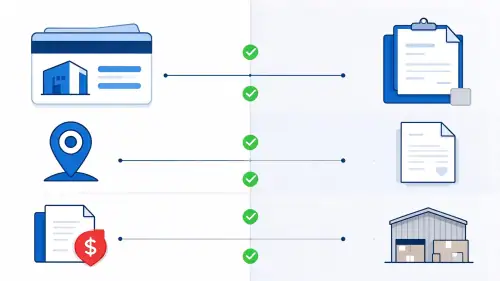
| Information Required for Verification | Corresponding Logistics Document | Consistency Requirement |
|---|---|---|
| Company name | Commercial invoice shipper, customs importer | Match backend registration or explain relationship |
| Company address | Invoice address, receiving address, customs address | Match backend address |
| Tax identification number | EIN/VAT/EORI on customs documents | Match backend tax information |
| Supplier relationship | Supplier invoices, purchase orders | Name, product, date traceable |
| Genuine operations | Tracking numbers, proof of delivery, warehousing records | Verifiable and checkable |
You can take this table and compare it against your own shipping process. Whichever row doesn’t line up is where verification may get stuck.
5. What FBA Sellers Should Prepare Before Verification Notices Arrive
Here’s a preparation checklist.
Information side
-
Confirm the company name, address, and tax number in the backend exactly match the actual operating entity
-
Confirm the receiving bank account matches the registered entity
-
Confirm contact information is verifiable
Logistics side
-
Use company names and addresses on commercial invoices that match the backend
-
Clear customs under your own IOR wherever possible, or be able to explain the relationship between the forwarder’s IOR and the store entity
-
Keep complete supplier invoices and purchase orders
-
Keep tracking numbers, proof of delivery, and warehousing records
-
Build the habit of archiving by shipment so you can retrieve documents quickly during verification
Process side
-
Assign one person to handle collecting and submitting verification materials
-
Prepare government-issued ID, bank statements, and other supporting materials in advance
-
Submit within the required timeframe after the notice arrives – don’t wait until the deadline

6. Why FBA Verification Pressure Is Rising in 2026
Several changes in 2026 make verification more urgent.
Change 1: Platforms are scrutinising genuine operations more closely
Amazon’s verification no longer just checks whether you filled in the information – it checks whether the information corroborates itself. Cross-verification between shipping documents, tax records, and bank statements is becoming more common.
Change 2: Customs compliance requirements are tightening
After the US closed its low-value duty-free channel, all shipments to FBA in principle require formal customs entry. Importer information on customs documents gets checked more frequently, and mismatches with the store entity surface more easily.
Change 3: FBA prep services ended, shifting document responsibility upstream
With labeling and packaging responsibility shifted to the shipper, sellers depend more heavily on shipping documents. The accuracy of commercial invoices, supplier invoices, and customs documents directly affects both verification and clearance.
Change 4: Multi-platform operations increase information complexity
Sellers operating on multiple platforms may mix shipping documents. Verification requires you to clearly distinguish the business flows of different platforms.

7. How to Choose Logistics Support That Helps with FBA Verification
Here are the criteria for choosing a logistics partner.
Criterion 1: Can they clear customs under the seller’s own entity?
Using the seller’s own IOR and tax number for clearance gives the cleanest information chain during verification.
Criterion 2: Can they provide complete, traceable documents?
Can they provide commercial invoices, customs documents, and tracking records by shipment – rather than only when asked?
Criterion 3: Can they ensure document information matches the backend?
Can the shipper name, address, and product descriptions be filled in accurately according to what the seller provides?
Criterion 4: Can they support archiving of supplier invoices and purchase records?
Can supplier invoices, purchase orders, and shipping documents form a complete evidence chain?
Criterion 5: Do they understand the logic of verification?
A good logistics partner should know that document consistency affects not just customs clearance but also platform verification. For example, AMZ Shipper focuses on cross-border logistics for Amazon sellers and can support customs clearance under the seller’s own IOR, document information verification, and tracking record provision. But whichever partner you choose, the key is finding a team that’s willing to issue documents under your company entity and ensure document consistency. If you regularly use China to the USA freight services or Amazon FBA shipping to the USA, confirm your document template with your logistics partner in advance and lock in the company name, address, and tax number.
FBA account verification isn’t just filling out forms in the backend. It tests the information consistency of your entire operating chain – and shipping documents are the link most prone to problems and most easily overlooked. Get your commercial invoices, customs documents, supplier invoices, and backend information aligned, and verification becomes a much smoother process.


