
A lot of sellers, after getting their US and Europe stores running smoothly, start looking toward the Middle East. Amazon UAE and Amazon Saudi Arabia are growing fast with relatively less competition – they look like a promising new market.
But when they actually start shipping, many run into a problem: you can’t just copy your US or Europe process for the Middle East. Customs rules, product certifications, last-mile delivery, and tax handling all differ from the US and Europe. Copying a US or Europe logistics plan to Amazon Middle East usually ends with goods stuck at customs, delivery addresses that don’t match, or warehouse appointments you can’t book.
This article isn’t about market opportunities. It’s about how to get goods into Amazon UAE and Saudi warehouses efficiently and compliantly. Customs clearance, certification, and delivery are the three areas that need the most preparation when shipping to Amazon Middle East.

1. Why Shipping to Amazon UAE/Saudi Arabia Is Different from the US and Europe
Let’s start with where the differences lie.
Difference 1: Different customs rules and document requirements
Saudi Arabia and the UAE have their own customs systems and document requirements. Saudi import clearance is stricter about product access and document completeness; the UAE’s free zone and mainland clearance processes also differ. When shipping to Amazon Middle East, the information on commercial invoices, packing lists, and certificates of origin must be complete and accurate – any missing item can cause clearance delays.
Difference 2: Different product certification and labeling requirements
Many categories shipped to Saudi Arabia need to meet local certification and labeling standards. Product manuals, warning labels, and country-of-origin marks have different requirements than in the US and Europe. Before shipping to Amazon Middle East, confirm each item according to destination requirements – don’t just reuse US or Europe certification documents.
Difference 3: Different last-mile delivery and address systems
Address systems in parts of the Middle East aren’t fully standardised, and last-mile delivery depends more heavily on recipient phone numbers and address descriptions. Amazon FBA warehouse appointment and delivery requirements also differ from the US and Europe.
Difference 4: Different tax and duty handling
Both the UAE and Saudi Arabia have VAT. How import duties and VAT are handled needs to be confirmed in advance, and the choice between DDP and DAP directly affects clearance responsibility and cost. When shipping to Amazon Middle East, clarify before signing whether the quote includes VAT.
The core insight: when shipping to Amazon Middle East, customs clearance, certification, and delivery all need to be prepared according to local rules.
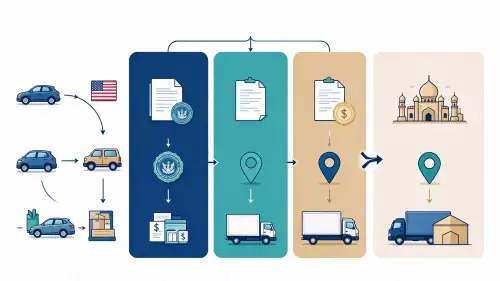
2. What to Prepare Before Shipping to Amazon UAE/Saudi Arabia
Here’s the pre-shipment checklist, focused on what’s different from the US and Europe.
Product compliance preparation
-
Confirm whether products meet the destination country’s certification and labeling requirements
-
Confirm product manuals, warning labels, and country-of-origin marks meet local standards
-
For sensitive categories, confirm in advance whether additional certification or test reports are needed
Document preparation
-
Commercial invoice and packing list information complete and accurate
-
Confirm importer information and tax number are ready
-
Confirm clearance method (DDP or DAP) and responsibility division
Amazon backend preparation
-
Create the shipment in Seller Central and confirm the target Amazon FBA warehouse address
-
Download FNSKU and carton labels and apply them at origin
-
Confirm Amazon UAE/Saudi inbound requirements
Logistics preparation
-
Confirm whether your logistics partner covers Middle East routes
-
Confirm whether they handle destination customs clearance and last-mile delivery
-
Confirm delivery addresses and recipient information are accurate
If you usually use a shipping document checklist to verify documents, add the local certification and certificate of origin requirements when shipping to Amazon Middle East.
3. How to Choose a Shipping Method to Amazon UAE/Saudi Arabia

Ocean freight
Best for large volumes and non-urgent restocks. From major Chinese ports to Jebel Ali in the UAE or Dammam in Saudi Arabia, then trucked to Amazon FBA warehouses. Low cost, but longer transit time.
Air freight
Best for time-sensitive, high-value lightweight goods. From major Chinese airports to Dubai, Riyadh, and other airports, then delivered to Amazon FBA warehouses. Fast, but costs more than ocean.
Express
Best for small-batch testing and emergency restocks. Fast door-to-door, but the highest unit cost.
How to choose
-
New product testing, small batches: air or express
-
Regular restocking, larger volumes: ocean
-
Pre-peak stocking: ship ocean early, use air for emergencies
Whichever method you choose, confirm your logistics partner can handle destination customs clearance and last-mile delivery. A logistics plan that only goes as far as the port often isn’t enough for Amazon Middle East, because last-mile delivery and warehouse appointments also need professional support. If you need to compare cost and transit times across methods, check the shipping method comparison and freight quotes on the site.
4. How to Handle Customs and Compliance for Amazon UAE/Saudi Arabia
Customs clearance and compliance are the areas most likely to cause problems when shipping to Amazon Middle East.
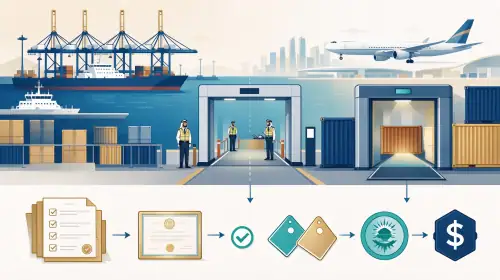
Choosing a clearance method
-
DDP: the logistics provider handles clearance and taxes, which is easier for the seller – but confirm they use a compliant importer entity
-
DAP: the seller or consignee handles clearance, requiring you to manage tax numbers and customs documents
Customs documents
-
Commercial invoice: product description, quantity, value, and trade terms complete
-
Packing list: carton count, weight, and dimensions accurate
-
Certificate of origin (if applicable)
-
Product certification documents (if applicable)
VAT and duties
Both the UAE and Saudi Arabia have VAT. How import VAT and duties are handled needs to be confirmed in advance. Clarify before signing whether the DDP quote includes VAT.
Common sticking points
-
Importer information doesn’t match the store entity
-
Missing product certifications
-
Commercial invoice descriptions too vague
-
Incorrect or missing tax number information
To organise document preparation systematically, check the shipping document checklist and FBA preparation checklist on the site, and add the certification requirements specific to Amazon Middle East.
5. How to Handle Last-Mile Delivery and Warehouse Receiving for Amazon UAE/Saudi Arabia
Last-mile delivery and warehouse receiving are another key part of shipping to Amazon Middle East.

Address accuracy
Address systems in parts of the Middle East aren’t fully standardised, and delivery depends more heavily on recipient phone numbers and address descriptions. Confirm the Amazon FBA warehouse address and appointment information are accurate before shipping.
Warehouse appointments
Amazon UAE/Saudi warehouse appointment requirements differ from the US and Europe. Confirm whether your logistics partner handles the local equivalent appointment process.
Delivery times
Last-mile delivery times are affected by address clarity, appointment windows, and local traffic. Plan ahead during peak season and leave buffer time.
Tracking information
Confirm your logistics partner can provide tracking from origin to the Amazon FBA warehouse, especially the segment from customs clearance to delivery. The cargo tracking guide on the site can help you understand how tracking milestones are set up.
6. Amazon UAE/Saudi Arabia Shipping Preparation Checklist
| Stage | Check Items | Key Reminder |
|---|---|---|
| Product compliance | Certifications, labels, manuals | Confirm per destination requirements |
| Documents | Commercial invoice, packing list, certificate of origin | Complete and accurate |
| Customs | DDP/DAP, importer information, VAT | Clear responsibility division |
| Transport | Ocean/air/express selection | Confirm Middle East route coverage |
| Last-mile delivery | Address, appointment, tracking | Confirm delivery capability |
| Warehouse receiving | Amazon FBA warehouse requirements, labels | Apply labels at origin |
7. How to Choose Logistics Support for Amazon UAE/Saudi Arabia
Here are the criteria for choosing a logistics partner.
Criterion 1: Do they cover Middle East routes?
Confirm they have stable routes and space from China to the UAE and Saudi Arabia.
Criterion 2: Can they handle destination customs clearance?
Confirm they can handle clearance in the UAE and Saudi Arabia, and are clear on DDP/DAP responsibility division.
Criterion 3: Can they handle last-mile delivery and warehouse appointments?
A plan that only goes as far as the port isn’t enough – last-mile delivery and Amazon FBA warehouse appointments need professional support.
Criterion 4: Do they understand local compliance requirements?
They should be able to flag product certification, labeling, and VAT requirements in advance.
Criterion 5: Can they provide end-to-end tracking?
Tracking from origin to the Amazon FBA warehouse, especially the segment from clearance to delivery.

For example, AMZ Shipper focuses on cross-border logistics for Amazon sellers and can support transport on China-Middle East routes, destination clearance, and last-mile delivery. If you usually ship to the US or Europe, you can compare the China to the USA freight services and Amazon FBA shipping to the USA processes on the site to see what extra preparation the Middle East requires. To understand the FBA shipping process systematically, check the FBA shipping guide and freight forwarding FAQ on the site.
Shipping to Amazon Middle East isn’t about copying your US or Europe logistics plan. Customs rules, product certifications, and last-mile delivery all need to be prepared according to local requirements. Get these three things ready in advance, and your goods will make it into Amazon UAE and Saudi warehouses smoothly.


