
A lot of sellers choose a shipping method the same way: use whatever others are using, or go with whichever quote is lowest.
But what really decides your shipping method isn’t the quote sheet – it’s your seller stage. A new seller still testing products and a growth-stage seller with steady orders have completely different optimal logistics plans. A new seller using full containers ties up all their cash in inventory and takes on too much risk. A mature seller still using courier has unit costs eating most of their margin – growth gets held back by logistics.
Shipping methods aren’t “pick one and use it forever” – they follow your seller stage. This article isn’t comparing which method is better. It gives you a framework for judging by seller stage, so you know which one to use now and when to upgrade.

1. Why Seller Stage Decides Your Logistics Choice
Let’s start with the four variables that define your seller stage.
Monthly shipping volume: a few cartons, dozens of cartons, or full containers. Volume determines which billing method you can use and the ceiling on your unit cost.
Cash flow capability: whether you can handle ocean freight’s payment terms and inventory tie-up. Courier means paying freight upfront and shipping small batches; ocean means tying up inventory first and spreading costs later. Different cash capabilities mean different options.
Inventory turnover cycle: how long until you run out of stock. Two weeks left, and only courier or air can save you. Two months left, and LCL or even full container is feasible.
Sensitivity to transit time: whether you’re testing products or selling steadily. Testing needs speed; steady sales need stability.
The core logic: new sellers use courier to test products, growth sellers use LCL to control costs, mature sellers use full containers to push unit freight down. Get the seller stage wrong, and you either pay too much or miss the timing.
2. Seller Stage – New Sellers: What Direct Courier (UPS/DHL) Suits
Here’s what direct courier suits and why.

What direct courier offers
-
Door-to-door, fast transit
-
Charged by actual or volumetric weight, high unit cost
-
Usually has weight and size limits
-
Simple to operate, good for new sellers without logistics experience
Which seller stage it suits
-
Just starting out, still testing products
-
Small monthly volume, a few cartons to a dozen or so
-
Need to validate products quickly and see market response
-
Limited cash, don’t want to tie up a large inventory in one go
Logistics priorities at this stage
-
Speed over cost
-
Simplicity over price
-
Get the FBA shipping process working first, optimise costs later
A 2026 note: after FBA prep services ended, courier shipments also need FNSKU labeling and packaging compliance at origin. Direct courier doesn’t solve labeling – you or your supplier need to handle it. If your supplier can’t label well, check the FBA preparation checklist on the site to confirm labeling and packaging requirements in advance.
3. Seller Stage – Growth and Mature Sellers: What LCL/Full Container Special Line Suits
Here’s what LCL and full container special lines suit.
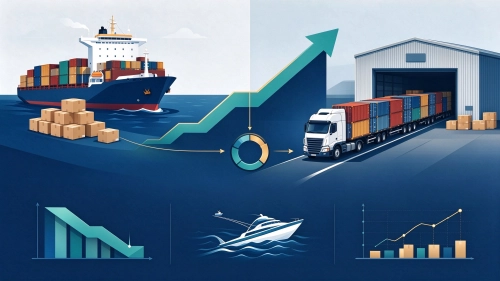
What LCL special line offers
-
Charged by CBM, lower unit cost than courier
-
Slower than courier but more flexible than full container
-
Suits medium volumes that don’t fill a container
-
Usually includes export customs, destination clearance, and delivery
What full container special line offers
-
Charged by container type, lowest unit cost
-
Stable transit times, good for large restocks
-
Requires enough volume to fill a container
-
Suits sellers with steady orders and predictable inventory turnover
Which seller stage it suits
-
Product validated, entering steady sales
-
Monthly volume grown to dozens of cartons or more
-
Cash capability to handle ocean freight terms and inventory tie-up
-
Predictable inventory turnover, able to plan restocks ahead
Logistics priorities at this stage
-
Cost optimisation over speed
-
Need a logistics partner that handles origin labeling, packaging checks, and delivery appointments
-
Need end-to-end tracking to avoid stockouts
To understand the difference between LCL and full container, check the LCL shipping guide and FCL shipping guide on the site. To compare cost and transit times across methods, check the shipping method comparison and freight quotes.
4. Seller Stage Comparison – Direct Courier vs LCL/Full Container Special Line
| Dimension | Direct Courier (UPS/DHL) | LCL/Full Container Special Line |
|---|---|---|
| Suitable seller stage | New sellers, testing phase | Growth and mature sellers |
| Monthly volume | A few to a dozen cartons | Dozens of cartons to full containers |
| Unit cost | High | Medium to low |
| Transit time | Fast | Medium to slow |
| Billing method | Actual/volumetric weight | CBM/container |
| Operational complexity | Low | Medium to high |
| Cash tie-up | Low | Medium to high |
| Inventory planning requirements | Low | High |
| 2026 labeling responsibility | Seller or supplier | Forwarder can help with origin labeling |
You can use this table to see which seller stage you’re in and which method fits. If you’re shipping China to the US, combine it with the China to the USA freight services and Amazon FBA shipping to the USA pages on the site to see the service scope for each transport mode.

5. How to Tell Which Seller Stage You’re In
Here’s a way to judge your own seller stage.
Criterion 1: Monthly shipping volume
-
A few to a dozen cartons: new stage, courier or air
-
Dozens of cartons: growth stage, LCL
-
Approaching or exceeding a full container: mature stage, full container
Criterion 2: Inventory turnover cycle
-
Under 2 weeks to stockout: only courier or air can save you
-
1-2 months: LCL is feasible
-
Over 2 months: full container offers the best value
Criterion 3: Cash capability
-
Limited cash, don’t want to hold inventory: courier, small batches
-
Can handle ocean freight terms: LCL or full container
Criterion 4: Product validation status
-
Still testing: courier
-
Steady sales: LCL
-
Multiple SKUs selling steadily: full container
The judgment principle: if any one of the four criteria points to “new stage,” treat it as new stage first. Don’t tie up a large inventory during testing just to save on freight. Use the wrong seller stage logistics plan, and the freight you save might not cover storage fees and dead stock losses.

6. Seller Stage – When to Upgrade from Courier to LCL/Full Container Special Line
Here are the upgrade signals.
Signal 1: Courier cost as a share of selling price keeps rising
When courier freight takes up an increasingly large share of the product’s selling price, it’s time for a more economical method. Use shipping cost estimates regularly to compare cost shares across methods.
Signal 2: Products are selling steadily
The testing phase is over, sales are predictable, and you can plan restocks by sales volume instead of small-batch quick validation.
Signal 3: Stockout risk starts affecting rankings
If high courier costs make you ship less often and cause stockouts, you need special lines for more stable restocking.
Signal 4: Monthly volume is enough to consolidate
When volume grows enough to fill an LCL consolidation or approach a full container, unit costs drop noticeably.
Signal 5: You start needing labeling and appointment support
After FBA prep services ended in 2026, if your supplier can’t label well, you need the forwarder to provide origin labeling and packaging checks. Special line forwarders match this need better.

7. How to Choose Logistics Support for Your Seller Stage
Here are the criteria for choosing a logistics partner by seller stage.
Criterion 1: Does it cover the transport modes your current seller stage needs?
New stage needs courier or air, growth needs LCL, mature needs full container. Confirm your partner covers your current and next-stage needs, not just one mode.
Criterion 2: Can it provide origin labeling coordination?
With labeling responsibility moved upstream in 2026, whether the forwarder can coordinate FNSKU labeling and packaging checks at origin directly affects whether goods get into the warehouse smoothly.
Criterion 3: Can it handle destination clearance and warehouse appointments?
A plan that only goes as far as the port isn’t enough for FBA shipping. Confirm they handle clearance and Carrier Central appointments. To understand the receiving process, check the Amazon delivery guide on the site.
Criterion 4: Can it provide end-to-end tracking?
Tracking from origin to the FBA warehouse – especially after upgrading to special lines, there are more tracking milestones and you need clearer status updates. The cargo tracking guide on the site explains how tracking milestones are set up.
Criterion 5: Does it understand the logic of seller stage?
A good logistics partner should recommend the right method based on your volume, inventory cycle, and cash capability – not just push one service. For example, AMZ Shipper focuses on cross-border logistics for Amazon sellers and can support different transport modes including express freight, LCL shipping, and FCL shipping, coordinating origin labeling and destination clearance as your seller stage changes. If you ship to the US, check China to the USA freight services and China to the USA shipping options to compare transport combinations for different seller stages.
Choosing a logistics method isn’t about picking “the best” – it’s about picking what fits your current seller stage. New sellers use courier to get the process working, growth sellers use LCL to control costs, mature sellers use full containers to push unit freight down. Follow your seller stage, and logistics won’t become the bottleneck to growth.


