
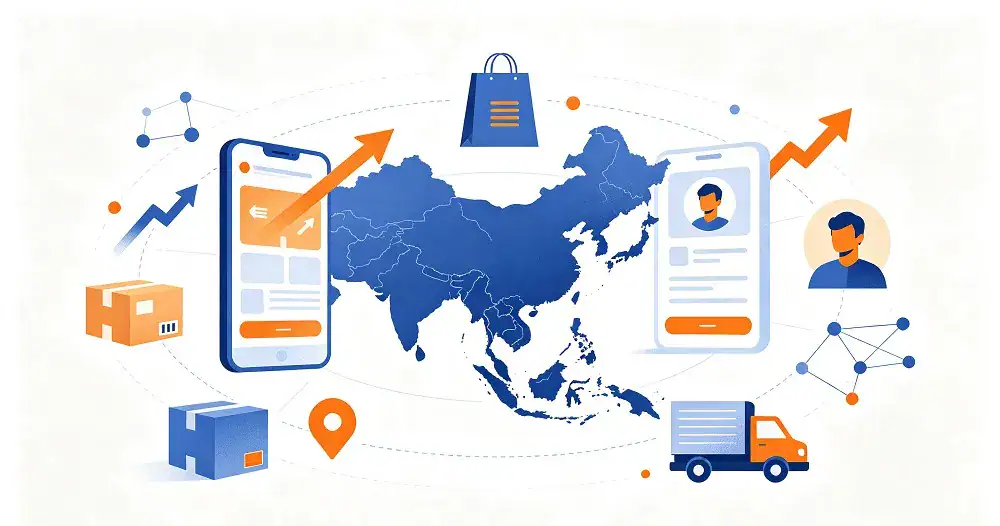
India’s e-commerce sector has been growing at over 20% year on year, making it one of the few true blue-ocean markets left in the world. With a population of 1.4 billion and more than 900 million internet users, this consumer market is attracting growing interest from Chinese sellers. Interestingly, around 90% of the products sold on Indian e-commerce platforms are sourced from China, yet the number of Chinese sellers on Amazon India is still quite small—fewer than 300,000 sellers in total, and only a tiny fraction of them are from China. That mismatch between supply and demand is exactly where the opportunity lies.
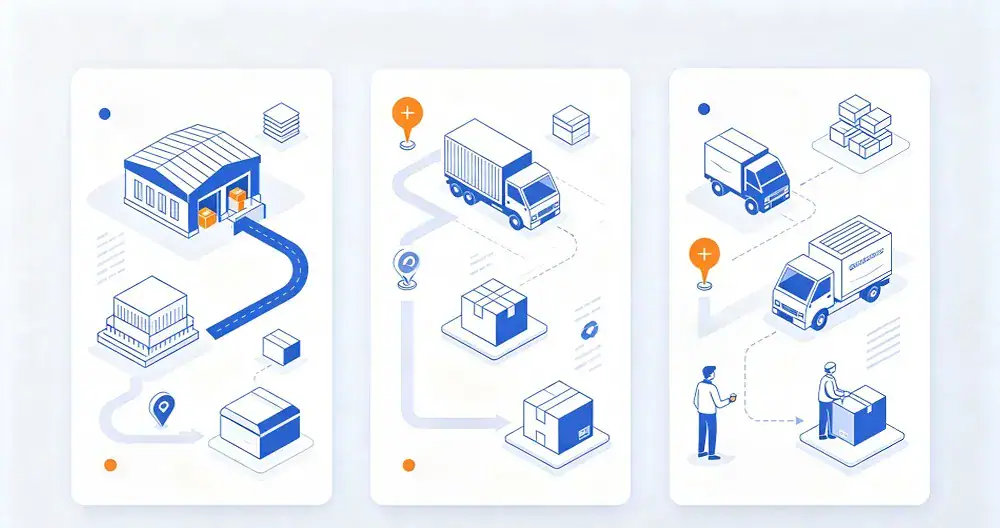
That said, the logistics barriers to entering the Indian market have kept many sellers on the sidelines. In this article, we’ll break down the three main fulfillment models available on Amazon India and lay out a clear logistics roadmap for Chinese sellers.
1. Comparing the Three Fulfillment Models on Amazon India
Amazon India offers sellers three ways to fulfill orders, each with different entry requirements and use cases.
| Fulfillment Model | Delivery Time | Prime Badge | Cash on Delivery | Best For |
|---|---|---|---|---|
| FBA (Fulfillment by Amazon) | 2–4 days | Yes | Yes | Most sellers |
| FTZ (Free Trade Zone / Bonded Warehouse) | 2–4 days | Yes | No | Higher-priced products |
| MFN (Merchant Fulfilled Network) | 15–21 days | No | No | Sellers with many SKUs |
Source: Amazon Seller Central guidelines

2. FBA – High Rewards, High Entry Barriers
FBA is Amazon India’s all-in-one storage and delivery service. Senders send their products in bulk to Amazon’s fulfillment centers, and Amazon takes care of storage, picking, packing, and last-mile delivery.
The entry requirements are the biggest hurdle. Under India’s FDI regulations, using FBA requires an Indian company structure with at least 51% local ownership. For Chinese sellers, this usually means one of two things: setting up a local entity in India, or working with a service provider that can offer access to an Indian-registered company.
Why sellers go for FBA:
-
Fast delivery: 2–4 days, compared to 15–21 days for self-fulfillment
-
Prime badge: gives you access to millions of Prime members
-
Marketing perks: BD and DOTD events are free to join, and LD deals cost much less than they do on Amazon US
-
Hassle-free returns: products can go back to the FBA warehouse for resale, or be disposed of through Amazon’s return services
-
Less customer service work: Amazon handles buyer inquiries and returns
India-specific FBA requirements you can’t ignore:
-
Every single unit must have the MRP (Maximum Retail Price) clearly printed on the outer packaging – this is required by India’s Metrology Act
-
Clothing items need plastic dust-proof bags; electronics must meet BIS safety and compliance standards
-
Maximum box weight: 23kg; maximum box size: 45cm × 34cm × 26cm

3. MFN – A Low-Threshold Option for Getting Started
For sellers who don’t yet have an Indian company setup, MFN offers a much simpler way in. You can sign up with just a Chinese business license.
What MFN looks like in practice:
-
You’re responsible for packing, labeling, and the entire shipping process
-
Longer delivery times: 15–21 days; no Prime badge; no cash-on-delivery option
-
Faster payment settlement: funds hit your account within 7 days after shipment, which is great for testing new products
-
Lower inventory risk: you only ship after an order comes in, so you’re not stuck with unsold stock
-
Important warning: If you don’t ship within 48 hours of the expected ship date, the order gets canceled automatically, and you’ll be charged a cancellation fee
MFN works best for sellers with a large number of SKUs, those who want to minimize inventory risk, or those who are still in the product-testing phase.

4. FTZ (Bonded Warehouse) – A Middle Ground
The FTZ model lets sellers store their goods in bonded warehouses in India. Once an order comes in, the goods are released from the bonded warehouse and shipped to the buyer.
Why sellers choose FTZ:
-
Easier onboarding: you can apply with a Chinese company registration
-
Prime badge included: gives you access to Prime members
-
Fast payment turnaround: funds arrive in 2–3 days
-
Works well for higher-value products

5. Logistics Challenges in India – and How to Handle Them
Challenge 1: The FBA eligibility hurdle. The 51% local ownership rule is the single biggest obstacle for Chinese sellers who want to use FBA. Workaround: start with the FTZ model, or work with a service provider that can offer access to an Indian entity.
Challenge 2: Weak logistics infrastructure. India’s logistics network is still catching up, especially in tier-2 and tier-3 cities, where delivery points are widely scattered and delays are common. Data shows that return rates under the self-fulfillment model can be two to three times higher than in more mature markets. Solution: choose a tech-savvy logistics partner that offers services like address validation, pre-call checks, and multiple delivery attempts – these can significantly boost your delivery success rate.
Challenge 3: High return rates and trust issues. Rejections and false claims of non-delivery are more frequent in India than in many other markets. Under the cash-on-delivery model, rejection rates can go as high as 15%. Solution: build a solid evidence chain that includes unboxing videos and tracking records to improve your chances in dispute cases; also, work with a logistics provider that offers fast COD payment collection cycles.
Challenge 4: Customs clearance and compliance risks. Indian customs authorities are strict about document accuracy and consistency. Mistakes like incorrect HS codes or undervalued shipments can lead to seizure, along with hefty storage and detention fees. Solution: go with a freight forwarder that offers DDP (Delivered Duty Paid) services and can perform HS code reviews and document compliance checks before your goods even leave the warehouse.
Challenge 5: Tax compliance. Once you register for a GST number, you’ll need to file returns on time – failure to do so can result in large fines. Solution: use tax tools like ClearTax to auto-generate compliance reports, which can slash the time you spend on tax filings.
6. A Three-Stage Logistics Roadmap
Stage 1 (Quick start): Use the MFN model with your Chinese company registration to begin with small-batch testing. This is the lowest-risk, lowest-threshold option – just keep an eye on that 48-hour shipping window.
Stage 2 (Scaling up): Once you’ve built a stable monthly sales volume, move to the FTZ (bonded warehouse) model to unlock the Prime badge and 2–4 day delivery times, which will boost your conversion rates and customer satisfaction.
Stage 3 (Full-scale operations): When your business reaches a larger scale, partner with a service provider to access an Indian-incorporated entity and unlock full FBA benefits – lower last-mile delivery costs and a more complete returns handling process.
Throughout the entire logistics chain, having a reliable partner with solid customs experience is essential. Look for a logistics provider that offers transparent pricing, end-to-end shipment tracking, pre-clearance compliance checks, and fast COD payment settlement – these capabilities will make your journey into the Indian market far smoother and less stressful.
ABout AMZ Shipper
AMZ Shipper has several years of experience for international logistics Freight Forwarding service. Our service is for importer and exporter, foreign freight forwarders, local and abroad business. Export of 1500 of 40HQ per year for FBA Amazon shipping, 15-30 tons of air shipments per month.
Member of WCA. Our company is a professional Amazon freight forwarder that specializes in providing comprehensive and efficient services to customers.


