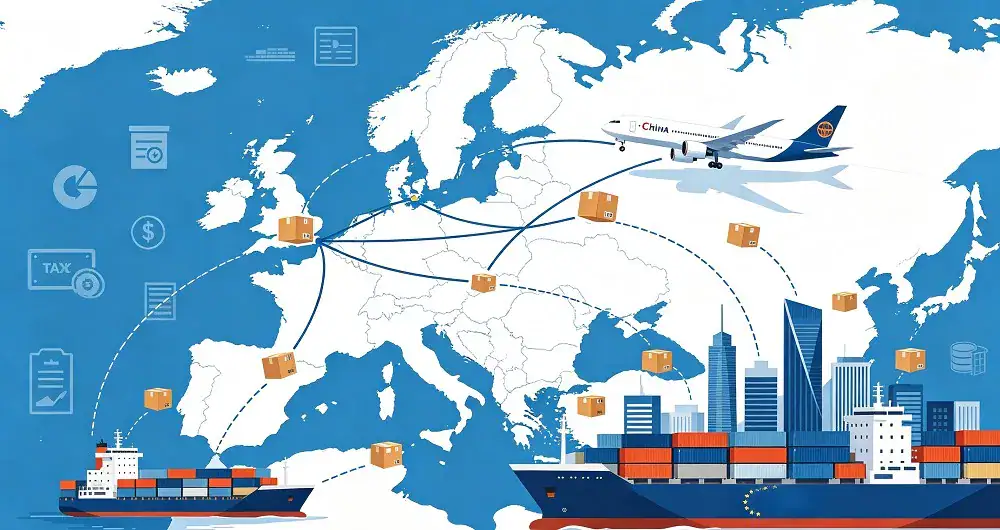
Since the EU VAT reform took full effect on July 1, 2021, all goods imported into the EU, regardless of their value, are subject to VAT. This change completely abolished the VAT exemption for parcels under €22, marking the official start of the “full-tax era” for European e-commerce logistics. For Amazon sellers and cross-border logistics providers, understanding and making good use of the Import One-Stop Shop (IOSS) and the One-Stop Shop (OSS) schemes have become essential capabilities for optimizing customs clearance efficiency, controlling costs, and ensuring a smooth customer experience.
Understanding the Core Tools: How IOSS and OSS Differ
Many sellers often get confused between IOSS and OSS. Clarifying where each one applies is the first step in developing a sound logistics strategy. OSS is mainly designed for “distance sales”—that is, when non-EU businesses sell goods or services to EU member states. IOSS, on the other hand, is specifically designed for imported goods and applies when non-EU businesses ship goods directly into the EU and deliver them to end consumers. Its purpose is to simplify the VAT declaration and payment process for imported goods valued at no more than €150.
The table below sums up their main differences:
| Aspect | IOSS (Import One-Stop Shop) | OSS (One-Stop Shop) |
|---|---|---|
| Who it applies to | B2C sales shipped from outside the EU and imported into the EU. | Distance sales from inventory within the EU (e.g., FBA warehouses) to consumers across EU countries. |
| Goods value | Applies to goods with an intrinsic value not exceeding €150. | No strict value limit (mainly for goods circulating within the EU). |
| Core function | Collects import VAT from the consumer at checkout, allowing goods to be exempt from import VAT when they enter the EU, enabling faster customs clearance. | Simplifies VAT reporting for multi-country sales within the EU. Sellers only need to register in one member state to declare and pay VAT for all EU countries where they make sales. |
| Impact on logistics | Directly affects the clearance process. Using IOSS avoids delays caused by customs having to collect VAT, and buyers don’t face extra charges upon delivery. | Mainly affects the tax reporting side; it has less direct impact on the physical clearance process, but it provides a compliance foundation for “EU internal transfers” or “distance sales.” |
Choosing Your Strategy: How to Optimize Logistics Based on Your Business Model
Your logistics strategy should be closely tied to your supply chain setup (where your inventory is stored) and your sales model. When planning, it’s important to understand two key VAT moments: the import VAT when goods enter the EU, and the sales VAT when goods are supplied to consumers.
Scenario 1: You Ship Directly from China (Small Parcels / Dedicated Lines) with Unit Value ≤ €150
Recommended Strategy: Prioritize registering for and using IOSS.
-
Clearance Advantage: With IOSS, you collect VAT from the buyer at checkout and provide your IOSS number when the goods are imported. Customs will waive the import VAT, significantly speeding up clearance. This helps avoid delays caused by “awaiting tax payment” or “notifying the consignee,” which can lead to storage fees or returns. Without IOSS, the unpaid import VAT will be charged to the buyer upon arrival, which often results in refused deliveries.
-
Customer Experience: Since buyers have already paid all taxes at checkout, they won’t face any “unexpected bills” upon delivery. This helps reduce return rates and negative reviews, both of which are critical for maintaining good store ratings. With IOSS, the VAT is collected at the point of sale, which stabilizes the “last-mile” delivery experience.
-
Logistics in Practice: You need to accurately transmit your IOSS number in the electronic customs declaration data (not just stick it on the parcel). The accuracy of this information is key to getting your goods cleared quickly.
Scenario 2: You Use Amazon FBA or Third-Party Overseas Warehouses (Inventory Within the EU)
Recommended Strategy: Focus on OSS compliance, and pay attention to the applicability of IOSS for the first leg of shipping.
-
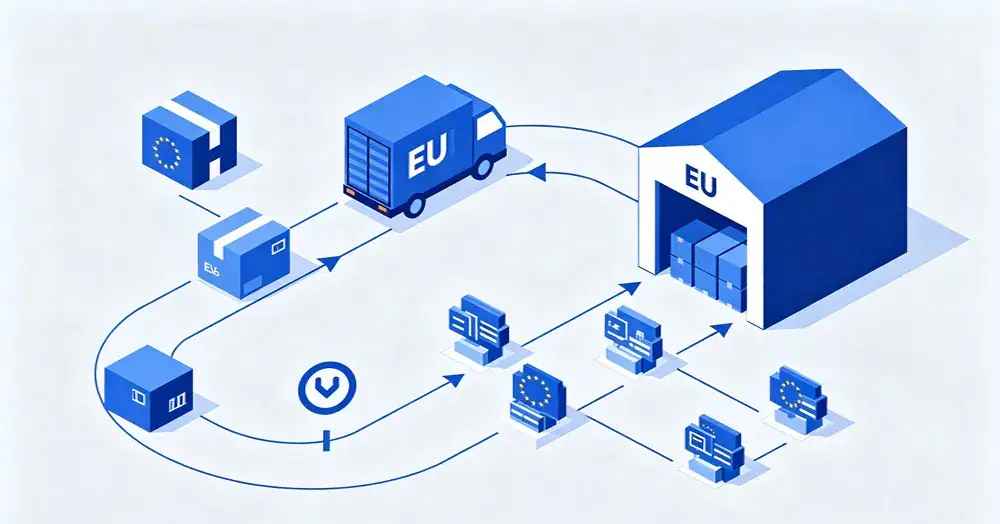
Tax Compliance: When your goods are sold from within the EU, the OSS scheme applies to simplify your multi-country VAT reporting duties. Here, your logistics strategy should center on “first-leg logistics”—that is, how to get your goods from China to the EU warehouse in a compliant and efficient way.
-
First-Leg Clearance: For this first leg, if you clear customs using your own VAT number, you’ll need to pay import VAT as per the standard process (which you can later deduct). It’s worth noting that IOSS only applies to goods shipped directly from outside the EU to the final consumer. So, it’s crucial to distinguish between the tax obligations at the “import stage” and those at the “sales stage.”
Choosing between DDP (Delivered Duty Paid) and DAP (Delivered at Place) is more than just a logistics decision—it’s a VAT strategy choice. With DDP, you (the seller) or your logistics provider take on the import clearance and VAT responsibilities, offering a more predictable customer experience. With DAP, the buyer pays the import charges upon arrival, which can lead to unexpected tax bills, returns, and unhappy customers.
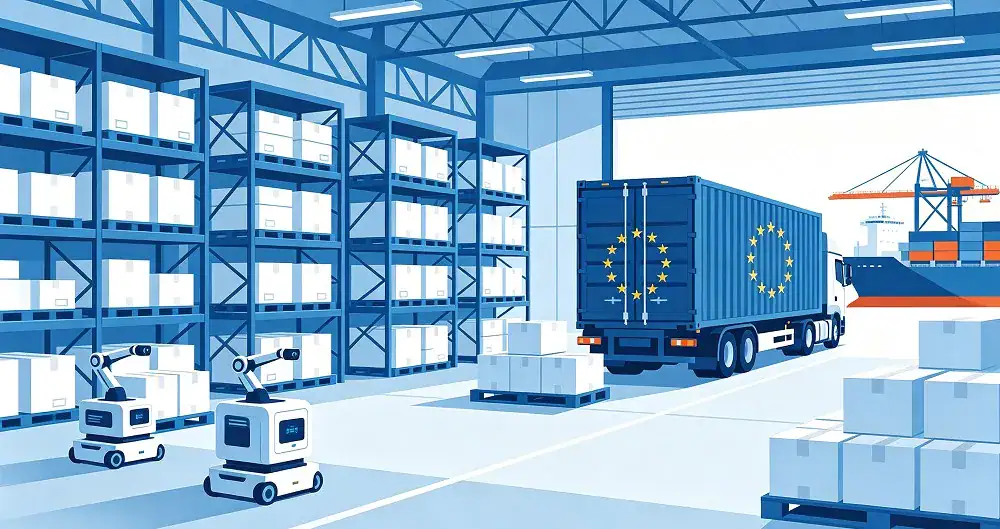
Risks in Practice and the Value of a Reliable Logistics Partner
The EU VAT reform hasn’t just changed tax rates; it has reshaped the entire chain of responsibility. E-commerce platforms (like Amazon) are considered “deemed suppliers” in certain sales and are therefore responsible for withholding and remitting VAT. The platform may also handle local VAT reporting through its own OSS registration.
Some common mistakes when using IOSS include:
-
Applying IOSS to ineligible goods (e.g., items over €150, B2B sales, or goods subject to excise duties).
-
Using the wrong VAT rate, failing to apply the correct rate for the destination country.
-
Missing IOSS data in customs declarations, leading to double VAT charges on the goods.
These errors can lead to customs inspections, additional tax assessments, and even penalties. A professional logistics partner adds value by offering clear pricing, end-to-end tracking, and expert customs support. They can help you navigate the tax logic and avoid compliance risks caused by information gaps. Remember, using IOSS is voluntary—but if you choose not to, your goods may be subject to special arrangements where VAT is settled at import or upon delivery in the destination country, adding more uncertainty to the process.
Key Action Checklist
-
Evaluate Your Business Model: Figure out whether your orders are shipped directly from China or from inventory stored within the EU.
-
Match IOSS / OSS to Your Model: For direct shipments of low-value (≤ €150) B2C orders, actively register for and use IOSS. For the EU warehouse model, ensure OSS compliance and optimize your first-leg logistics plan.
-
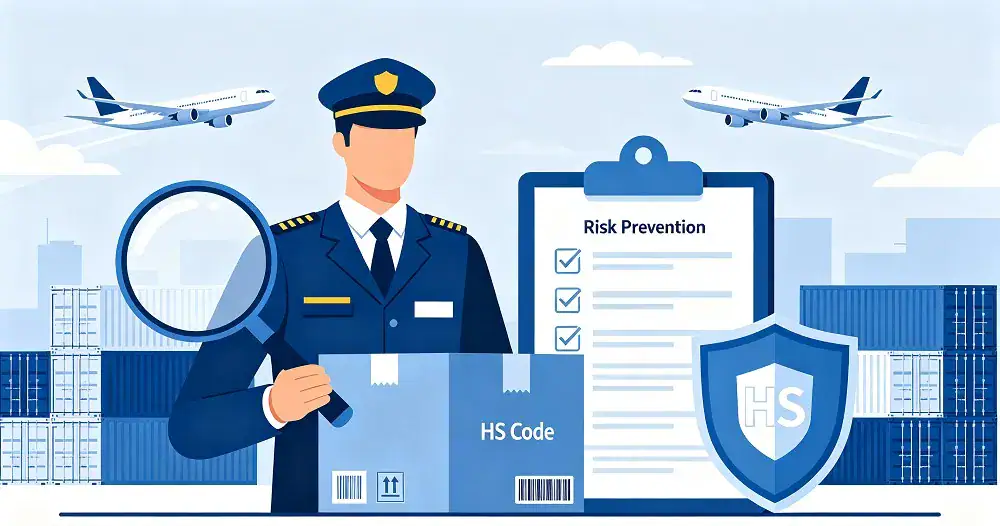
Ensure Data Accuracy: Include the HS code, VAT number, and IOSS number (if applicable) accurately on your commercial invoice and in the electronic declaration data. Correct product classification directly affects the VAT rate and customs duties applied.
-
Choose a Professional Partner: Work with a logistics provider that offers professional customs guidance, supports IOSS data integration, provides transparent pricing, and has a solid EU clearance network.
ABout AMZ Shipper
AMZ Shipper has several years of experience for international logistics Freight Forwarding service. Our service is for importer and exporter, foreign freight forwarders, local and abroad business. Export of 1500 of 40HQ per year for FBA Amazon shipping, 15-30 tons of air shipments per month.
Member of WCA. Our company is a professional Amazon freight forwarder that specializes in providing comprehensive and efficient services to customers.


