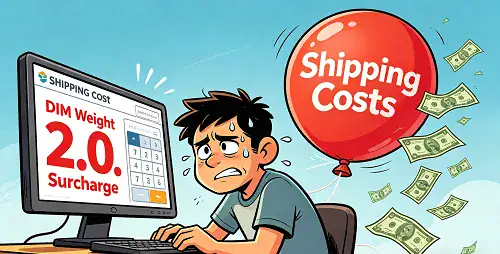
Back in January 2026, FedEx announced an average rate hike. Around the same time, UPS and DHL also started cracking down on dimensional weight (DIM weight) pricing. So what does that actually mean for you? In plain English: you might be paying way too much for the “air” inside your packages.
If you’re a cross-border e-commerce seller—especially one selling furniture, home goods, sports gear, or electronics—rising shipping costs are probably eating into your profits. But there’s a solution that’s been quietly gaining traction: flat packing. This article walks you through how flat packing can slash your logistics costs significantly, from how DIM weight works to practical steps you can take.
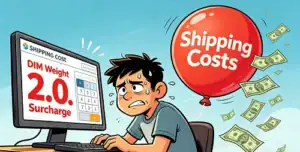
Part 1: Why Is DIM Weight Suddenly Such a Big Deal?
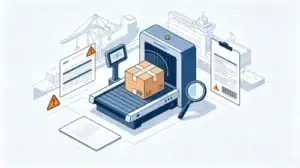
DIM weight pricing isn’t exactly new. But what changed in 2026 is how strictly and widely it’s being enforced. A few years ago, carriers only applied DIM weight rules to obviously oversized packages. Now? Almost every single package gets scanned and calculated automatically.
1.1 The DIM Weight Formula
Here’s how carriers calculate it:
DIM weight (kg) = Length(cm) × Width(cm) × Height(cm) / DIM factor
For air express, the DIM factor is usually 5000 or 6000. Let’s use 5000 as an example. Take a box that’s 60cm × 50cm × 40cm. Its DIM weight would be 60×50×40/5000 = 24kg. If the actual weight of that box is only 10kg, guess what? You’re paying for 24kg. That’s a significant markup.
1.2 Current Carrier Pricing Rules at a Glance
| Shipping Method | Pricing Rule | Impact on Sellers |
|---|---|---|
| Express (FedEx/UPS/DHL) | The higher of actual weight or DIM weight | Light but bulky items get hit hard |
| Air freight (consolidated) | Usually DIM weight or whichever is higher | You need to proactively optimize packaging |
| Full container load (ocean) | Based on volume (CBM) or weight | Flat packing = more units per container |
| LCL (ocean) | Ratio of 1:1 (1 ton = 1 CBM) | Either too tall or too heavy hurts you |
1.3 Three Common Pain Points for Sellers
-
Overpacking: You use oversized boxes just to feel safe, filling more than half the space with bubble wrap or foam.
-
Products shipped fully assembled: That small table or shelf you’re selling could easily be taken apart, but you’re shipping it in one rigid piece.
-
No logistics input at the design stage: By the time you’re ready to ship, you realize the product’s dimensions are a nightmare for DIM weight—but now it’s too late to change.

Why Is DIM Weight Suddenly Such a Big Deal?
Part 2: Flat Packing—Your Sharpest Tool Against DIM Weight Pricing
Flat packing isn’t a new invention. IKEA has been doing it for decades. But for cross-border sellers, it’s quickly moving from “nice to have” to “must have.”
2.1 What Exactly Is Flat Packing?
Flat packing means designing a product so it can be broken down into flat or thin components. Those pieces are then stacked neatly inside a slim, high-strength corrugated box. The customer puts it together at home using a manual.
Common product categories that work well:
-
Flat-pack furniture (tables, chairs, bookshelves, nightstands)
-
Picture frames, mirrors, whiteboards
-
Some sports equipment (skateboards, small fitness steps)
-
Electronic components (monitor stands, computer desks)
2.2 How Flat Packing Saves You Money—A Real Comparison
Let’s take a 120cm long, 60cm wide, 75cm tall desk that can be taken apart. Here’s how traditional vs. flat packing stack up:
| Comparison | Traditional Assembly | Flat Pack |
|---|---|---|
| Final box size | 125cm × 65cm × 15cm | 130cm × 42cm × 8cm |
| Volume (cubic meters) | 0.122 CBM | 0.044 CBM |
| DIM weight (factor 5000) | 125×65×15/5000 = 24.4 kg | 130×42×8/5000 = 8.7 kg |
| If actual weight is 12kg | Billed at 24.4kg | Billed at 12kg (actual) |
Just by changing the packaging, you save on every unit. If you’re selling this product in large volumes, those savings add up fast.
2.3 Four Big Benefits of Flat Packing
-
Drastically lowers DIM weight: You basically flatten one dimension (usually height), which can reduce DIM weight by 30% to 60%.
-
Packs more into containers or pallets: A 40-foot high cube container that holds a certain number of fully assembled desks can take roughly double that number in flat pack form.
-
Less damage during transit: Big, half-empty boxes allow items to shift around. Flat packs keep everything snug and stable.
-
Easier warehouse storage: Flat boxes stack neatly, so you can store more in the same space and move inventory faster.

Part 3: A Three-Step Action Plan for Sellers
3.1 Step One: Pick the Right Products and Redesign Them
Not every product is a good fit for flat packing. Here’s how to do a quick internal assessment:
Products that work well:
-
Items with symmetrical or separable parts (tabletop + legs, shelves + uprights)
-
Products that are easy to assemble without power tools
-
Items where screws and small parts can be bagged together
Products that don’t work well:
-
One-piece items that cannot be taken apart (ceramic vases, solid sculptures)
-
High-end electronics that customers expect to use right out of the box
-
Expensive items where customers would be annoyed by assembly
If your product passes the test, talk to your supplier about: ① changing how parts connect (screw-together vs. welded); ② writing clear assembly instructions with lots of pictures; ③ standardizing how screws and small parts are packed.
3.2 Step Two: Design and Test Your Flat Pack Box
The main challenge with flat packing is making the box thin but tough. You want to save space without sacrificing protection.
| Design Element | What to Look For | Common Problems & Fixes |
|---|---|---|
| Box material | High-strength, lightweight corrugated board | Don’t use basic 3-ply. Go with 5-ply or reinforced board. |
| Inner dividers | Cardboard, foam, or honeycomb board to separate parts | Parts rubbing against each other = damage. Add cushioning between them. |
| Sealing | Reinforce the bottom for heavy items; use strapping if needed | Long, flat boxes tend to bend. Add corner protectors. |
| Stack test | Must hold at least 5 layers without crushing | Run a real warehouse test. Don’t just guess. |
Heads-up: Do a full drop test (one corner, three edges, six sides) and a vibration test before mass production. Fixing issues early is way cheaper than dealing with broken products at an overseas warehouse.
3.3 Step Three: Work Closely with Your Logistics Partner
This is where many sellers drop the ball. Your freight forwarder (like AMZ Shipper) needs accurate information about your flat packs to actually save you money. Don’t just send them a photo and hope for the best.
What you need to share with your forwarder:
-
Final packed box dimensions and weight (measure at least three sample boxes and average them)
-
How many SKUs per box (if mixed, list quantities)
-
Stacking limits (how many boxes can go on top of each other)
-
Special handling needs (“don’t crush” or “this way up”)
How your forwarder will help:
-
Booking freight: They’ll figure out the best way to stack flat boxes on pallets to fill containers as efficiently as possible.
-
Last-mile charges: They’ll enter accurate dimensions and weights into carrier systems upfront, avoiding surprise bills because someone measured wrong.
-
Warehouse receiving: If flat packs need to be broken down into single units for FBA or fulfillment, your forwarder needs to plan the unpacking and sorting process ahead of time.

Part 4: Checklists and Estimates You Can Actually Use
4.1 Flat Pack Implementation Checklist
| Step | Task | Status | Who Owns It |
|---|---|---|---|
| 1 | Confirm product can be taken apart easily | ⬜ Yes / ⬜ No | Product Manager |
| 2 | Supplier completed at least 2 rounds of samples and confirmed structural stability | ⬜ Yes / ⬜ No | Sourcing |
| 3 | Flat pack box passed drop test and stack test | ⬜ Yes / ⬜ No | QA |
| 4 | Assembly manual written and translated into English/local language | ⬜ Yes / ⬜ No | Operations |
| 5 | Hardware parts bagged separately and clearly labeled | ⬜ Yes / ⬜ No | Packaging Engineer |
| 6 | Forwarder received exact dimensions, weight, and stacking plan | ⬜ Yes / ⬜ No | Logistics Coordinator |
| 7 | Shipping budget updated based on the new packaging plan | ⬜ Yes / ⬜ No | Finance |
4.2 Estimated Freight Savings by Product Category
| Product Example | Original Box Volume (CBM) | Flat Pack Volume (CBM) | Volume Reduction |
|---|---|---|---|
| Folding table (60×60×75cm assembled) | 0.12 | 0.04 | 67% |
| 3-tier shelf (80×30×90cm) | 0.22 | 0.08 | 64% |
| Whiteboard (100×60cm, removable frame) | 0.06 | 0.02 | 67% |
| Small children’s climbing frame | 0.35 | 0.15 | 57% |
Estimates based on air freight from China to the US West Coast using standard DIM factors. Your actual results will vary depending on product weight, shipping lane, and season.
4.3 Common Mistakes and How to Avoid Them
-
Mistake #1: Thinking flat packing = lower product quality
Actually, flat packing is about changing the shipping form, not the product itself. IKEA ships hundreds of millions of flat pack items every year. Customers are fine with it as long as the design is solid. -
Mistake #2: Assuming every product can be flat packed
Not true. As mentioned earlier, one-piece or ready-to-use products are better left in traditional packaging. Flat packing works best for items that have assembly potential. -
Mistake #3: Believing flat packing is just a factory issue, not a logistics one
Wrong. Your freight forwarder needs to get involved early. Why? Because last-mile carriers charge extra fees for long boxes (for example, anything over a certain length threshold). If you flatten a box but make it too long in one direction, you might not save anything after the surcharges. A good forwarder helps you balance volume savings against those extra fees.
ABout AMZ Shipper
AMZ Shipper has several years of experience for international logistics Freight Forwarding service. Our service is for importer and exporter, foreign freight forwarders, local and abroad business. Export of 1500 of 40HQ per year for FBA Amazon shipping, 15-30tons of air shipments per month.
Member of WCA. Our company is a professional Amazon freight forwarder that specializes in providing comprehensive and efficient services to customers.