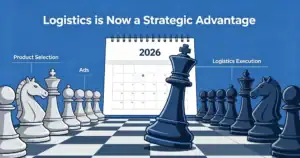
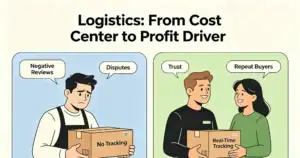
By 2026, competition in cross-border e-commerce has shifted from “fighting for traffic” to “battling over supply chains.” For Amazon sellers, rising ad costs and fierce price wars have made profits harder to come by. Against this backdrop, logistics is no longer just a “cost center” for shipping goods—it’s becoming a key profit driver.
Amazon itself is tightening its logistics requirements. From stricter inbound defect rate standards to delayed shipments hurting your account health, and with customers expecting faster delivery than ever—logistics has moved from “behind-the-scenes support” to a front-line competitive advantage. Those who can keep logistics costs down while improving delivery speed will find the key to thriving in 2026.
AMZ SHIPPER, a logistics provider focused on Amazon sellers, builds on four core strengths: efficient logistics, competitive pricing, reliable partners, and personalized service. Based on these, we’ve identified three major logistics trends for 2026 that Amazon sellers can’t afford to ignore, along with practical ways to handle them.
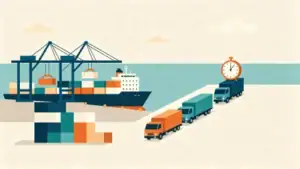
1. Trend One: Delivery Speed Is Becoming a Standard Expectation
1.1 Amazon’s policies make on-time delivery a must
In 2026, Amazon is monitoring seller logistics performance more closely than ever. Metrics like inbound defect rate, late shipment rate, and in-transit exception rate are directly tied to your traffic allocation and Buy Box win rate. Meanwhile, customers on Amazon are paying more attention to estimated delivery dates—products showing “delivery in 2 days” can see conversion rates over 30% higher than those showing “5 days.”
For FBA sellers, running out of stock doesn’t just mean lost sales. It also means losing ad rank while you wait for restocks, and giving competitors a chance to take your spot. For FBM sellers, late shipments threaten your account health directly.
1.2 The real pain points sellers face
| Pain Point | What It Looks Like | Impact on Profit |
|---|---|---|
| Stockout losses | Long transit times kill your hot-selling items | Direct loss of daily revenue + ranking drop |
| Slow cash flow | Money tied up in ocean freight for weeks | Higher capital costs, tighter cash flow |
| Negative reviews | Late delivery upsets customers | Lower store rating, hurts conversion |
The hidden cost of uncertain delivery times is often underestimated. Take a product priced at $29.90. If you run out of stock for just 3 days due to a shipping delay, you don’t just lose those 3 days of sales. You’ll also have to spend extra on ads to push your ranking back to where it was.
1.3 How AMZ SHIPPER helps: turning “efficient logistics” into real delivery commitments
At AMZ SHIPPER, “efficient logistics” is one of our core strengths. Here’s how we help sellers lock in reliable delivery times:
First, we build stable shipping schedules. By working with multiple reliable ocean and air carriers, we secure regular space for our clients. During peak seasons, you won’t be left waiting in line. For popular West Coast destinations, our standard ocean freight typically takes 12-15 business days from our warehouse in China to your products being checked in at an Amazon FBA center.
Second, we handle all the prep work before your goods leave China. Labeling, palletizing, photographing, weighing—everything gets done upfront. That means when your shipment arrives overseas, it’s ready to book an appointment with Amazon right away. No extra waiting.
Third, our reliable partner network keeps things moving on the ground. After customs clearance, your goods are handed off to trusted local trucking companies for fast delivery to Amazon FBA centers. For busy warehouses like ONT8 or LAX9, we offer expedited delivery options.
Here’s a quick comparison of our service options for shipments from China to West Coast FBA centers:
| Service Type | Best For | Estimated Total Transit Time | Recommended For |
|---|---|---|---|
| Economy Ocean | Regular restocking, non-urgent large shipments | 18-22 business days | Budget-conscious sellers with good safety stock |
| Standard Ocean | When you’re running low but not critical | 12-15 business days | Most Amazon sellers—sweet spot of cost & speed |
| Air Express | Emergency restocking, product launches, peak season prep | 5-8 business days | High-turnover items, sudden stockouts |
With these options, sellers can choose the right balance of cost and speed based on their inventory levels and cash flow needs.
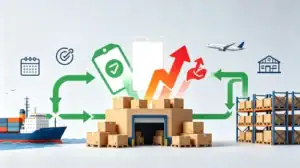
2. Trend Two: Cost Control Now Means Looking at the Whole Picture, Not Just Freight Rates
2.1 Both visible and hidden costs are squeezing sellers
In 2026, the cost structure of international logistics has changed significantly.
Visible costs: While ocean freight rates have come down from their pandemic peaks, surcharges like fuel, peak season, and port handling fees are adjusting more frequently. In the first quarter of 2026, the total cost per kilogram to ship from China to the West Coast is still about 15-20% higher than it was in 2023.
Hidden costs: Two “cost black holes” that many sellers overlook are becoming harder to ignore:
-
Dimensional weight waste: Many sellers still use standard boxes without optimizing them for their specific products. A package that weighs 5 kg but takes up enough space to be charged for 8 kg means you’re paying 60% more than you should.
-
Damage and returns: Poor packaging leads to broken goods during transit. You lose the product itself, plus return processing fees, replacement shipping costs, and potentially negative reviews that hurt your store.
2.2 Common mistakes sellers make with cost management
-
Only looking at the per-kilogram freight rate, ignoring dimensional weight optimization
-
Using one-size-fits-all boxes without considering different SKU shapes and sizes
-
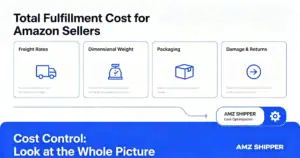
Forgetting to calculate “total fulfillment cost per order” (packaging, labor, shipping, potential returns)
-
Restocking in small, frequent batches that drive up per-unit shipping costs
2.3 How AMZ SHIPPER helps: competitive pricing + personalized service to cut costs from both ends
At AMZ SHIPPER, “competitive pricing” and “personalized service” work together to help sellers save money—not just on freight rates, but on total logistics costs.
On freight rates: By consolidating shipments from multiple clients, we get better rates from carriers and pass the savings on to you. For sellers with consistent volume, we offer long-term rate locks to protect you from surprise peak-season hikes.
On packaging: This is one of the biggest opportunities for cost savings in 2026. AMZ SHIPPER offers custom packaging consulting for Amazon sellers:
-
Size customization: Based on each SKU’s exact dimensions, we calculate the ideal box size to minimize dimensional weight. One of our clients, an electronics accessories seller, reduced their per-box dimensional weight from 8.2 kg to 5.6 kg—a 31.7% drop. That saved them over $20,000 per year in shipping costs alone.
-
Structure optimization: For fragile or oddly shaped items, we design internal supports that keep products safe while using less padding, further reducing volume.
-
Material recommendations: Based on product weight, shipping distance, and destination market requirements, we suggest the most cost-effective box materials and filling options—so you’re not paying to ship air.
Here’s a before-and-after look at packaging optimization:
| Metric | Before Optimization | After Optimization | Savings |
|---|---|---|---|
| Dimensional weight per box | 8.2 kg | 5.6 kg | 31.7% |
| Freight cost per box (China to West Coast) | $38.50 | $26.30 | 31.7% |
| Cushioning material cost per box | $0.85 | $0.45 | 47.1% |
| Damage & return rate | 2.3% | 1.1% | 52.2% |
The numbers above are based on real optimization results across our client base. Your actual savings will vary depending on your products.
By combining front-end freight rate optimization with custom packaging solutions, AMZ SHIPPER helps sellers move beyond “cost per kilogram” thinking to true “total fulfillment cost” control.
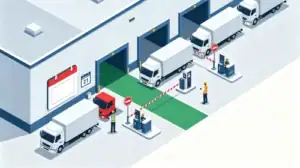
3. Trend Three: Supply Chain Risk Management Is Now a Must-Have
3.1 The global logistics environment in 2026: volatility is the new normal
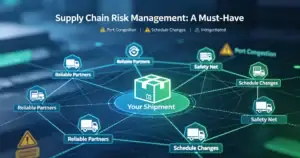
Over the past few years, we’ve seen port congestion, container shortages, canceled sailings, and freight rates going through the roof. Heading into 2026, while things have improved, “short-term, sharp volatility” is becoming a regular feature of international logistics.
Common things that can disrupt or delay your shipments include:
-
Port labor negotiations slowing down operations
-
Extreme weather temporarily shutting down ports
-
Customs at the destination suddenly increasing inspection rates
-
Carriers changing schedules or skipping ports
-
Trucking capacity getting tight in certain regions during peak season
For Amazon sellers who rely on lean inventory management, any one of these issues can cause restocking delays, stockouts, and even have your listing suspended. In a volatile environment, “reliable” is worth more than “cheap.”
3.2 Common challenges sellers face with risk management
-
Not getting information: Your logistics provider doesn’t proactively warn you about delays. You’re left guessing and chasing updates.
-
No backup plan: All your shipments go through the same route or carrier. One breakdown stops everything.
-
Slow to react: By the time you find out there’s a problem, it’s too late to do anything about it.
-
Chasing the lowest price: You go with the cheapest provider but end up paying for it in hidden risks and uncertainty.
3.3 How AMZ SHIPPER helps: building a safety net with reliable partners and personalized service
At AMZ SHIPPER, “reliable partner network” and “personalized service” are how we help sellers manage supply chain risk.
On our partner network: We don’t rely on one carrier, one route, or one overseas agent. By building relationships with multiple partners across different regions, we can:
-
Build in route redundancy: For major routes from China to the West Coast, East Coast, and Europe, we work with at least two carriers. If one has space issues, we switch to the other.
-
Split across ports: Beyond LA/Long Beach, we have proven alternatives like Seattle and Oakland. If one port gets clogged, your freight can go another way.
-
Keep customs options open: We maintain multiple customs clearance channels in destination markets. If one gets backed up with inspections, we pivot to another.
-
Reserve trucking capacity: We have agreements with multiple local trucking companies. During peak season, our clients get priority for delivery slots.
On personalized service: We take a proactive approach to risk management for every client:
-
Risk alerts: When we see congestion building at a destination port or a carrier announces a schedule change, we let you know immediately—and tell you how it might affect your shipment.
-
Actionable advice: Based on your inventory levels and restocking plans, we offer specific recommendations like “switch to another route,” “book the next sailing now,” or “activate air freight backup.”
-
Dynamic stocking recommendations: For seasonal products or items tied to promotions, we help you calculate safe inventory levels and plan restocking ahead of known logistics bottlenecks.
-
Custom contingency plans: For high-value or time-sensitive goods, we work with you in advance to set up emergency procedures (e.g., automatically upgrade to faster shipping if we miss a promised delivery window).
Here’s how proactive vs. reactive risk management compares:
| Aspect | Reactive Approach | AMZ SHIPPER Proactive Approach |
|---|---|---|
| How you learn about risks | You stumble on the news yourself | We monitor and tell you directly |
| When you find out | After delays have already happened | When signs of trouble first appear |
| Options you have | Few—you’re stuck with the outcome | Multiple backup plans to choose from |
| Impact on your business | Stockouts, bad reviews, ranking drops | Risks contained, impact minimized |
| Your effort level | Constant chasing for updates | We keep you informed automatically |
By combining a reliable partner network with personalized, proactive risk management, AMZ SHIPPER helps sellers find certainty in an uncertain logistics world. Logistics stops being a source of risk and becomes your buffer against it.
Cross-Border E-commerce Logistics Is Now a Strategic Advantage for Amazon Sellers
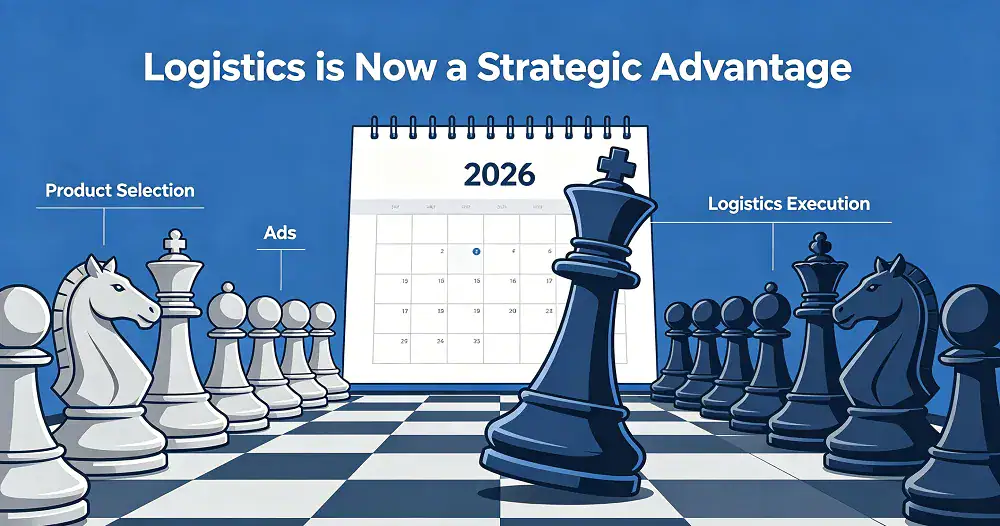
The cross-border e-commerce landscape for 2026 is clear: picking good products and running effective ads are just table stakes. What really separates profitable sellers from the rest is logistics execution.
-
Speed determines how fast you turn over inventory and how efficiently you use your cash
-
Cost control determines how much profit you keep at any given price point
-
Risk management determines whether you keep selling when supply chains get choppy

ABout AMZ Shipper
AMZ Shipper has several years of experience for international logistics Freight Forwarding service. Our service is for importer and exporter, foreign freight forwarders, local and abroad business. Export of 1500 of 40HQ per year for FBA Amazon shipping, 15-30tons of air shipments per month.
Member of WCA. Our company is a professional Amazon freight forwarder that specializes in providing comprehensive and efficient services to customers.