We’re now just one month away from August 12, 2026 – the date when the EU’s Packaging and Packaging Waste Regulation (PPWR, Regulation (EU) 2025/40) becomes fully mandatory. This marks a major shift: EU packaging rules are moving from a “directive” to a “regulation” – meaning one unified, directly enforceable legal framework applies across all member states.
If you’re shipping products to the EU market – whether through Amazon FBA, self-fulfillment, or traditional B2B channels – there’s one thing that should be at the top of your mind right now: Is your packaging compliant?

Why PPWR Is Different This Time
PPWR officially came into force on February 11, 2025, but most of the real compliance requirements don’t kick in until August 12, 2026. Unlike the old Packaging Directive (94/62/EC), this is a regulation – it applies directly to all 27 member states without needing to be turned into national laws. That means consistent standards and consistent enforcement across the board. No more “different interpretations per country.”
The scope is broad – anyone who places packaged products on the EU market falls under PPWR, regardless of where your company is registered or which logistics channel you use. For cross-border sellers, this means if you’re shipping orders to any EU country, you have compliance obligations there.
Looking at the bigger picture, PPWR isn’t happening in isolation. It’s a key piece of the EU’s Green Deal and Circular Economy Action Plan, sitting alongside the Battery Regulation and the Carbon Border Adjustment Mechanism (CBAM). Together, these form a complete new generation of environmental rules for products sold in Europe. What you invest in packaging compliance today is really an investment in your long-term access to the EU market.

Core Requirements Taking Effect on August 12, 2026
Starting August 12, all packaging placed on the EU market must meet these conditions:
| Compliance Area | Specific Requirements |
|---|---|
| Substance Limits | Total combined content of lead, cadmium, mercury, and hexavalent chromium must stay below 100 mg/kg; PFAS in food-contact packaging are strictly restricted |
| Documentation | Manufacturers must complete conformity assessment, sign an EU Declaration of Conformity (DoC), and keep technical files on record |
| Operator Labeling | Packaging must show the manufacturer’s or importer’s company name, trademark, and contact info; if size doesn’t allow printing, you can use accompanying documents instead |
| EPR Registration | Complete Extended Producer Responsibility (EPR) registration in each EU country where you make sales, and upload your registration numbers to the relevant platforms (like Amazon) |

Substance Limits: More Than Just a Total Number
One thing to watch closely – the 100 mg/kg limit applies to the total combined amount of all four heavy metals, not each one individually. So if your packaging contains multiple metallic elements, you need to control each one carefully and make sure the sum stays under the limit. This means asking your packaging suppliers for full material composition reports, not just a verbal assurance.
For food-contact packaging, PFAS restrictions are now in place. These chemicals are commonly used in grease- and water-resistant paper packaging – think takeout boxes, paper cups, and cake liners. If you sell food or food-contact items, you need a written statement from your supplier confirming no restricted PFAS were used, backed by actual test data.
Documentation: Keep Technical Files for Ten Years
The Declaration of Conformity (DoC) isn’t just a simple self-declaration form. It’s a formal statement that you’ve gone through the proper conformity assessment process. The DoC must be drafted in at least one EU official language and include: a description of the packaging, all applicable regulatory requirements, any involvement from notified bodies (if relevant), and your signature as the manufacturer.
Just as importantly, technical documentation must be kept alongside the DoC – things like design drawings, material lists, test reports, and recyclability assessments. These documents need to be kept for ten years from the date the packaging is placed on the market, ready for inspection by regulators at any time. And here’s the catch – this obligation doesn’t end if you switch suppliers. As the brand owner, you’re the one ultimately responsible for keeping these records.
Labeling: Small Packaging Has Options
The regulation does say you need to print the manufacturer’s or importer’s name, registered trademark, and a way to contact you (postal address or email) on the packaging. For really small items – like tiny cosmetics or small electronic accessories – this can be tricky.
The regulation offers a practical solution: if the packaging is truly too small to fit all the information, you can put it in an accompanying document – like an instruction manual, warranty card, or a separate insert. But keep in mind: you’ll need to be able to prove that the packaging couldn’t physically accommodate the information. It’s a good idea to take photos and keep written notes explaining why you chose this approach.
Who Counts as the “Manufacturer”? Brand Owners Can’t Pass the Buck
PPWR has a clear definition of “manufacturer”: anyone who places packaging on the market under their own name or trademark is considered the manufacturer. So if your brand is on the packaging, the responsibility for conformity assessment, drafting the DoC, and preparing technical files falls on you – not your contract manufacturer or packaging supplier.
Importers and distributors also have their own obligations. Importers must verify that the manufacturer has done the conformity assessment properly. Distributors need to exercise reasonable care while the packaging is in their supply chain. Every link in the chain has a role to play.
A special note for private-label sellers. Many cross-border sellers use an OEM model – products are made by factories, packaging may be provided by the factory or customized by the seller, and ultimately it’s the seller’s brand on the package. Under PPWR, you’re the manufacturer and must complete all compliance procedures yourself or through an authorized representative. The factory’s test reports can be part of your technical file, but the DoC must be signed in your name.

Packaging Recyclability: A Roadmap for the Next Three Years
While the full recyclability requirements have a phased timeline, PPWR has already set a clear direction for packaging design. From 2030, all packaging will need to meet recyclability standards. But even before that, starting August 12, 2026, operators already have a duty to ensure their packaging meets the “basic” recyclability level.
In practice, this means avoiding hard-to-separate multi-layer materials, excessive use of dark-colored plastics (which interfere with optical sorting), and adhesives or coatings that complicate the recycling process. The European Commission is still working on detailed “recyclability assessment methods” and “design-for-recycling” guidelines, but the principle is clear: packaging should be designed with its end-of-life in mind from the very beginning.
For e-commerce sellers, this doesn’t mean you need to completely overhaul your packaging materials overnight. But it’s worth starting conversations with your packaging suppliers about design improvements over the next year – so you don’t find yourself falling behind as the rules gradually tighten.
Self-Check Checklist: Are You Ready?
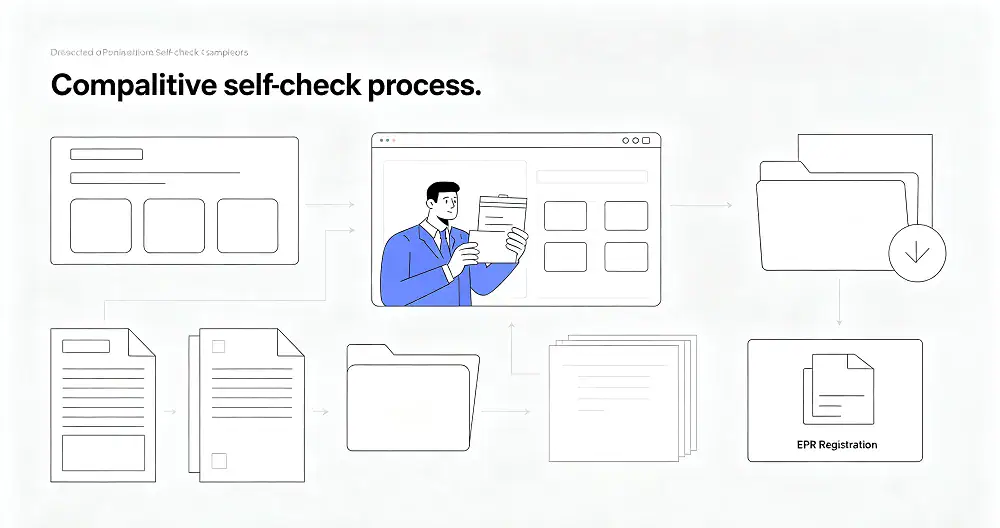
Before August 12 arrives, here’s a quick checklist to work through:
- I’ve completed EPR registration in every EU country where I have sales (including countries where I don’t have a local presence), and I have valid registration numbers
- I’ve uploaded my EPR numbers to the compliance portal on each platform (e.g., Amazon’s “Regulatory Compliance” page)
- I’ve asked my packaging suppliers for material composition reports confirming heavy metals are below the 100 mg/kg limit
- For food-contact packaging, I’ve confirmed PFAS levels are compliant
- I’ve drafted and signed an EU Declaration of Conformity for each packaging type, with technical files ready
- I’ve checked all sales packaging to ensure manufacturer name, trademark, and contact information are printed (or that I have accompanying documents prepared)
- I’ve saved all test reports, design drawings, and other technical documents properly, and I have a plan for keeping them for ten years
How AMZ Shipper Can Help You Stay on Track
As your international logistics partner, AMZ Shipper encourages you to start your packaging compliance assessment right away. With our established European logistics network and customs clearance experience, we can support you in these areas:
-
Document Pre-Check Support – we can help review your packaging labels, DoC, and other documents before shipment to reduce the chance of issues during customs clearance
-
Customs Clearance Coordination – as customs authorities may step up packaging inspections early in the PPWR implementation, we work closely with our clearance agents to help your goods get through smoothly
-
Reliable Shipping Lanes – compliance is the first step, but timely delivery is just as important. AMZ Shipper is committed to providing stable logistics services that aren’t disrupted by regulatory changes

Recommended Timeline for Getting Ready
Given that we’re already in mid-July and the August 12 deadline is just a month away, here’s a suggested pace:
| Timeline | Tasks to Complete |
|---|---|
| Now – July 20 | Submit EPR registration applications in all relevant countries (some are faster than others, but don’t cut it too close); reach out to suppliers for material test reports |
| July 21 – July 31 | Draft and sign your DoC and compile technical files; finalize your labeling approach (print or insert); upload all registration numbers to platforms |
| August 1 – August 11 | Spot-check a few shipments for packaging documents; confirm with your logistics partner that clearance paperwork is ready |
| Starting August 12 | Ensure every new shipment fully meets PPWR requirements, and keep all documents on file for future reference |
The EU’s green regulatory framework is expanding quickly – from battery rules to carbon adjustments to PPWR. Compliance capability has become a core competitive advantage for selling into Europe. Packaging compliance isn’t optional – it’s a task that needs to be completed in the next 33 days. Time is tight, so starting now is the smartest move you can make.
ABout AMZ Shipper
AMZ Shipper has several years of experience for international logistics Freight Forwarding service. Our service is for importer and exporter, foreign freight forwarders, local and abroad business. Export of 1500 of 40HQ per year for FBA Amazon shipping, 15-30tons of air shipments per month.
Member of WCA. Our company is a professional Amazon freight forwarder that specializes in providing comprehensive and efficient services to customers.