In international trade and cross-border e-commerce logistics, FCL and LCL are two of the most fundamental shipping modes you’ll come across. Pick the right one, and your supply chain runs smoothly with costs under control. Pick the wrong one, and you could be looking at delays, damaged goods, or hidden fees that eat into your margins.
What Is FCL Shipping?
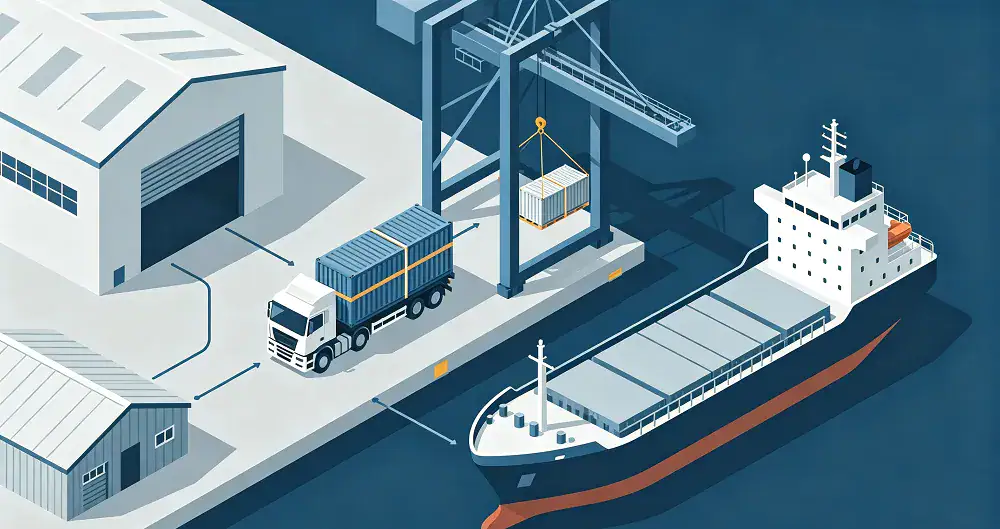
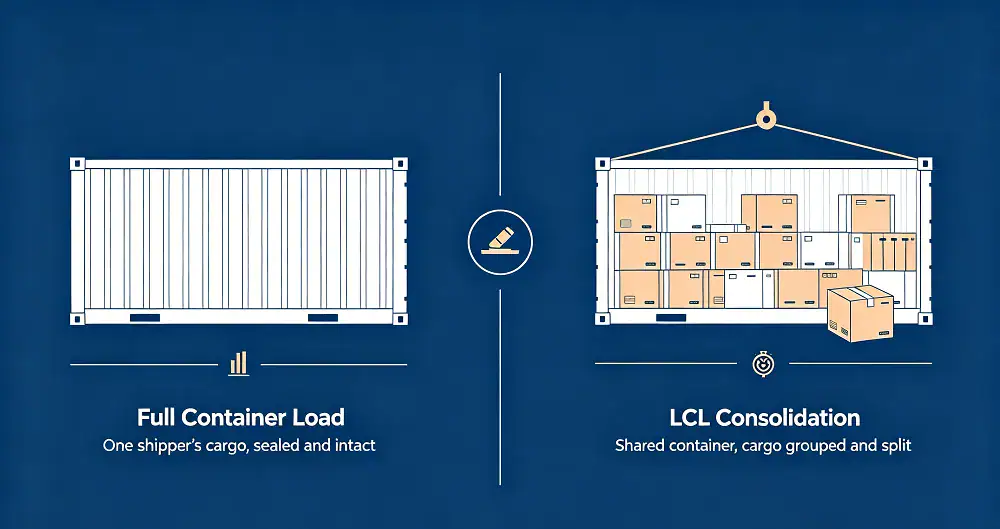
FCL stands for Full Container Load. It means one shipper’s goods fill an entire container, from packing and sealing at the origin all the way to unloading at the destination. The container stays sealed the whole trip—no one opens it or moves the cargo to another box along the way.
Key features:
-
Exclusive use – the whole container is yours alone; your cargo sits undisturbed
-
Intact seal – the container gets sealed at your warehouse and stays that way until it reaches the port of destination
-
Short and simple process – packing at factory → truck to port → loaded onto vessel → unloaded at destination port → truck to warehouse. No unpacking and repacking in between
Common container sizes:
-
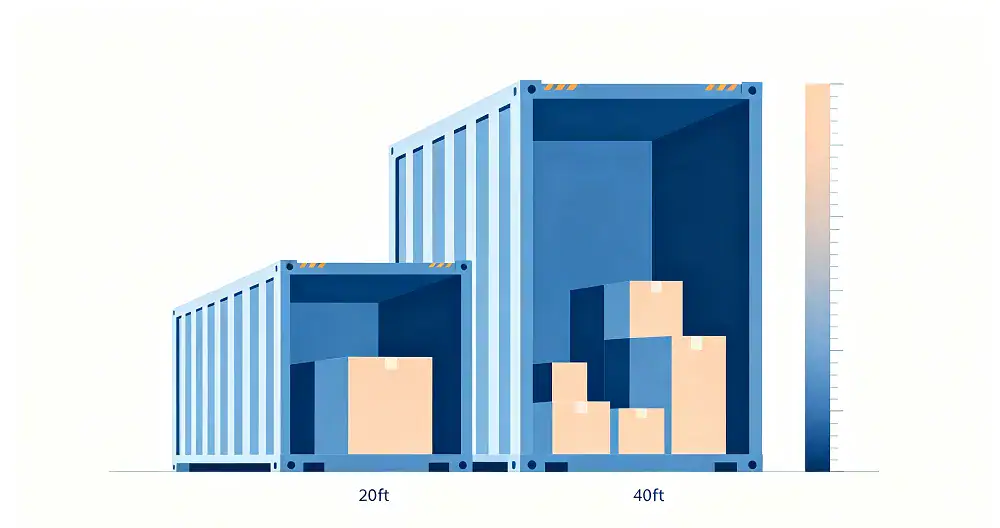
20-foot container (about 28–33 cubic meters of usable space)
-
40-foot container / 40-foot high cube (about 58–68 cubic meters of usable space)
What Is LCL Shipping?
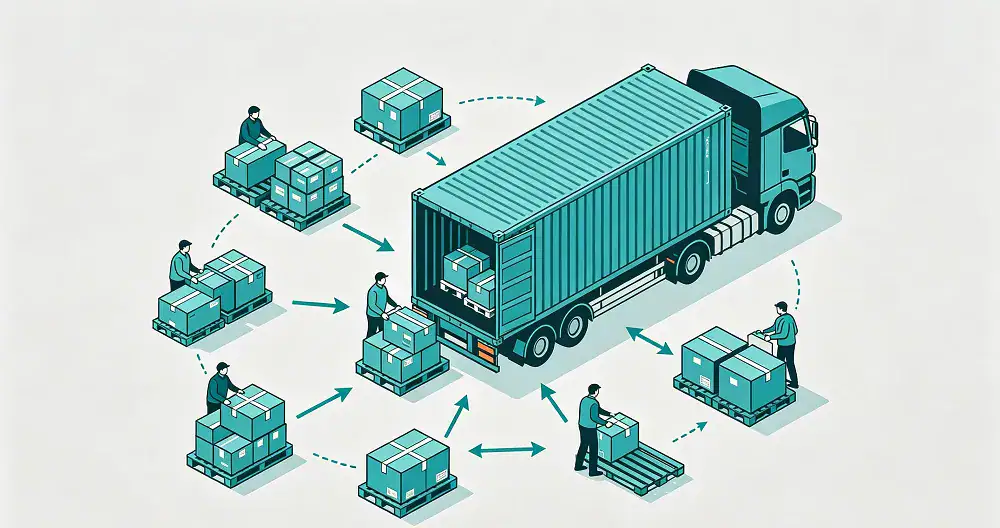
LCL stands for Less than Container Load. It means multiple shippers’ smaller shipments share one container. Their goods are consolidated at the origin port, packed together, and then separated at the destination port for individual pickup.
Key features:
-
Shared space – your cargo travels alongside other shippers’ goods, and you pay only for the volume you use
-
Longer process – cargo collection → consolidation → customs clearance → loading → unloading at destination → deconsolidation → individual pickup. There are two extra steps compared to FCL
-
Flexible – you can ship smaller quantities by sea without paying for a whole container, which works well for testing new products or restocking
FCL vs. LCL: A Side-by-Side Comparison
| Aspect | FCL (Full Container Load) | LCL (Less than Container Load) |
|---|---|---|
| Container use | Yours alone | Shared among multiple shippers |
| How you’re charged | Fixed rate per container | Based on volume (CBM) or weight (whichever is higher) |
| Transit time | Faster – direct routing, no intermediate stops. Usually 3–6 weeks depending on the route | Slower – you wait for cargo consolidation and deconsolidation, which adds roughly 5–10 extra days |
| Cargo safety | High – the seal stays intact, fewer handling points, and liability is clear if something goes wrong | Relatively lower – multiple handling and mixed cargo increase the risk of damage, and responsibility can be harder to pin down |
| Operational complexity | You handle the packing yourself; the process is fairly straightforward | You rely on your forwarder for consolidation and deconsolidation, with more paperwork and coordination involved |
How to Decide Between FCL and LCL
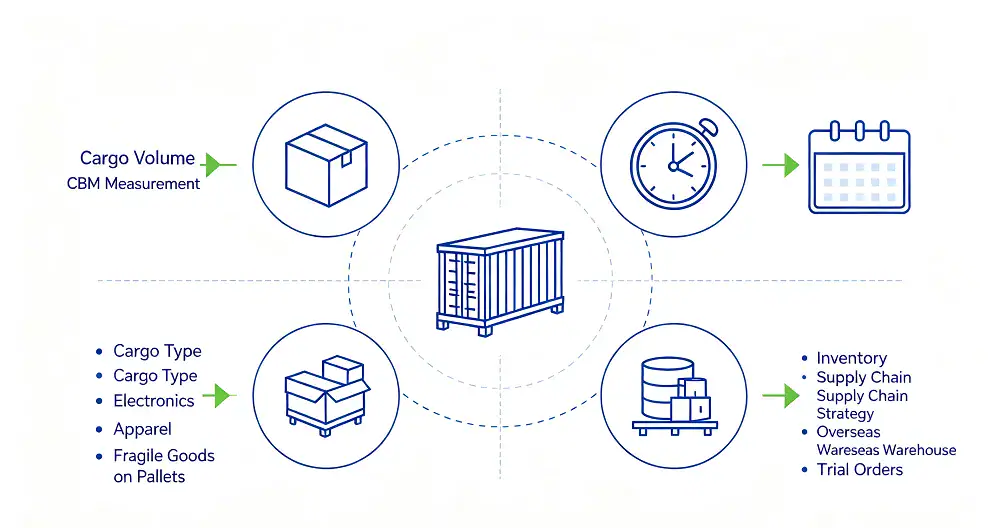
1. Look at your cargo volume – find the cost crossover point
FCL is charged per container, while LCL is charged per cubic meter. At a certain volume, the total cost of LCL will exceed the flat rate of an FCL container. That’s what we call the “cost crossover point.”
-
For most routes, the crossover point falls somewhere around 13–15 cubic meters
-
Volume > 15 CBM – FCL usually makes more sense financially, and it’s faster too
-
Volume < 13 CBM – LCL is more economical; you avoid paying for empty space you don’t need
On certain routes, during peak seasons, or for special cargo, the crossover point can shift to 14–20 CBM. It’s always a good idea to run the numbers based on your specific situation.
2. Look at your timeline
-
Urgent restocking, seasonal products, or promotional items – go with FCL. LCL adds 5–8 business days on average because of consolidation and deconsolidation, and during peak seasons it can take even longer. Missing your sales window could cost you far more than the freight difference
-
Regular replenishment or non-urgent goods – LCL is fine. The extra time is usually manageable, and it keeps your costs down
3. Look at what you’re shipping
-
High-value goods (electronics, luxury items), fragile products, precision equipment – FCL is the safer choice. The extra handling and mixed loading in LCL significantly increase the risk of bumps and pressure damage. With FCL, you could reduce your damage-related claims by up to 40%
-
Ordinary goods (apparel, home goods, small appliances) – if your packaging is solid, LCL is a reasonable option, especially when you’re just getting started
-
Special cargo (batteries, liquids, etc.) – check with your carrier ahead of time. Some may not accept these for LCL, or they might charge extra fees
4. Look at your overall supply chain strategy
-
Testing new products or small trial orders – LCL is perfect. You don’t have to commit to a full container or tie up too much capital in inventory
-
Established sellers with steady orders – FCL gives you more control, lower per-unit shipping costs, and works well with overseas warehousing
-
Mixed approach – move your core SKUs via FCL for reliable supply, and use LCL for test runs or emergency top-ups
Hidden Costs and Risks to Watch Out For
With FCL, keep an eye on:
-
Underestimating your cargo volume – if the container isn’t full, you’re still paying the full rate
-
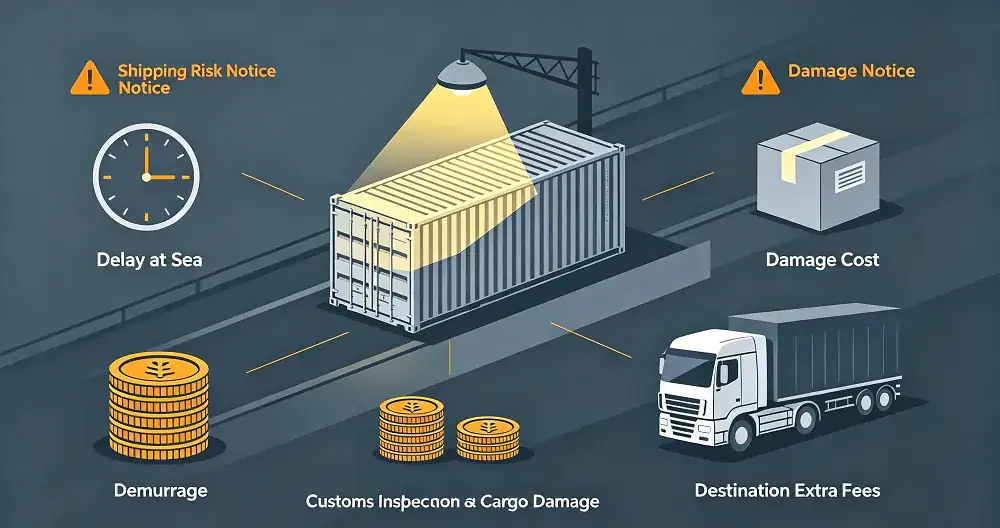
Demurrage charges at the destination port – most ports give you 4–7 free days, but after that, you’ll be charged daily if your shipment gets held up in customs
With LCL, watch for:
-
Customs issues with one shipper’s cargo can delay the entire container – your goods could get stuck because of someone else’s problem
-
Mixed cargo – if another shipper’s items violate regulations, it can hold up everyone’s shipment
-
Extra fees at the destination – deconsolidation charges, documentation fees, and LCL service fees can add up. Always ask for a full breakdown upfront so there are no surprises
How AMZ Shipper Helps You Make the Right Call
As a freight forwarder focused on cross-border e-commerce and FBA logistics, AMZ Shipper knows that there’s no one-size-fits-all answer when it comes to FCL vs. LCL. The right choice depends on your specific situation.
Here’s how we approach it:
-
Volume-based recommendations – based on your cargo’s size, weight, and timeline, we’ll walk you through both options with cost projections. We’ll help you find that crossover point so you’re not guessing
-
Clear LCL service standards – for our West Coast (Los Angeles/Long Beach) and East Coast (New York/New Jersey) routes, we’ve set internal processing targets. Once your cargo arrives at our designated warehouse, we aim to have it consolidated and loaded within 10 business days. If we miss that window due to our own fault, we’ll let you know
-
Itemized quotes upfront – freight charges, customs clearance fees, destination trucking, optional services – everything is spelled out before you ship. Unless you change the cargo type or shipping terms, you won’t see surprise fees on your final bill
-
Dedicated support with a 4-hour response window – our team covers both U.S. and China business hours. Every client gets a dedicated account manager who tracks your shipments and sends regular status updates
-
Strong network coverage – we have consolidation warehouses in Shenzhen, Yiwu, Guangzhou, and Qingdao, covering the main manufacturing hubs in southern, eastern, and northern China. We work directly with multiple shipping lines and handle over 1,500 40HQ containers of FBA-related sea freight each year
Choosing between FCL and LCL comes down to volume, timing, cost, and risk tolerance. Understanding how each mode works – and what it really costs beyond the freight rate – puts you in a better position to make smart decisions. And when you’re not sure which way to go, a logistics partner who takes the time to understand your business can make all the difference.
ABout AMZ Shipper
AMZ Shipper has several years of experience for international logistics Freight Forwarding service. Our service is for importer and exporter, foreign freight forwarders, local and abroad business. Export of 1500 of 40HQ per year for FBA Amazon shipping, 15-30tons of air shipments per month.
Member of WCA. Our company is a professional Amazon freight forwarder that specializes in providing comprehensive and efficient services to customers.