Introduction: Logistics Is No Longer “Backend Support” — It’s the Frontline in 2026
By 2026, competition in cross-border e-commerce has fully entered a phase of refined operations focused on experience, delivery speed, and cost control. Logistics efficiency is no longer just supply chain support — it has become a make-or-break factor that directly determines whether sellers can survive and turn a profit in the market.
Over the past year, the end of the U.S. “de minimis” exemption has caught countless sellers who relied on small-package direct shipping off guard. Data shows that after this policy took effect, parcel volume sent through postal systems dropped by 81%. Meanwhile, postal services in at least 25 countries have announced suspensions or pauses in shipments to the U.S. Against this backdrop, traditional logistics models are struggling, and AI, automation, and smart transport are shifting from “future concepts” to essential tools for solving today’s problems.
For a specialized cross-border logistics provider like AMZ Shipper, turning these technological capabilities into tangible benefits — stability, transparency, and on-time delivery — is exactly what building a competitive edge looks like in 2026.
Pain Points: Three Major Logistics Challenges Facing Cross-Border Sellers in 2026
Challenge 1: The “Mystery Box” of Costs and Policy Risks
The hidden surcharges — fuel add-ons, remote delivery fees, and the like — buried in traditional logistics quotes have long been eating into sellers’ margins. But since 2025, the cost impact has become even more severe due to structural tightening in customs and tax policies across multiple countries.
On August 29, 2025, the U.S. officially suspended the duty exemption for small parcels valued at $800 or less. The OBBBA Act, effective July 1, 2027, will permanently abolish this exemption. After the policy took effect, SHEIN and TEMU saw daily active users in the U.S. drop by 25% and 52%, respectively. This shows that logistics compliance has evolved from a back-office function into a strategic factor that directly affects front-end sales.
Challenge 2: Speed Anxiety in the Age of Delivery Race
On major e-commerce platforms, order abandonment rates are high when delivery times are too long. “Fast” and “stable” have become key factors in how platforms allocate traffic and how consumers make buying decisions. However, with widespread service disruptions in global postal systems due to policy changes, delivery uncertainty has only grown. Industry reports indicate that several European postal operators have temporarily restricted or suspended U.S.-bound services, citing unclear tariff collection mechanisms and data requirements. This fragility pushes sellers to seek logistics partners with stronger end-to-end control.
Challenge 3: Operational Inefficiency and Human Errors
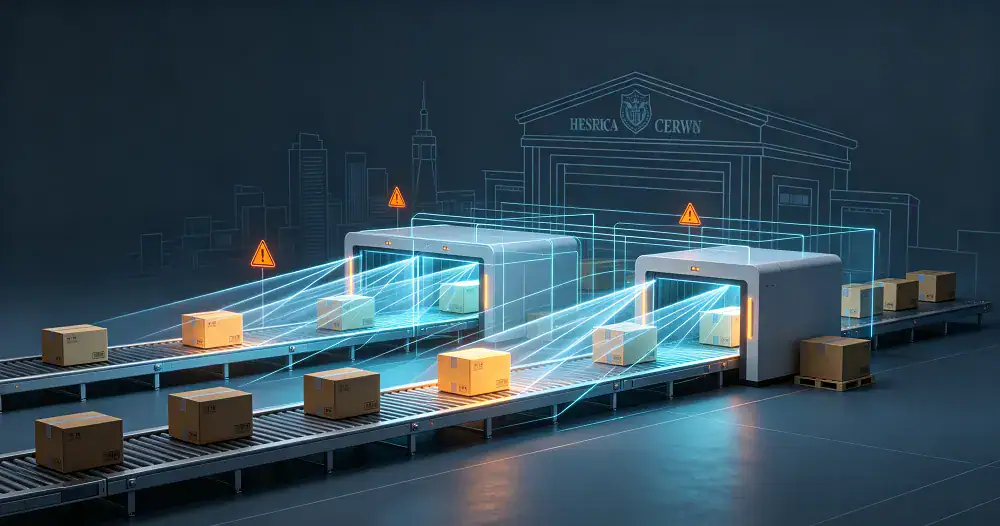
Too many operations staff are still buried in repetitive tasks — tracking shipments, preparing documents, and coordinating customs checks. In cross-border customs clearance, traditional manual review faces multiple headaches: multi-language document recognition, slow adaptation to rule changes, and low efficiency. Take waterproof boots as an example — if the sole material differs, the U.S. Customs duty rate can jump from 12.5% to 37.5%. Misclassification and missing declaration info don’t just add costs; they can trigger customs holds that delay entire shipments.
AI and Automation: From Standalone Tools to Full-Chain Intelligence
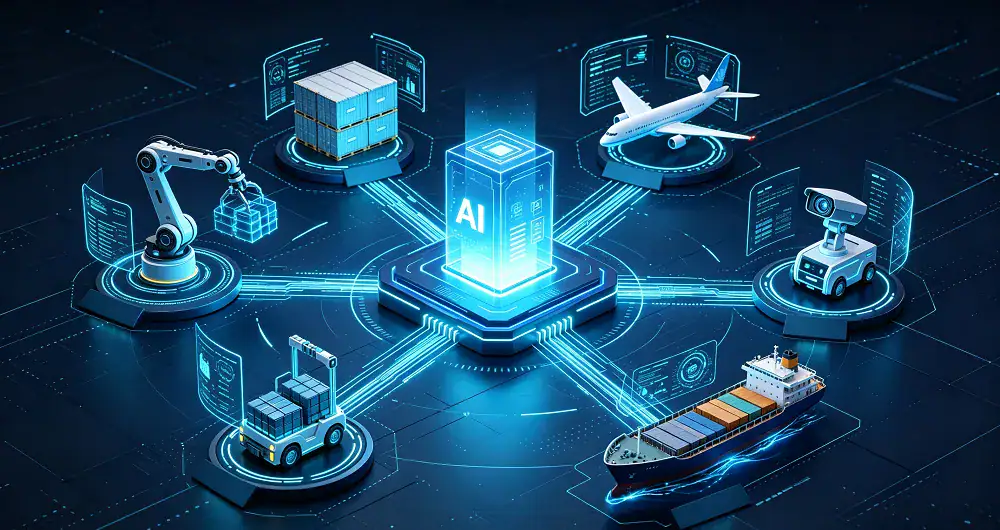
Faced with these challenges, AI and automation are no longer nice-to-have additions. They’ve become the smart operating system running through the entire logistics chain.
Smart Decision-Making: From Gut Feel to Data-Driven Choices
Dynamic Route Optimization and Emergency Playbooks
UPS’s dynamic ORION routing system uses real-time data to re-sequence delivery stops, cutting 2–4 miles per driver per day. FedEx’s AI-powered Weather Playbook helped its Memphis network recover twice as fast from a winter storm in 2024 compared to similar past events. These examples show that AI can significantly boost a transport network’s resilience and efficiency when things go wrong.
Smart Cost Simulation and Quoting
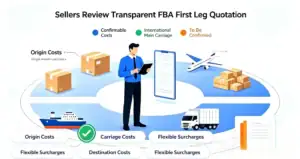
AI can generate accurate quotes based on real-time data — cargo details, shipping routes, fuel surcharges, and more — so sellers can estimate costs clearly before shipping and avoid unpleasant surprises on the final bill. This fits perfectly with AMZ Shipper’s commitment to itemized written quotes and transparent service. When clients can see exactly what they’re paying for, trust follows naturally.
Process Automation: Freeing People and Cutting Errors
AI Vision and Automated Warehousing
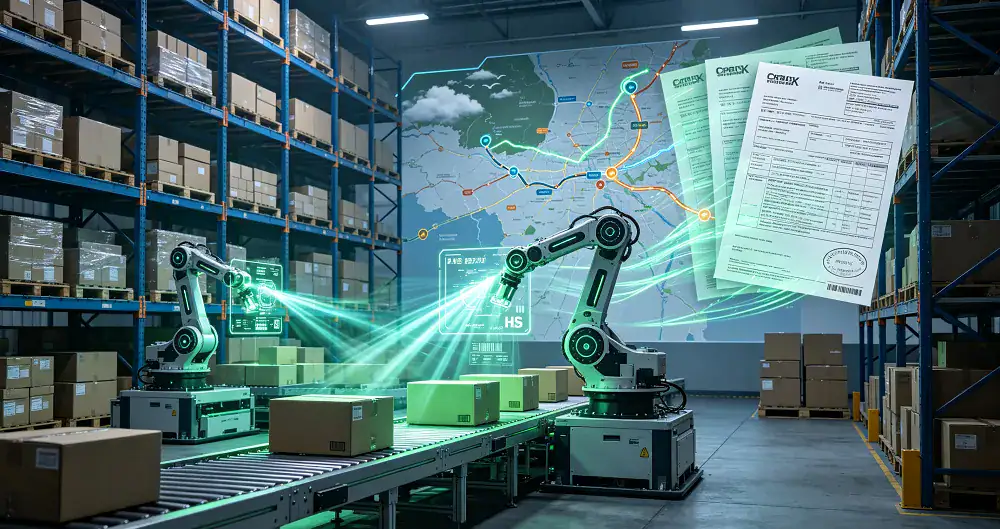
On the warehousing side, AI computer vision can analyze package dimensions and suggest the optimal box size, cutting down wasted space and reducing dimensional weight costs. Amazon’s Vision-Assisted Package Retrieval (VAPR), deployed on its Rivian delivery vans, projects green “O”s and red “X”s to help drivers quickly find the right packages. This saves over 30 minutes per route and reduces driver physical and mental effort by 67%.
RPA and AI Agents in Customs Clearance and HS Coding
At the customs bottleneck, AI large language models have already made real progress. SF Express, for instance, has rolled out a smart customs solution powered by its self-developed “Fengyu” LLM, with HS code matching accuracy above 90%, covering more than 30 country lanes, and cutting manual review time to about 30 seconds. Guangzhou’s “Single Window” platform offers an AI-based pre-classification service with 95% accuracy for the first three digits of HS codes. Some logistics platforms have even launched “coding agents” that connect to the latest tariff rules in real time, delivering complete and compliant HS codes within seconds — a far cry from the slow, error-prone manual approach.
Here’s a quick comparison of how AI changes key logistics processes:
| Logistics Process | Traditional Approach | With AI and Automation |
|---|---|---|
| HS Code Classification | Manual lookups, prone to errors and delays. | AI matches codes with 90%+ accuracy, results in seconds. |
| Customs Document Review | Staff read multi-language docs; rules update slowly. | AI reviews in ~30 seconds, 60% more efficient. |
| Warehouse Sorting | Manual barcode scanning and sorting by stop. | Computer vision with visual cues, faster and fewer errors. |
| Route Planning | Driver experience and static maps. | AI optimizes routes in real time, saving miles and time. |
Smart Transport: The Solid Foundation for Speed
Upgrading transport networks with smart technology is the physical backbone that turns “global delivery in X days” from a slogan into reality.
Key Trend: Capacity Networks Meet Digital Coordination
In 2026, several major logistics players are building large-scale robot-staffed warehouses in key overseas markets to support local fulfillment for e-commerce platforms. These automated facilities use higher storage density and AI scheduling to boost next-day and two-day delivery coverage. Meanwhile, “digital twin” technology is being used in warehouse design and operations — running thousands of simulations before deploying autonomous robots to ensure stability and efficiency.
From “Delivered” to “Delivered Right”
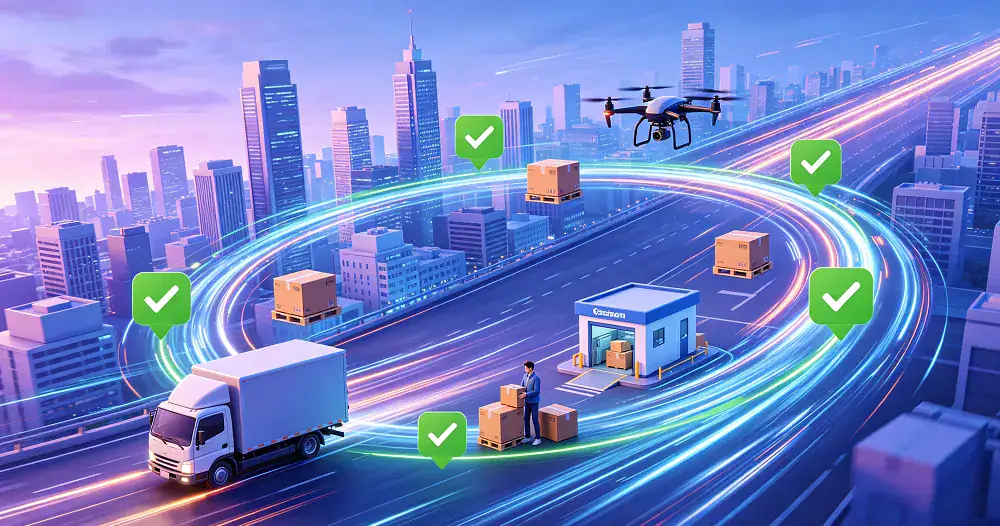
Real smart transport isn’t just about speed — it’s about reliability and compliance. With the de minimis exemption gone, every shipment, regardless of value, must go through formal declaration and pay applicable duties and taxes. This puts a premium on logistics providers with strong data integration and customs collaboration capabilities. Sellers need partners who can provide end-to-end digital tracking and real-time visibility into customs status — that’s how you keep your delivery promises under the new rules.
Partnering with a Reliable Smart Logistics Provider
AI, automation, and smart transport are no longer future concepts — they’re must-have capabilities in 2026 for sellers facing policy shifts, cost pressures, and the race for faster delivery. When choosing a logistics partner, sellers should look for these qualities:
-
Transparency — Can they provide itemized quotes, real-time tracking, and clear customs status updates?
-
Automation maturity — Do they use AI in warehousing, sorting, and customs classification to reduce errors and boost efficiency?
-
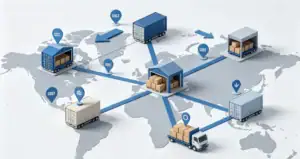
Network stability — Do they have diverse carrier relationships (direct bookings with multiple shipping lines and airlines) and contingency plans for disruptions?
-
Policy responsiveness — How quickly do they adapt to new customs rules and integrate compliance requirements into daily operations?
AMZ Shipper, with its 5-day LCL loading commitment, 4-hour customer response time, and global agency network, is steadily combining standardized processes with automated monitoring to deliver a service that is reliable, fast, and steady. In 2026 — a year of major structural change — a logistics partner that bakes transparency, responsiveness, and stability into its operations through technology and process discipline is exactly what cross-border sellers need to navigate the road ahead.