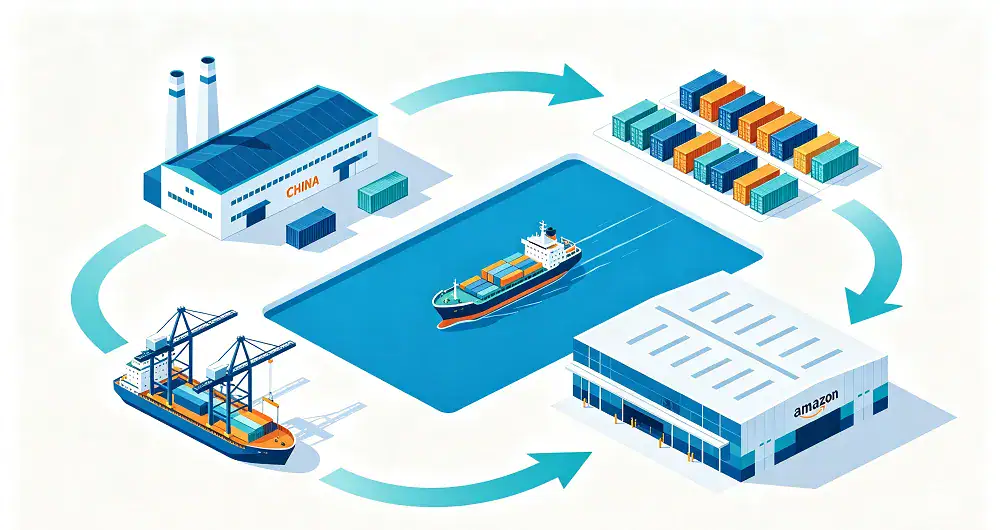
For Amazon FBA sellers, customs clearance is probably the least predictable part of the whole logistics chain, and also where things most often go wrong. Getting your goods from a factory in China all the way to an Amazon fulfillment center involves two separate clearance processes—export customs at origin and import customs in the destination country. A slip-up at any stage can mean your shipment gets stuck at port, racks up unexpected fees, or even misses your peak sales window. This article breaks down the entire FBA customs clearance process step by step, with practical tips for different product categories.
Who Actually Acts as the Importer of Record for Your FBA Shipment?
Before we dive into the process, there’s one key role you need to understand—the Importer of Record (IOR). This is the party legally responsible for ensuring the goods comply with all import regulations, paying the duties and taxes, and filing the necessary paperwork.
Here’s something a lot of sellers get wrong: Amazon does not act as the importer. The receiver you put on your shipping documents is typically “Amazon Fulfillment Services,” but that’s just the final delivery address—it doesn’t make Amazon responsible for customs. If you don’t have a U.S. entity, you’ll need to handle this one of two ways. You can register for a foreign importer tax ID and act as your own importer, or you can go with a logistics provider that offers DDP (Delivered Duty Paid) services, where the forwarder takes care of clearance on your behalf. The second option is easier, but you do give up some control over the clearance details.
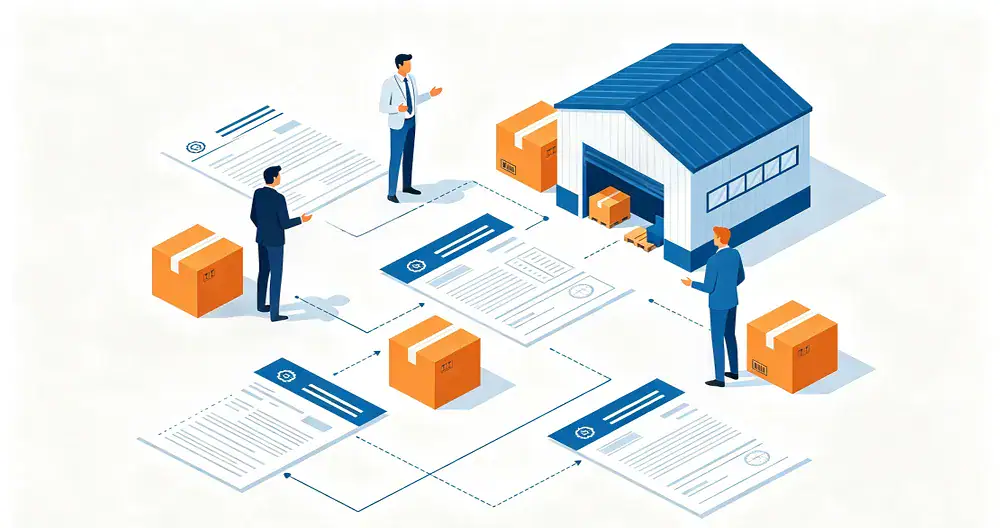
The Four-Step FBA Customs Clearance Process
Step 1: Pre-Shipment—Get Your Paperwork Right
The quality of your customs documents directly determines how smoothly your shipment clears. Here’s what you’ll need:
-
Commercial Invoice – Needs to show the shipper, receiver (again, Amazon Fulfillment Services, not just “Amazon”), product names in English, quantities, unit prices, total value, HS codes, and country of origin. Be specific with descriptions.
-
Packing List – Lists the dimensions and weight of each carton, along with the SKUs and quantities inside. If you’re mixing different items in one box, make this extra clear.
-
Customs Declaration Form – Usually prepared by your freight forwarder; you’ll just need to review and confirm the details.
The most common mistakes we see? Declared values that don’t match the actual cost, HS codes that are flat-out wrong, and vague descriptions like “Gift” or “Samples.” These can cause delays or even get your shipment rejected. A smart move is to send all your documents to your clearance agent at least three days before departure for a pre-review—this catches issues while there’s still time to fix them.
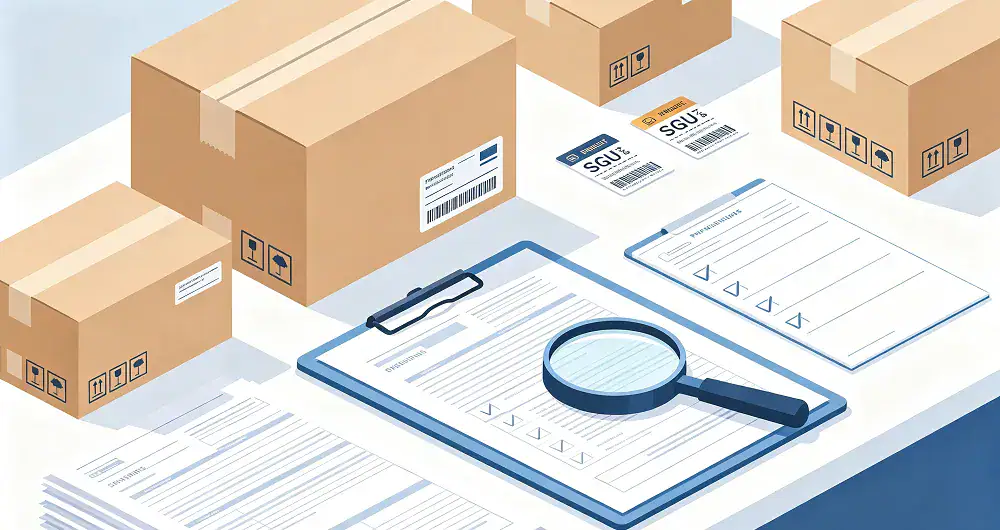
Step 2: Customs Declaration at the Destination Port
Once your shipment arrives at the destination port, the clearance agent needs to file the entry within a specific timeframe. In the U.S., for example, Customs and Border Protection (CBP) requires importers to file an entry summary within 15 calendar days of the arrival date, but the initial entry data must be submitted pretty quickly after the vessel docks. Miss these windows, and you’ll start accruing demurrage charges.
The most critical part of this step is getting the HS code right. The same product can fall under different classifications depending on its intended use, and picking the wrong one means you’ll pay either too much or too little duty—and if you’re audited, that’s a problem.
When it comes to declared value, keep in mind that for FBA shipments, you’re declaring the factory cost or purchase price—not what you sell for on Amazon. Declaring at retail price would make your duty bill skyrocket, but declaring artificially low to save a few dollars can get you penalized if customs decides to revalue your goods.
One absolute must: choose DDP (Delivered Duty Paid) shipping terms. If you go with DDU (Delivered Duty Unpaid), Amazon—as the receiver—will not pay the import duties for you. Your shipment will literally sit at the port with nobody to clear it.
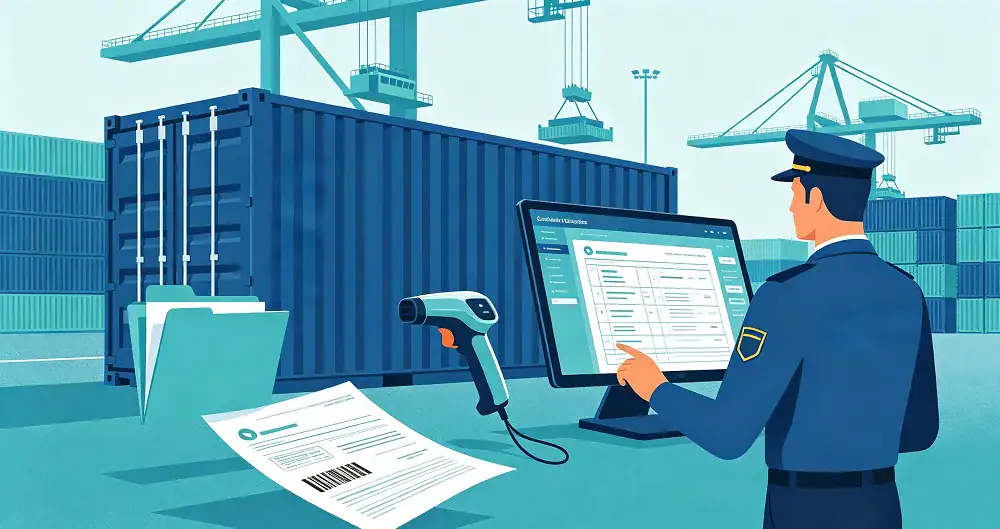
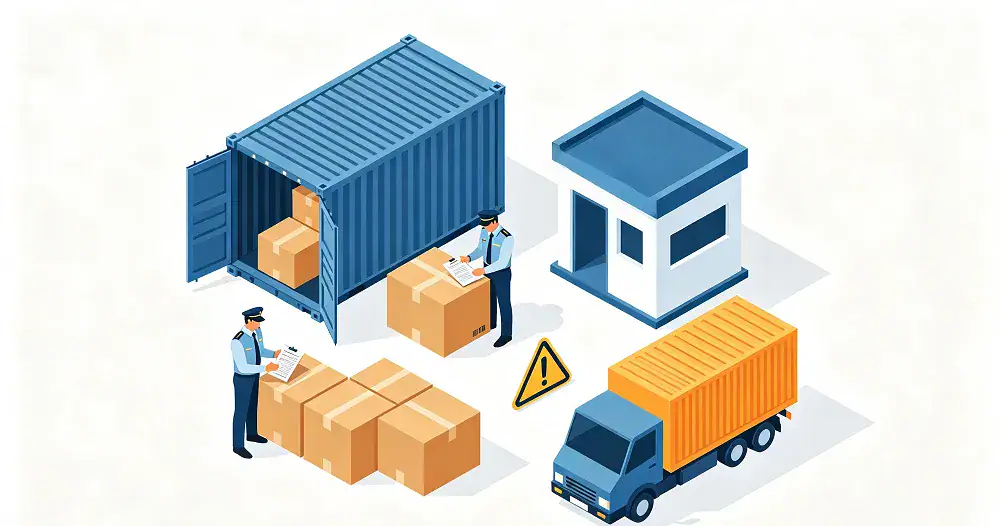
Step 3: Handling a Customs Inspection
Customs inspections are unpredictable by nature, but knowing a bit about how they work can help you prepare. Some product types get checked more often than others. Items like electronics and apparel tend to have higher inspection rates, especially if it’s your first time importing that particular product.
Quick Reference: Common Clearance Pitfalls
| Issue Type | What It Looks Like | What Happens |
|---|---|---|
| Value Mismatch | Declaring a lower value to reduce duty | Penalties, back taxes, possible seizure |
| Wrong HS Code | Picking a classification that doesn’t match the product | Incorrect duty calculation, clearance delays |
| Inconsistent Documents | Info doesn’t line up across invoice, packing list, and label | Customs rejects the filing, delays pile up |
| Missing Certifications | Shipping batteries without UN38.3 or MSDS | Shipment gets rejected or returned |
There are two types of inspections. Document-based checks are usually resolved within 1–2 days—you just submit the requested paperwork. Physical inspections take longer, typically 3 to 7 days, because the cargo needs to be moved from the dock to an inspection facility. These also come with extra fees for drayage and handling. The key is responding fast as soon as you get a notification—delays in providing the requested info just add more days (and more costs).
Step 4: Post-Clearance Delivery and Cost Optimization
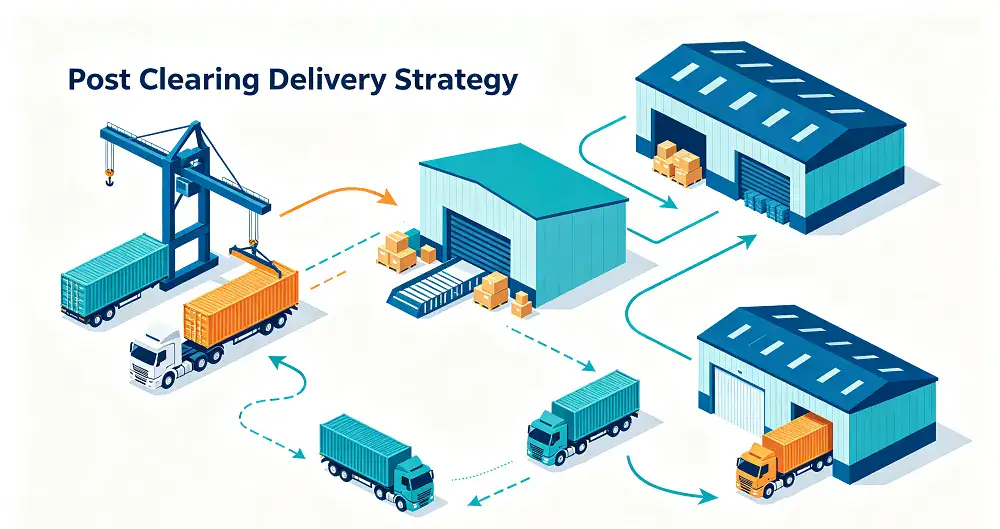
Getting customs clearance doesn’t mean you’re done with the port. Most terminals give you 3 to 5 free days to pick up your cargo; after that, per-day storage fees kick in. You’ll need to arrange trucking to get the goods to Amazon’s warehouses as soon as they’re released.
Different FBA warehouses have different appointment availability. Popular ones like ONT8 and LGB8 might require booking a delivery appointment 3 to 5 days in advance. If you’re sending goods to multiple fulfillment centers, consider moving everything to a third-party warehouse first, splitting the shipment there, and then arranging deliveries to each FBA location. This approach often works out cheaper than dispatching individual trucks directly from the port.
How Clearance Differs for General Cargo vs. Battery-Powered Products
Not all shipments go through customs the same way. There are some real differences between regular goods and products that contain lithium batteries, and you need to plan accordingly.
| Aspect | General Cargo | Battery-Powered Products |
|---|---|---|
| Required Documents | Commercial invoice, packing list, standard certifications | Everything for general cargo + UN38.3, MSDS, etc. |
| Inspection Risk | Around 5%–8% | Around 15%–20% |
| Typical Clearance Time | 3–5 days | 5–8 days |
| Extra Costs | Basic duty and service fees | Hazardous material handling fees, specialized paperwork |
General cargo is really about accuracy—if your paperwork matches what’s in the boxes, you’ll normally clear within a few days. Battery-powered items (anything with lithium batteries) add an extra layer of compliance that takes more time and costs a bit more, so factor that into your shipping timelines.
Three Practical Tips to Avoid Clearance Headaches
1. Be honest with your declared values.
This is the #1 trap sellers fall into. Under-declaring to save on duties might seem like a shortcut, but if customs decides to check, you’re looking at back duties plus penalties. The safe approach is to declare the actual purchase price and keep your invoices and payment records handy in case you’re asked for proof.
2. Sort out special certifications before you ship.
If you’re selling electronics, cosmetics, or anything with batteries, get your certifications in order ahead of time. For example, lithium-battery products need UN38.3 test reports and Material Safety Data Sheets (MSDS). Electronics headed to the U.S. may require FCC certification. These aren’t things you can scramble to pull together after customs sends you a query.
3. Keep a clearance record.
After each shipment clears, save the customs release notice and duty payment receipts. Track what the actual duty rate ended up being for each product. For items you import regularly, consider applying for a binding ruling from customs—this gives you a official classification that you can rely on for future shipments and reduces your chances of being inspected.
Choosing the Right Logistics Partner
FBA shipment involves multiple moving parts—export clearance, international shipping, import clearance, and final-mile delivery. A professional freight forwarder adds value beyond just moving boxes. Good ones catch problems in your documents before they become problems at the port, advise you on classification questions, and have the relationships to speed things up when something does get flagged.
AMZ Shipper offers end-to-end logistics solutions that cover everything from pickup in China to delivery at U.S. FBA warehouses. With warehouse locations in Shenzhen, Yiwu, Guangzhou, and Qingdao, the company handles over 1,500 40HQ containers of FBA-related ocean freight annually. As a member of the World Cargo Alliance (WCA), AMZ Shipper taps into a global partner network for destination clearance and local delivery. On the customs side, clients get clear, itemized pricing, bilingual support, and flexible options including both DDP and DDU to meet different trade requirements.
Clearance doesn’t have to be the hardest part of your FBA logistics. The trick is preparation—getting your documents right, filing properly, and being ready to respond if something comes up. A good partner makes the whole thing a lot less stressful.