In international trade, getting your goods from the departure port to the destination port smoothly depends not only on a reliable logistics network, but also on a complete and accurate set of shipping documents. These documents are the “common language” used by customs, carriers, and consignees. A small mistake in any detail can easily cause customs clearance delays. According to industry data, as many as 30% of cargo delays are directly linked to incomplete or incorrect documentation.
Drawing from real-world industry experience, this guide breaks down the three most essential shipping documents—the Bill of Lading, Commercial Invoice, and Packing List—and covers key compliance points for 2026 to help you steer clear of documentation-related risks.

1. Commercial Invoice: The Foundation for Customs Valuation
The commercial invoice is the primary document customs authorities use to determine duties and collect trade statistics. In simple terms, it’s the seller’s sales bill to the buyer, listing all the transaction details. A well-prepared commercial invoice gives the destination customs a clear and accurate picture of what’s being shipped.

Key Points to Fill In Correctly
-
Shipper and Consignee Information: Use official company letterhead and clearly state the full legal name and complete address (including postcode and country) of both the shipper and the consignee.
-
Invoice Number and Date: Each invoice should have a unique number that matches your internal records for easy tracking. Use the international date format YYYY-MM-DD to avoid confusion.
-
Item Description: This is where many errors happen. Avoid vague terms like “accessories” or “daily necessities.” A better approach is to use a “material + purpose + specific name” structure. For example, write “Men’s Leather Oxford Shoes” instead of just “Shoes.”
-
HS Code (Harmonized System Code): This is the product’s “ID card” for customs, determining duty rates and regulatory requirements. Provide the most accurate HS code possible, and use the number of digits required by the destination country (e.g., the 10-digit HTS code for the US). Putting the wrong code can lead to fines, goods being held, or even being put on a customs watchlist.
-
Value and Incoterms: The declared value must be truthful and match the sales contract. Always specify the currency clearly (e.g., USD, EUR) and avoid ambiguous symbols like “$” alone. Also, make sure to state the Incoterms (e.g., FOB, CIF, or DDP), as this determines who pays for freight and insurance.
-
Country of Origin: Clearly state where the goods were manufactured, like “Made in China.”

2. Packing List: A Detailed Physical Breakdown of Your Shipment
If the commercial invoice is about “value,” the packing list is about “physical details.” It doesn’t include prices but provides the physical specs that customs officers and carriers need for inspections and stowage planning. Customs can use this list to verify the cargo without even opening the container.
Key Points to Fill In Correctly
-
Packing Details: List each package or pallet individually with its gross weight, net weight, dimensions (length × width × height), and package type (like carton CTN or pallet PLT).
-
Marks & Numbers: These are the symbols and numbers printed or stuck on the outside of your cargo packages. The marks on the packing list must match exactly what’s physically on the packages. This is a crucial reference for customs officers during inspection.
-
Data Consistency: The total number of packages and total gross weight shown on the packing list must match exactly what’s shown on the Bill of Lading. This is one of the most common checks customs does.
3. Bill of Lading: The Document That Proves Ownership
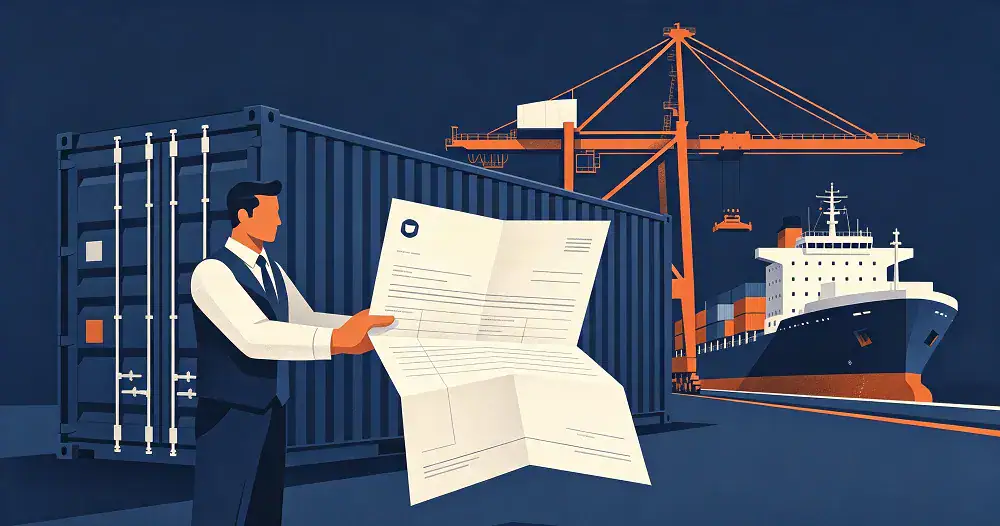
The Bill of Lading (B/L) is the single most legally significant document in international sea freight. Issued by the carrier or its agent, it serves three key functions: a receipt for the goods, evidence of the transport contract, and most importantly—a document of title. In practice, whoever holds the original Bill of Lading has the legal right to claim the goods.
Types of Bill of Lading and What to Watch For
-
Original B/L vs. Sea Waybill: An Original B/L is negotiable and can be transferred, often used in Letter of Credit (L/C) transactions. A Sea Waybill is non-negotiable, faster for releasing cargo, and usually used when the consignee is clearly known and trusted.
-
Master B/L vs. House B/L: A Master B/L is issued by the shipping line to the freight forwarder, while a House B/L is issued by the freight forwarder to the actual shipper.
Checklist for Reviewing Your Bill of Lading Draft:
-
Consignee and Notify Party: Double-check every single letter. A typo in the company name can prevent the destination office from notifying the right party or releasing the cargo.
-
Cargo Description: The product name, number of packages, and weight on the B/L must perfectly match the Commercial Invoice and Packing List. This is the critical “document-to-document” consistency rule.
-
Container and Seal Numbers: Verify these numbers against what was recorded during container loading. No mismatches allowed—these are the primary identifiers for tracking and verifying container integrity.
-
Verify Before Finalizing: The draft review stage is critical because making changes after the B/L has been issued usually incurs significant amendment fees.
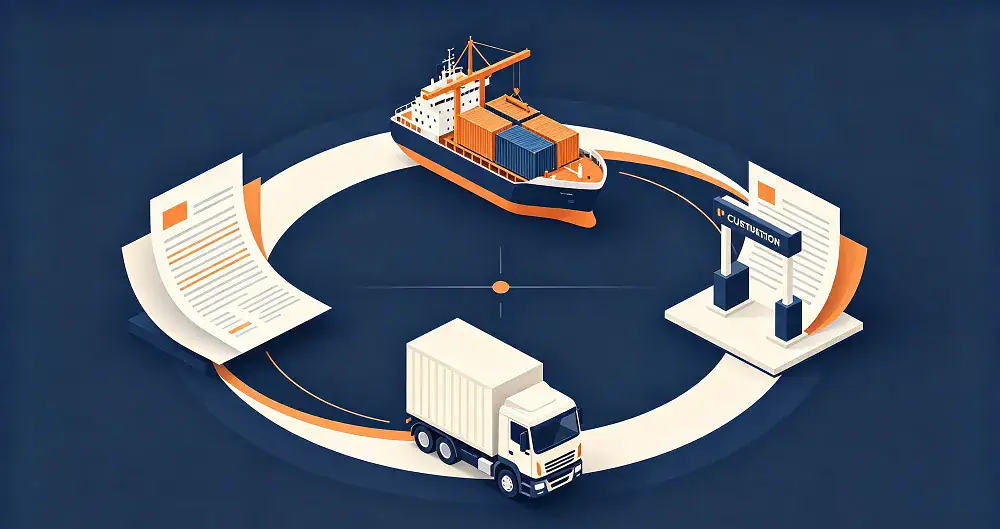
How the Three Core Documents Connect
To make it easier to see how these documents relate to each other, here’s a summary table:
| Data Point | Commercial Invoice | Packing List | Bill of Lading |
|---|---|---|---|
| Core Purpose | Customs valuation & duty calculation | Physical cargo details & verification | Proof of ownership & transport contract |
| Shipper/Consignee Info | ✓ Must be accurate | ✓ Must be accurate | ✓ Must be accurate |
| Item Description | ✓ Detailed (material, use, etc.) | ✓ Can be brief | ✓ Must be consistent with Invoice & List |
| Packages/Weight/Volume | ✓ Shows totals | ✓ Shows per-package breakdown + totals | ✓ Totals must match the Packing List |
| HS Code | ✓ Critical field | ✗ Not typically shown | ✗ Not typically shown |
| Incoterms | ✓ Must be stated | ✗ Not needed | ✓ Reflects freight payment terms |
Common Pitfalls and How to Avoid Them
-
Inconsistency Across Documents: The biggest mistake is having key details (like item names, quantities, or weights) not matching up between the Invoice, Packing List, and Bill of Lading. This will trigger a “misdeclaration” alert during customs review, which can lead to detention or penalties.
-
Vague Descriptions: Being too general in your item description on the commercial invoice is one of the top reasons for customs suspicion.
-
Suspicious Valuation: Intentionally over-declaring or under-declaring the value is extremely risky. Customs has internal price reference databases and can easily spot abnormal figures.
-
Missing Special Certifications: Certain products (like toys, electronics, or wooden items) may require additional mandatory certifications for the destination country (such as FCC, FDA, or IPPC fumigation certificates). Don’t overlook these.

Final Words
Preparing international shipping documents takes careful attention and a high sense of responsibility. The Commercial Invoice, Packing List, and Bill of Lading are the cornerstones of customs clearance—they support each other and none can be missing. Ensuring that the information on all three is truthful, accurate, and consistent is the fundamental requirement for fast and smooth customs processing.
Working with a logistics partner who has solid experience and transparent processes makes a huge difference. A professional freight forwarder doesn’t just help you double-check documents—they also provide end-to-end tracking and proactive alerts, helping you avoid potential risks tied to paperwork issues, so your cargo truly moves without a hitch.
AMZ Shipper has several years of experience for international logistics Freight Forwarding service. Our service is for importer and exporter, foreign freight forwarders, local and abroad business. Export of 1500 of 40HQ per year for FBA Amazon shipping, 15-30tons of air shipments per month.
Member of WCA. Our company is a professional Amazon freight forwarder that specializes in providing comprehensive and efficient services to customers.