For many Amazon sellers, FBA is a double-edged sword. It gives you the Prime badge and handles customer delivery, but it also leaves you with two constant headaches: how much inventory should you send, and what are you actually paying for shipping? Order too much, and long-term storage fees eat your profits. Order too little, and you run out of stock, lose your ranking, and miss sales.
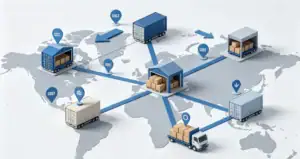
And shipping costs? They can get messy. From your factory in China to an Amazon warehouse in the US or Europe, you have ocean freight, air freight, customs duties, clearance fees, and final delivery charges.
At AMZ Shipper, we deal with FBA freight every single day. In this guide, we’ll break down smart inventory planning and the real costs behind FBA shipping — so you can save money and stop guessing.

Part 1: Smart FBA Inventory Planning — Avoiding Both Stockouts and Overstocking
Good FBA planning isn’t about gut feelings. It’s based on data, lead times, and risk control. Here are three practical strategies.
1. Calculate safety stock and reorder point
Safety stock = (max daily sales × max lead time) — (avg daily sales × avg lead time). When your inventory drops below the reorder point, it’s time to ship more.
2. Staged replenishment for seasonal products
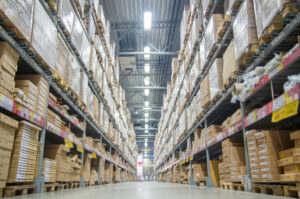
For big sales events like Prime Day or Black Friday, don’t send everything at once. A good rule of thumb is to send 30% to FBA first, and keep the remaining 70% at a warehouse like AMZ Shipper’s facility in China. Then ship in smaller batches based on how fast you’re selling. This keeps storage fees low and prevents stockouts.
3. Use an overseas warehouse to get around storage limits
If Amazon caps your storage space, ship your products to an overseas warehouse first (we work with reliable partners), then send small batches to FBA as needed. You pay a little extra for local delivery, but it’s still cheaper than paying over-limit storage fees to Amazon.
Here’s a simple table to help you decide based on your sales situation:
| Sales Pattern | Recommended Strategy | Main Risk to Watch |
|---|---|---|
| New product, no sales history | Send a small test batch (20-30 days of expected sales) | Don’t over-invest before knowing demand |
| Stable product, 100-500 units/month | Keep 45 days of safety stock + 15 days in transit | Watch for seasonality and competitors |
| Hot item during sales events, 1000+ units/month | Staged replenishment + warehouse transit | Keep FBA stock under 60 days |
| Large or oversized product | Use ocean freight + warehouse storage | Focus on reducing dimensional weight |
Part 2: Understanding FBA Shipping Costs — Know Where Your Money Goes
FBA freight charges aren’t just “X dollars per kg.” Several pieces come together. Once you understand the structure, it’s much easier to tell if a quote is fair.
Main cost components
-
Pickup/delivery in China: From your factory or supplier to the freight forwarder’s warehouse.
-
International freight: Sea freight (FCL/LCL) or air freight. Usually charged by dimensional weight vs actual weight — whichever is higher.
-
Destination port/airport fees: Unloading, documentation, terminal handling.
-
Customs clearance & duties: Import duties (based on product value and HS code), customs broker fees, plus any extra costs if customs inspects your shipment.
-
Final delivery: Truck or courier from the port/airport to the Amazon warehouse.
Dimensional weight example
A carton with actual weight 12kg and size 50cm×40cm×30cm:
-
Dimensional weight = 50×40×30 / 6000 = 10kg
-
Chargeable weight = max(12kg, 10kg) = 12kg
If the size changes to 60cm×50cm×40cm:
-
Dimensional weight = 60×50×40 / 6000 = 20kg
-
Chargeable weight = 20kg — that’s 8kg extra shipping cost for the same actual weight.
Part 3: 6 Practical Tips to Lower Your FBA Shipping Costs
These tips have worked for many sellers. Try them and you’ll likely see a difference.
-
Optimize your outer carton: Use a tighter-fitting box without over-packaging. For lightweight but bulky items, even 1cm less on each side can save you real money.
-
Combine small items into one box: Put multiple small products into a single carton to increase the actual weight share. But don’t exceed Amazon’s 22.5kg per box limit — otherwise you’ll pay an extra handling fee.
-
Mix shipping methods for flexibility: Use sea freight (30-40 days) for routine restocks, and air or express (7-12 days) for urgent needs. Don’t send everything by air — costs can be 3-5 times higher.
-
Use LCL consolidation: If you don’t have enough for a full container, share one with other sellers. AMZ Shipper offers regular LCL services — splitting the cost makes shipping much cheaper per cubic meter.
-
Declare honestly to avoid customs delays: Use the right HS code and declare a realistic value. If customs stops your shipment for inspection, detention and storage fees can easily reach hundreds of dollars.
-
Audit your freight bills regularly: Remeasure your boxes. Check if the forwarder charged the right dimensional weight. Many sellers recover 3-8% of their shipping costs every month just by doing this.

Part 4: How to Choose a Reliable FBA Freight Forwarder
There are plenty of forwarders out there, with prices all over the place. Focus on these five things when comparing them.
Here’s a quick comparison table to help you evaluate:
| What to Check | What a Good Forwarder Looks Like | Red Flags |
|---|---|---|
| Price transparency | Itemized quotes, no hidden fees | One all-in price that magically goes up later |
| Consistent transit time | Shows actual delivery history, deviation ≤3 days | Only talks about best-case delivery time |
| Customs expertise | Works with its own or long-term customs brokers | Subcontracts clearance and can’t give you updates |
| Tracking system | Real-time tracking, self-service visibility | You have to ask someone every time |
| Compensation policy | Clear terms for delays or lost goods | Only verbal promises, nothing in writing |
At AMZ Shipper, we focus on getting these five things right for Amazon sellers:
-
Competitive pricing: Through LCL, FCL, and long-term space contracts, we keep rates lower than the market average.
-
Efficient logistics: From our China warehouse to FBA receiving — every step is trackable. Sea freight to the US West Coast can be as fast as 22 days.
-
Reliable partners: We only work with overseas customs brokers and trucking companies that we’ve used for 3+ years. Our inspection rate is under 2%.
-
Personalized service: We handle different product types (batteries, magnets, oversized items) with custom plans. You don’t pay for things you don’t need.
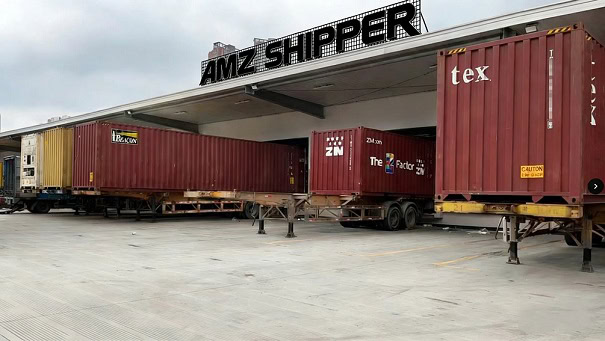
We have warehouses in multiple cities across China, handle thousands of containers every year, ship to dozens of countries, and offer 24/7 support in both Chinese and English. Whether you’re a small seller just starting out or a high-volume merchant shipping thousands of units a month, you’ll get a logistics plan that actually fits your business.
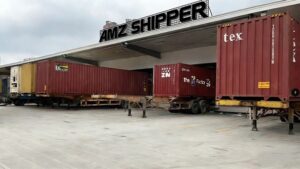
ABout AMZ Shipper
AMZ Shipper has several years of experience for international logistics Freight Forwarding service. Our service is for importer and exporter, foreign freight forwarders, local and abroad business. Export of 1500 of 40HQ per year for FBA Amazon shipping, 15-30tons of air shipments per month.
Member of WCA. Our company is a professional Amazon freight forwarder that specializes in providing comprehensive and efficient services to customers.