As we move into 2026, the international logistics environment facing Chinese cross-border e-commerce sellers is going through a structural shift. It’s no longer just about freight rates going up or down. Instead, we’re seeing deep changes happening at the same time — in warehousing strategies, cost structures, compliance requirements, and what consumers expect from delivery. Through our conversations with sellers, we’ve noticed some clear trends and common pain points, but also early movers who are turning these shifts into real advantages in cost and speed. Here’s a breakdown across five key areas.
Regionalized Warehousing Is Speeding Up: The Logic Behind Inventory Placement Has Changed
Keeping inventory closer to the consumer is no longer just an option
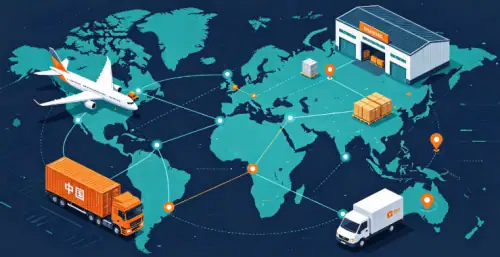
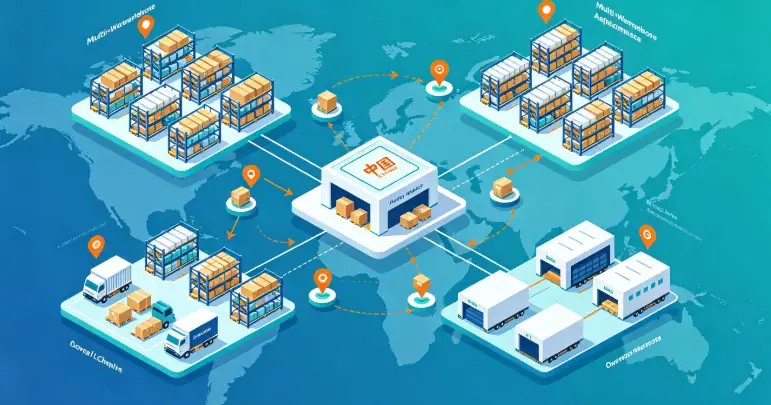
In the past, many sellers got used to shipping everything to a single overseas warehouse or one Amazon FBA location, then distributing from there. But in 2026, customs clearance times vary even more from country to country, and the uncertainty around first-mile transportation has grown. At the same time, major e-commerce platforms are giving more traffic weight and stricter delivery-time requirements to locally fulfilled orders. This has made “split inventory, multi-node fulfillment” a must-have approach for controlling costs and maintaining delivery speed — not just a nice extra. We see more and more sellers setting up at least two warehouses around their main sales regions, or even using third-party warehouse networks to keep stock in multiple locations within the same region. The goal is simple: shorten the final delivery distance and reduce reliance on a single customs port.
This brings new challenges for cash flow and operations
Splitting inventory pushes up holding costs. Where you once only needed enough safety stock for one warehouse, you now have to split that stock across several locations, often forcing your total inventory volume up by more than 20%. Industry data shows that average inventory turnover days for sellers with a multi-warehouse setup tend to stretch noticeably longer, and the risk of dead stock gets harder to monitor when products are scattered around. We regularly see sellers with solid annual sales run into trouble — a poorly coordinated warehouse transfer causes one location to run out of stock during a big promotion while another sits overstocked, and the sales window just slips away. This doesn’t just test cash flow; it demands much sharper inventory allocation logic and efficient inter-warehouse transfer capabilities.
Logistics Costs Enter a Period of “Fine-Grained Volatility”
Freight rates no longer just rise or fall — they swing sharply in tight cycles
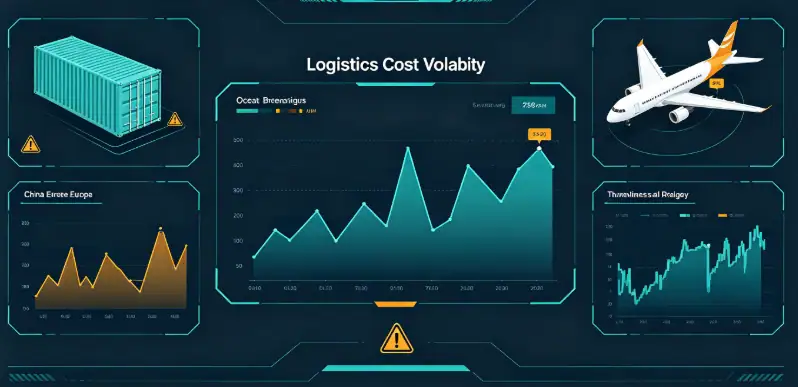
In 2026, the mismatch between seasonal supply and demand on international freight markets is more obvious than ever. Air cargo capacity gets extremely tight during peak seasons, while in the off-season there can be temporary overcapacity. Ocean spot rates jump up and down within just a few months, driven by carrier capacity adjustments and shipment volume fluctuations. Looking at an average rate over a quarter no longer helps much with decision-making. What sellers actually experience is more like “prices spike and then drop within a short window” or “the slow season isn’t slow, and the peak season isn’t that peak.” This kind of fine-grained volatility essentially comes from the ongoing tug-of-war between growing cross-border e-commerce volumes and the structural reshuffling of global shipping capacity.
How sellers can shift from “reacting” to “planning ahead”
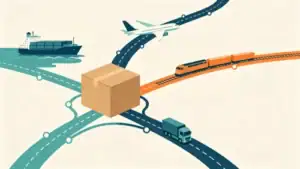
Faced with this, sellers who take a proactive approach are gaining a real cost edge. The key isn’t guessing the highest or lowest point — it’s using contract rate lock-ins and multimodal transport mixes to smooth out your annual fulfillment costs. The table below summarizes how different modes behave and what actions sellers can take.
2026 Freight Mode Volatility Patterns and Proactive Planning Suggestions
| Transport Mode | Volatility Pattern | Proactive Planning Advice |
|---|---|---|
| Ocean (FCL/LCL) | Spot rates fluctuate visibly with quarterly cargo volumes and carrier capacity adjustments; long-term contract rates stay relatively stable | Lock in a portion of contracted space during the slow season (usually Q2); supplement with spot bookings during peak season. Avoid going all-in on long-term contracts or all-in on spot. |
| Air Freight | Capacity is tight and rates jump sharply during peak (Q3–Q4); better rates can be negotiated in the off-season | Sign peak-season space protection agreements with logistics providers early. Shift a portion of time-sensitive goods to express via ocean fast-lane + courier combo. |
| China-Europe Rail / Land | Rates are relatively stable, but affected by congestion at nodes and schedule adjustments along the route | Use rail/land as a balanced option between ocean and air — rely on its stability for part of your inventory replenishment to cut air freight dependency. |
A practical suggestion: sellers should start discussing peak-season capacity plans with logistics partners as early as the second quarter. Based on sales forecasts, lock in rates or guarantee space for at least half of your expected volume. That helps neutralize the risk of sudden swings in the spot market.
Compliance Complexity Is Rising: Full-Chain Transparency from Customs to Tax
Product compliance and import clearance information transparency are becoming hard barriers
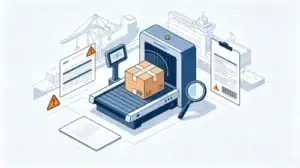
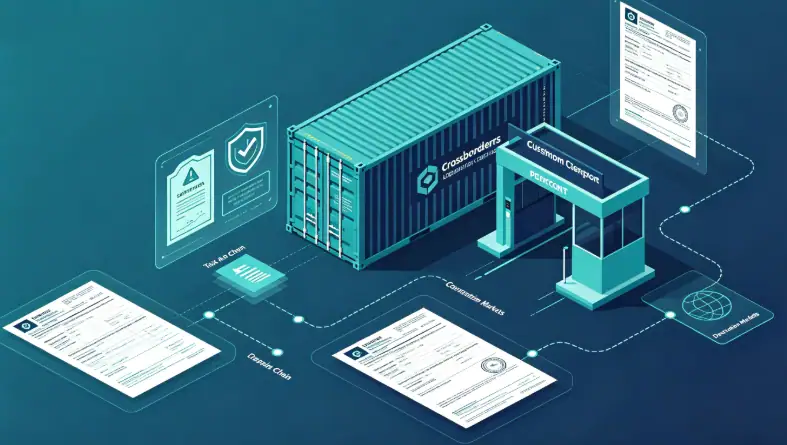
Over the past couple of years, several major consumer markets have been updating their import regulations, requiring sellers to provide more detailed information — product composition, safety certifications, producer responsibility details, and complete supply chain traceability records. Customs inspections now focus not only on declared names and values but also on whether your compliance documentation is complete and readily available. Shipments that can’t provide electronic compliance files quickly may face days or even weeks of inspection holds, or even be returned. This trend is only getting stronger in 2026; cargo with incomplete compliance information faces much higher clearance risk at destination ports.
For small and mid-sized sellers, this means “compliance equals efficiency”
Compliance isn’t just for big players anymore — it has become a baseline capability that directly protects shipping speed. We’ve seen situations where a single product missing a required certification or label causes an entire container to be held, followed by steep demurrage and destruction costs. For sellers with tighter cash flow, a disruption like that can directly impact account health. That’s why sellers need to move compliance checks upstream — before sourcing and before shipping. Focus on:
- Destination-country certification requirements (e.g., safety, environmental, energy efficiency labels).
- Ensuring that every shipment’s invoice and packing list matches the actual goods 100%.
- Keeping a complete supply chain traceability file ready to respond quickly when customs asks.
- Working with logistics providers that offer customs advisory capability and pre-review your documents early.
Adding a compliance step upfront may seem like extra work, but it effectively prevents problems at the destination and improves your overall fulfillment efficiency at the source.
Last-Mile and Returns: From Cost Center to Experience Differentiator
Consumer expectations are shifting from “days” to “hours”
According to surveys on consumer logistics experience from firms like eMarketer, more than half of online shoppers see fast, on-time delivery as a key reason they buy again. Same-day or next-day delivery orders convert at significantly higher rates than standard shipping. In 2026, these expectations are stretching further toward “within hours,” especially in densely populated urban areas. At the same time, an easy return experience directly impacts brand reputation. Last-mile logistics capability has become a clear dividing line between sellers — delivery delays or difficult returns very quickly lead to negative reviews and lost customers.
The hidden opportunity in returns management
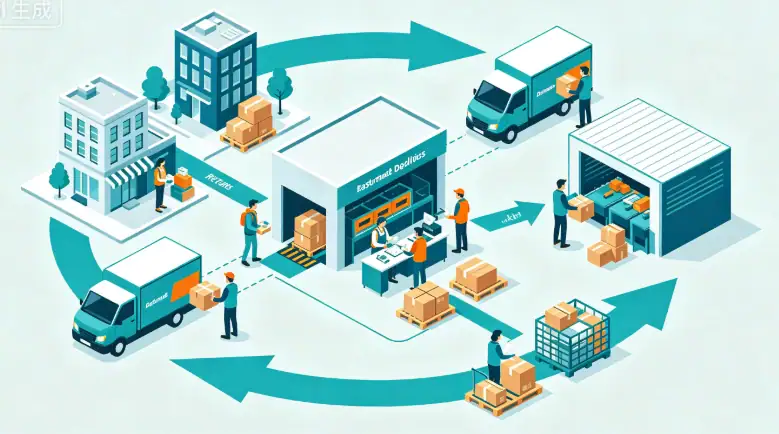
Returns are often seen as pure loss. But from a logistics operations perspective, a smooth returns flow and a refurbish-and-resell chain can recover a significant amount of product value. Many sellers don’t yet handle returns in a systematic way — they simply ask the overseas warehouse to dispose of them cheaply or discard them. In reality, you can turn returns into a profit-recovery point by:
- Setting up a dedicated returns receiving center in the destination country to sort items by quality grade.
- Repackaging and refurbishing returned items with no functional defects, then selling them as second-hand or open-box goods.
- Reselling defective items in bulk to discount channels or recyclers to recover residual value.
- Using returns data to feed back into product improvement and packaging design, cutting return rates at the source.
When returns management shifts from “throw it away” to “manage it actively,” sellers find that a solid reverse logistics system can lower total costs quite meaningfully.
Digitalization and Visibility Are No Longer “Nice-to-Have” — They’re Basic Infrastructure
The insight leap from “where’s my cargo” to “why is my supply chain stuck”
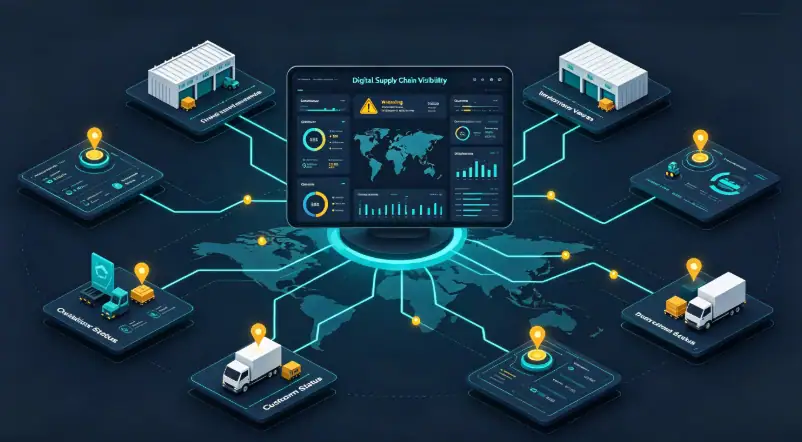
A few years ago, sellers only needed to know if a container had been picked up or checked into a warehouse. Now, leading sellers are asking for much more — metrics like “inventory turnover rate,” “slow-moving stock alerts by location,” and “fulfillment speed comparison by channel.” They’re not satisfied with just tracking shipments; they want logistics data connected to their sales data so they can spot potential stockout risks or excess inventory ahead of time, and understand whether the root cause is a first-mile delay, customs holdup, or last-mile delivery problem. This upgrade from “after-the-fact tracking” to “early warning” is reshaping what value logistics services are expected to deliver.
How small and mid-sized sellers can embrace digitalization without high costs
Digital transformation doesn’t have to be expensive. Small and mid-sized sellers can tap into open ecosystems: first, choose logistics providers that offer standard API connections so order, inventory, and tracking data sync automatically to your own ERP or operations system; second, make full use of the analytical tools platforms already provide, such as FBA inventory health reports or the basic dashboard of a third-party warehouse management system, to set up simple fulfillment exception alerts. Consolidating logistics information that used to be scattered across emails and spreadsheets into one structured view is often enough to cut day-to-day firefighting and communication costs by over 20 percent. The key is actually putting logistics data to work — not just being able to “see it.”
2026: Rethinking the Strategic Role of Logistics
Logistics has quietly shifted from a support function for cross-border e-commerce into a strategic factor that affects cash flow efficiency, customer retention, and the ability to expand into new markets. Regional warehousing, cost volatility, compliance thresholds, last-mile experience, and digital capabilities — each of these dimensions is widening the operational gap between different sellers. Yes, the challenges are more complex than before. But the opportunities are just as real: sellers who proactively adjust their inventory networks, plan capacity with precision, stay firm on compliance, and make good use of returns data will walk away with lower total chain costs and higher customer satisfaction amid all the turbulence. That’s the structural advantage that logistics now provides.
ABout AMZ Shipper
AMZ Shipper has several years of experience for international logistics Freight Forwarding service. Our service is for importer and exporter, foreign freight forwarders, local and abroad business. Export of 1500 of 40HQ per year for FBA Amazon shipping, 15-30tons of air shipments per month.
Member of WCA. Our company is a professional Amazon freight forwarder that specializes in providing comprehensive and efficient services to customers.