
For anyone running an Amazon business, FBA headhaul logistics costs are probably one of the most frustrating line items on your backend reports. In 2026, this has gotten even more complicated – Amazon just rolled out another round of FBA fee adjustments, fuel surcharges are now in effect, and customs policies keep shifting. The thing is, the “cheapest” FBA shipping solution is never just about the lowest freight quote. What really matters is the lowest total landed cost – that’s the sum of every single expense from your factory gate all the way to the Amazon fulfillment center door.
In this post, we’ll break down the cost structure of FBA headhaul logistics in 2026, compare the main transport modes, and give you a few practical money‑saving strategies that actually work.
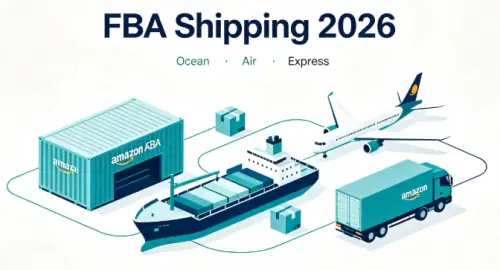
The 2026 FBA Shipping Landscape — What’s Changed?
This year, several key changes have reshaped how you should think about FBA shipping costs – and they directly affect which method makes the most sense for you.
First, FBA fulfillment fees went up. From January 15, 2026, Amazon US increased average FBA fees by $0.08 per unit sold, which is less than 0.5% of the average selling price. Standard‑size items saw tiered increases depending on their price range, with products in the $10‑$50 bracket feeling the biggest hit.
Second, inbound placement service fees got adjusted. For standard‑size items choosing single‑point receiving, the inbound placement fee went up by $0.05 per unit on average. At the same time, Amazon added five new weight tiers for large standard‑size items. And if your shipment doesn’t arrive or goes to the wrong address, you’ll now be charged a flat $0.60 per unit as an inbound defect fee.
Third, fuel and logistics surcharges kicked in. Starting April 17, 2026, Amazon began applying a 3.5% fuel and logistics surcharge on FBA fulfillment fees for US and Canada orders. That means even if your base shipping rate stays the same, you’re still paying more out of pocket.
Fourth, the aged inventory threshold got much tighter. From July 8, 2026, the threshold for aged inventory was cut in half – from 365 days to just 181 days. And if your inventory sits longer than 365 days, the surcharge can go as high as 13 times the monthly storage fee.
Fifth, low‑inventory fees are now stricter. The fee calculation has switched from parent ASIN level to FNSKU level – meaning each individual child SKU needs to have more than 28 days of inventory, and you can’t rely on other SKUs to average it out.
All these changes together mean the cost structure for FBA headhaul logistics in 2026 looks very different from previous years. Picking the wrong shipping mode can cost you way more than you’d expect.
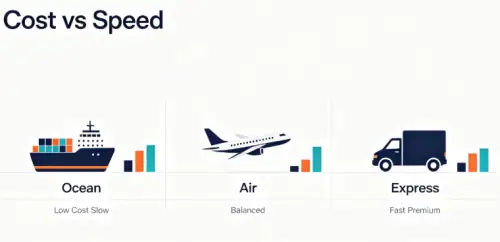
The Three Main Shipping Methods — Cost vs. Speed
When it comes to FBA inbound logistics, you really only have three core options: ocean, air, and express courier. They vary wildly in cost and transit time, and none of them is inherently “the cheapest” – it all depends on your specific situation.
Option 1: Ocean Freight – The King of Cost‑Effectiveness
Ocean freight still gives you the lowest unit cost for FBA headhaul logistics. In 2026, the market has settled into three main tracks: Matson’s premium express service, ZIM’s value‑for‑money option, and Yantian’s economical choice.
Sub‑options:
-
LCL (Less than Container Load) – good if you don’t have enough cargo to fill a full container; charges are based on the greater of volume or weight.
-
FCL (Full Container Load) – priced per container type (20GP or 40HQ); the more you ship, the lower your per‑unit cost.
-
Express vessels – Matson’s CLX service can get your goods to the warehouse in about 11‑12 days after sailing.
Transit time: Express vessels around 12‑15 days; regular vessels 22‑45 days.
Cost profile: The lowest per‑unit transport cost – ocean freight typically runs about one‑sixth to one‑tenth of air freight rates. Shipping full containers pushes that advantage even further.
Best for: High‑volume restocking, heavy items, low‑margin products, and sellers with longer inventory turnover cycles. For steady North American sellers, ocean shipping is usually the go‑to choice for FBA headhaul logistics.
Option 2: Air Freight – The Middle Ground Between Speed and Cost
Air freight gives you a decent balance between urgency and expense.
Sub‑options:
-
Air freight special line – cargo flies to the destination country, clears customs, then gets delivered to FBA by local courier or truck, with total delivery time of 7‑15 days.
-
Air + express tail – a combination of air transport and express final‑mile delivery, typically reaching the warehouse in 10‑15 days.
Transit time: 5‑12 days.
Cost profile: Significantly higher than ocean – roughly 5‑10 times the ocean rate.
Best for: Emergency replenishment, high‑value products, new product launches, and seasonal items. For high‑value goods, air freight might only account for 5‑10% of total product cost, which is entirely acceptable.
Option 3: Express Courier – The Speed King
International express is the fastest, but also the most expensive option for FBA shipping.
Transit time: 3‑5 days.
Cost profile: The highest per‑unit rate, suitable only for very small batches.
Best for: Sample shipments, test orders, and urgent small restocks. But here’s a warning – never use commercial express for large shipments. The high rates and lack of volumetric weight advantages will only blow your budget.
Key takeaway: Ocean is the cheapest – but only if you can afford to wait. Air is expensive – but if a stockout costs you more in lost sales than the freight difference, then air is actually the “cheapest” choice for you. The cheapest FBA headhaul logistics solution always depends on your unique factors: shipment size, urgency, product value, and cash flow.
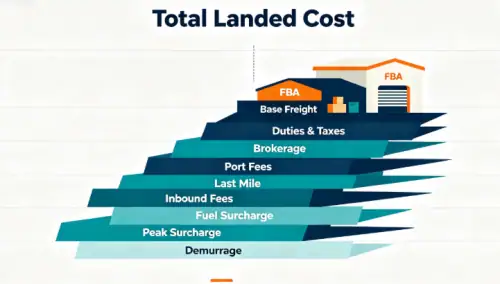
Beyond the Freight Rate — What Actually Determines Your Landed Cost
A lot of sellers only look at the “price per kilogram” quote, only to find their final bill much higher than expected. The true cost of FBA inbound logistics goes way beyond just the base freight.
Here’s what really makes up your total landed cost:
| Cost Component | Explanation |
|---|---|
| Base freight | Transport charges for ocean/air/express |
| Customs duties & taxes | Based on declared value and destination country tariff rates |
| Brokerage & clearance fees | Customs filing, documentation, and handling |
| Destination port/airport charges | Terminal handling charges (THC), loading/unloading fees |
| Final‑mile delivery | Transport from port/airport to Amazon warehouse |
| Amazon inbound fees | Placement fees, defect fees, etc. |
| Fuel surcharge | 3.5% added starting April 2026 |
| Peak season surcharge | Applied during October‑December busy months |
| Demurrage & detention | If FBA receiving is delayed, these charges at destination can be painfully high |
Core point: The cheapest freight quote doesn’t always mean the lowest total cost. What you should really compare is the all‑in DDP (Delivered Duty Paid) price – that’s the one‑stop price that includes freight, duties, clearance, and delivery. Asking only “how much per kilo” is like looking at just the tip of the iceberg.
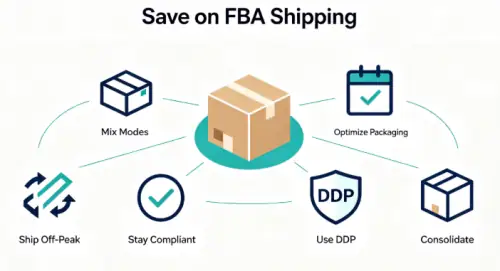
Smart Strategies to Lower Your FBA Shipping Costs
Now that you know what drives the costs, here are some practical moves to trim your FBA headhaul logistics spending.
1. Mix and match – don’t stick to just one mode
The smartest approach isn’t picking one method forever – it’s combining them. Keep 7‑15 days of inventory moving by air to avoid stockouts, while splitting your bulk orders so that about 70% goes by ocean for earlier planning. Your core SKUs can ride the slow boat, while hot items and test runs take the faster route – this keeps costs down without sacrificing availability.
2. Optimize your packaging – don’t pay for air
Air freight and some ocean shipments charge based on volumetric weight (taking the greater of actual weight and dimensional weight). Over‑packaging inflates the volume weight and can double your shipping fees.
-
Choose boxes that fit your products snugly, with minimal empty space.
-
For clothing, bedding, and soft goods, use vacuum compression – it can shrink volume by 30‑60%.
-
Keep your outer carton dimensions within 1.2 times the actual product volume.
3. Ship off‑peak – avoid the peak‑season frenzy
Air freight rates swing wildly between off‑peak and peak seasons. During September‑December, capacity gets tight and prices skyrocket. If you want to save, lock in lower rates during July‑August and send your peak‑season stock to overseas warehouses or FBA ahead of time.
4. Stay compliant with labels and prep requirements
In 2026, FBA’s defect standards are stricter than ever. Incorrect labels or non‑compliant packaging can get your shipment rejected at the door. If that happens, you’ll face extra rework fees and potentially miss your sales window. Compliance is money saved.
5. Consider DDP terms – convenience pays off
For small to mid‑sized sellers who aren’t familiar with destination customs procedures, choosing DDP (delivered duty paid) might have a slightly higher upfront rate, but it spares you from hidden charges like demurrage, inspection fees, or return shipping costs caused by clearance hiccups.
6. Consolidate shipments – volume gives you bargaining power
Air freight generally uses tiered pricing – the heavier your cargo, the lower the unit rate. Combine multiple small orders into one larger shipment, or mix light‑weight and heavy‑weight items together – the actual weight of the heavy stuff can offset the volumetric weight of the light stuff. Small sellers can pool orders across their own stores and aim for thresholds like 45kg, 100kg, or 500kg to get better rates.
Common Mistakes That Make Your FBA Shipping More Expensive
Here are the most frequent pitfalls sellers fall into with FBA headhaul logistics – avoiding them alone can save you a ton.
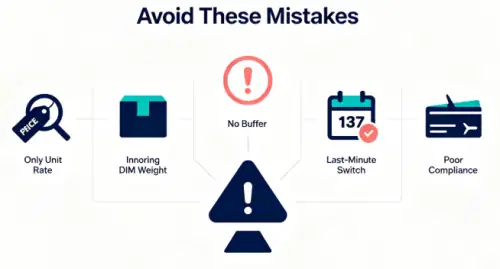
Only looking at unit rates, not total costs. Asking “how much per kilo” without asking for the all‑in landed price is the biggest trap. The cheapest‑looking lane might end up being the most expensive once all the extras pile on.
Ignoring volumetric weight. Many sellers focus too much on the product’s actual weight and forget about the packaging volume. A product weighing 0.5 lb could have a dimensional weight of 6.9 lb if the box is oversized – and that can multiply your shipping cost several times over.
Not leaving a buffer for warehouse receiving. Amazon has strict cutoff dates – arriving even one day late can cost you a Lightning Deal or a traffic spike. During peak season, FBA warehouse processing times stretch much longer than usual.
Switching to expensive channels at the last minute. Sellers who normally use ocean freight panic during peak season and switch to air – when air rates are at their highest. Planning ahead is the real cost‑saver.
Skimping on label and packaging compliance. Wrong labels or packaging that doesn’t meet FBA standards can result in extra handling fees – or worse, an entire shipment being rejected. The cost of rework and reshipping is far higher than getting it right the first time.
How to Choose the Right Shipping Partner
Picking the right logistics partner is just as important as picking the right shipping mode. Here are a few things to look for:
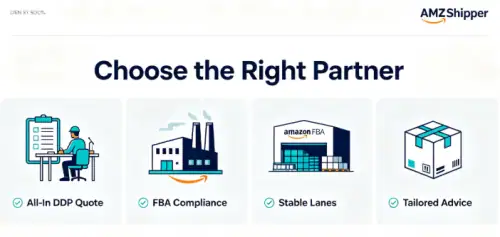
Do they offer an all‑in DDP quote? A partner who can give you a straightforward, all‑inclusive price shows they have a handle on the entire chain, and it saves you from nasty surprises on the final invoice.
Are they familiar with FBA receiving requirements? A logistics provider that truly understands FBA inbound logistics knows the label specs, packaging rules, and appointment procedures for each warehouse – that helps you avoid rejections and extra fees.
Do they have stable lanes and transparent communication? Stable lanes mean predictable transit times; transparent communication means you’ll get timely updates about peak surcharges, vessel schedule changes, and other critical info.
Can they give you tailored advice based on your situation? Anyone who blindly recommends “the cheapest” route without asking about your shipment size, product value, and urgency probably doesn’t know much about FBA headhaul logistics. A genuinely professional partner will ask those questions first.
On that note, AMZ Shipper – a logistics company focused specifically on FBA inbound shipping – offers a one‑stop service from your factory floor to the Amazon warehouse, helping sellers find the right balance between cost, speed, and compliance for their particular business.
Final Thoughts
In 2026, there’s no one‑size‑fits‑all “cheapest” way to handle FBA headhaul logistics. Ocean freight gives you the lowest unit cost but takes the longest; air gets there fast but costs a lot more; express courier works only for tiny urgent shipments. The real key to saving money is this: calculate your total landed cost, not just the freight rate; mix and match methods instead of sticking to one; and plan ahead while staying compliant, rather than scrambling to fix problems after they happen.
Before every shipment, get multiple all‑in DDP quotes and weigh them against your own shipment volume, timing needs, product characteristics, and cash flow. After all, every dollar you save on FBA inbound logistics goes straight to your bottom line.
ABout AMZ Shipper
AMZ Shipper has several years of experience for international logistics Freight Forwarding service. Our service is for importer and exporter, foreign freight forwarders, local and abroad business. Export of 1500 of 40HQ per year for FBA Amazon shipping, 15-30tons of air shipments per month.
Member of WCA. Our company is a professional Amazon freight forwarder that specializes in providing comprehensive and efficient services to customers.