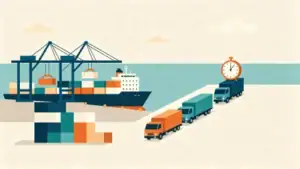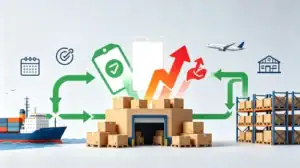
For many Chinese Amazon sellers, getting products into US FBA warehouses on time isn’t just a logistics task—it directly affects Listing rankings, inventory turnover, and the health of the entire supply chain. In reality, quite a few sellers lose money not because their products aren’t competitive, but because shipments arrive late, customs clearance fails, or shipping costs eat up their margins.
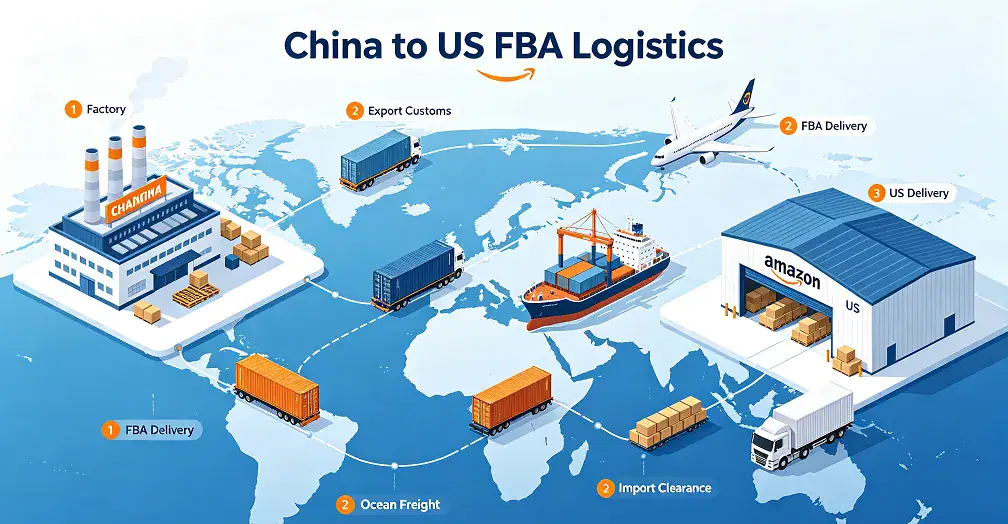
From the factory floor in China to the final shelf in an Amazon FBA warehouse, this isn’t a simple shipping move. It’s a coordinated supply chain process that covers export customs, international transportation, US import clearance, and last-mile delivery. Drawing on AMZ Shipper’s hands-on experience serving Amazon sellers over the years, this guide walks you through the key knowledge you need for China-to-US logistics in 2026, so you can make smarter shipping decisions.
1. Why China-to-US Shipping Matters for Amazon Sellers
On Amazon’s platform, FBA inventory status directly affects how well a seller performs. When stock fails to arrive at US warehouses on schedule, it can trigger a chain of problems:
-
Stockouts kill your rankings—once a Listing runs out of stock, its organic search weight and BSR rank drop fast. The cost of relaunching is way higher than the logistics investment needed to keep inventory flowing.
-
Storage costs creep up—if goods show up all at once and exceed FBA inbound limits, you could end up paying extra storage fees or dealing with delayed check-ins.
-
Cash flow gets tied up—the longer your goods are in transit, the longer it takes to get your money back. This hits small and mid-sized sellers especially hard.
-
Negative reviews increase—customers expect fast delivery these days. Late arrivals hurt your store ratings.
AMZ Shipper’s take: Treat logistics as a strategic part of your supply chain, not just a cost line item. Planning your shipping rhythm in advance and leaving room for customs delays is the foundation of healthy FBA inventory management.
2. Main Shipping Methods from China to USA
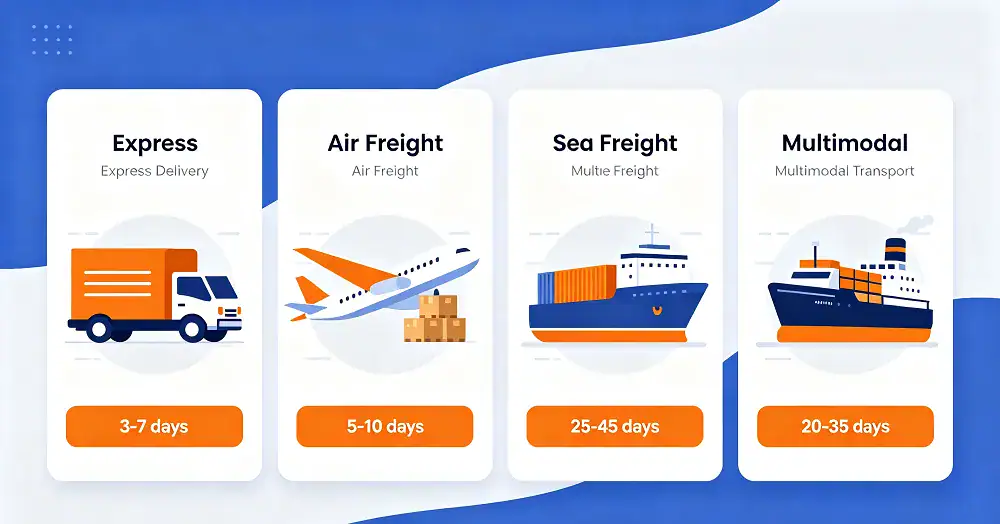
Currently, goods heading from China to US Amazon FBA warehouses mainly move through these four options. Which one works best depends on how urgent your shipment is, its volume and weight, and how fast you need to turn your cash around.
| Shipping Method | Typical Transit Time | Best For | Cost Level | Notes |
|---|---|---|---|---|
| Express Delivery | 3-7 business days | Samples, urgent restocks, small high-value shipments | Highest | Door-to-door, stable but expensive |
| Air Freight | 5-10 business days | Medium batches, seasonal restocks | Higher | Good balance between speed and cost for mid-sized cargo |
| Sea Freight | 25-45 calendar days | Large-volume regular restocks, full containers | Lowest | Cost-effective, but requires advance planning |
| Multimodal Transport | 20-35 calendar days | Time-sensitive shipments between air and sea options | Medium | Combines rail and sea, an alternative for some inland routes |
For most FBA sellers, sea freight with DDP service offers the best cost-to-value ratio for regular restocking. It keeps per-unit logistics costs low while using DDP to sidestep the tricky responsibilities of US import clearance.
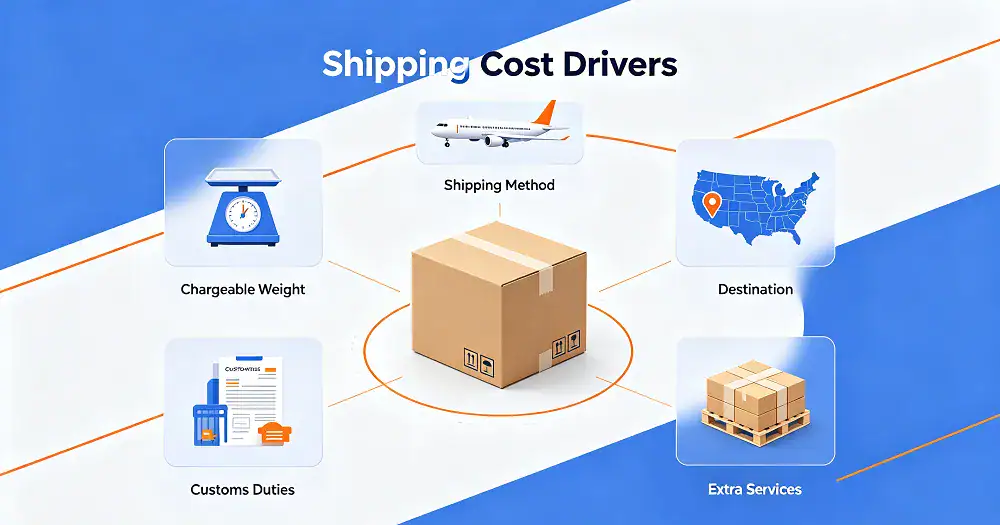
3. What Drives Your Shipping Costs
Logistics costs aren’t determined by a single factor. Sellers need to watch these variables when crunching the numbers:
1. Chargeable Weight
Carriers usually charge based on the greater of actual weight and volumetric weight (length × width × height ÷ dimensional factor). For products that are bulky but light, optimizing your packaging can significantly reduce chargeable weight.
2. Shipping Method
Unit costs vary a lot across different transport modes. Even within the same mode, peak season vs. off-season and space availability can shake up pricing.
3. Destination Warehouse Location
FBA warehouses are scattered across the US. Shipping to West Coast warehouses generally costs less than shipping to the East Coast, so factor that into your planning.
4. Customs and Duty Arrangements
Under DDP vs. DDU, who picks up the tab for duties and fees changes—and that directly impacts your total bill.
5. Value-Added Services
Extra services like FBA label application, pallet wrapping, carton reinforcement, and mixed-case sorting all come with additional charges.
Pro tip from AMZ Shipper: Build a complete landed cost worksheet that includes freight, duties, handling fees, and final delivery. Don’t just look at the per-kilo freight rate and call it a day.
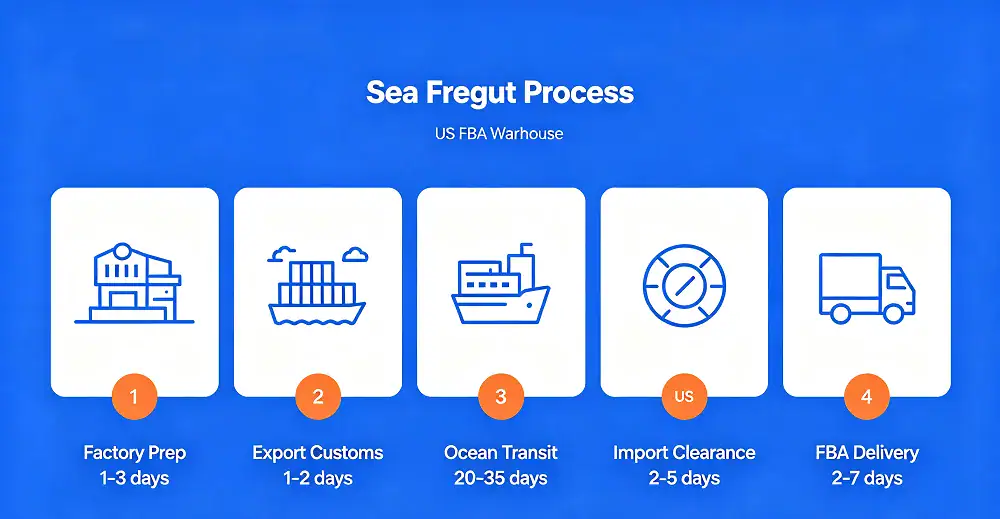
4. Breaking Down the China-to-US Shipping Timeline
Knowing how long each step takes helps you plan your restocking and shipping schedules with precision. Here’s what a standard sea freight process looks like:
| Stage | Estimated Time | What to Watch For |
|---|---|---|
| Factory Prep & Pickup | 1-3 days | Confirm packaging meets transport requirements before pickup |
| Export Customs Clearance | 1-2 days | All paperwork must match cargo details exactly |
| Ocean Transit | 20-35 days | Affected by routing, weather, and port congestion |
| US Import Clearance | 2-5 days | May extend if customs inspects the shipment |
| Delivery to FBA Warehouse | 2-7 days | Appointment must be booked with the FBA warehouse in advance |
For time-sensitive restocks, air freight can shrink the total lead time to 7-12 days, but expect a noticeable jump in logistics costs. Sellers need to weigh speed against cost based on their product sales velocity.
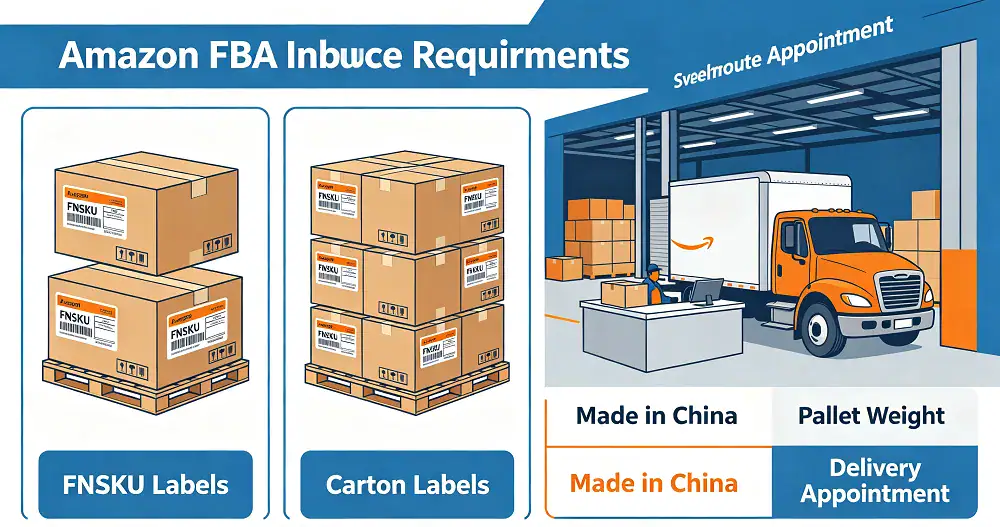
5. Amazon FBA Inbound Requirements You Can’t Ignore
Amazon has strict rules for inbound shipments. If you don’t follow them, your goods might be rejected, hit with extra fees, or stuck in receiving hell. Here are the most critical points for sellers:
1. Labeling Rules
-
FNSKU labels: Every single unit must have a scannable FNSKU barcode that’s clean and undamaged.
-
Carton labels: Each shipping box must display the Amazon-generated Shipment ID label with box number and total carton count.
-
Made in China marking: All products and outer cartons need a clear “Made in China” origin mark.
2. Packaging Requirements
-
Individual cartons generally shouldn’t exceed 50 lbs (about 22.7 kg). Heavier boxes must be marked “Team Lift” or “Heavy Package.”
-
Carton dimensions should stay within standard ranges—oversize boxes trigger extra handling fees.
-
Use high-quality corrugated cartons that can survive a long ocean journey without falling apart.
3. Appointment Scheduling
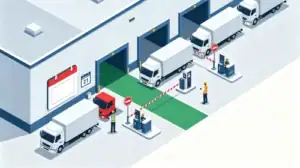
FBA warehouses work on an appointment-based receiving system. Once your shipment arrives in the US, the carrier needs to book a delivery slot. No appointment or showing up late means your truck might not get unloaded that day.
AMZ Shipper service note: We offer a pre-shipment FBA compliance check—labels, packaging, everything—before your goods leave China. This cuts the risk of US-side rejection way down.
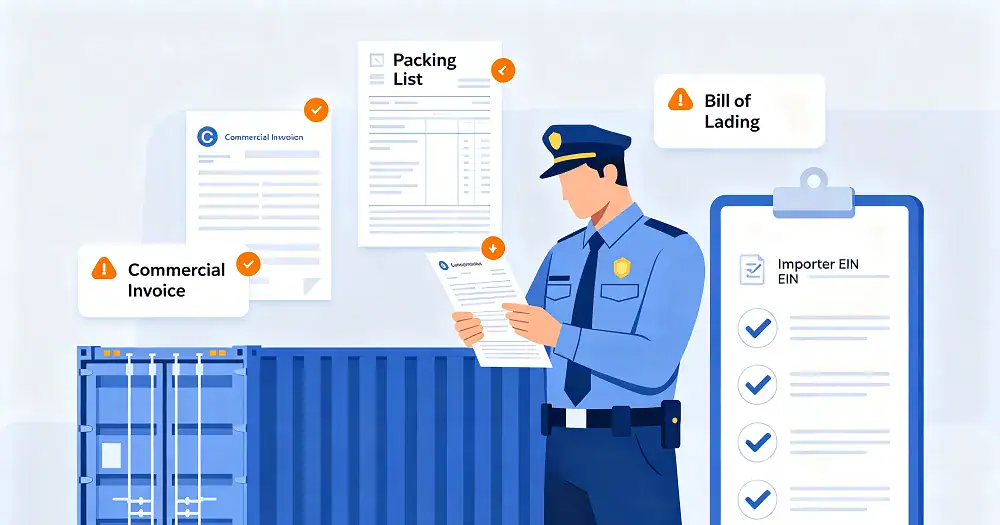
6. US Customs Clearance: What You Need to Prepare
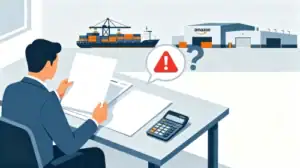
US import clearance is one of those things many Chinese sellers overlook—until it becomes a nightmare. Getting the basics right can save you from cargo getting stuck at the port.
Required Documents
-
Commercial Invoice: Must show buyer and seller info, product descriptions, HS codes, declared value, quantity, unit price, etc. Be specific—avoid vague terms like “gift” or “sample.”
-
Packing List: Detail what’s in each carton—weight, dimensions, packaging type.
-
Bill of Lading: The transport document for sea or air shipping. Can be original or telex release.
-
Importer Information: US importers need an EIN or SSN. For Chinese sellers without a US entity, DDP service lets the freight forwarder act as importer of record.
Why Clearance Fails (Common Pitfalls)
-
Wrong HS code: Leads to incorrect duty rates or even misdeclaration penalties.
-
Declared value too low: US Customs can revalue your goods and slap on fines.
-
Inconsistent paperwork: Info on the invoice, packing list, and bill of lading must line up perfectly.
-
Products with special requirements: Electronics may need FCC certification; children’s products require CPC certificates.
Talk to an experienced forwarder before shipping to confirm your product meets US entry requirements—don’t wait until your cargo is already at the port.
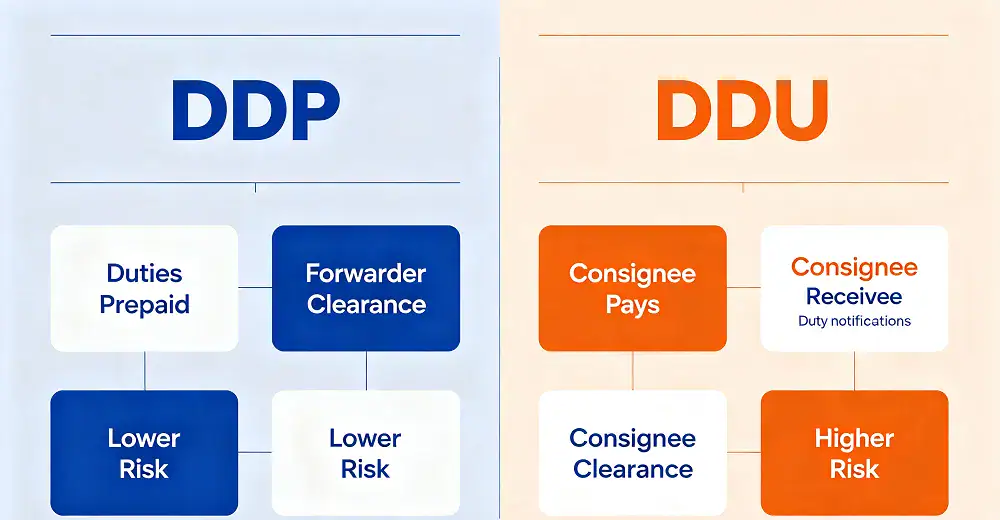
7. DDP vs. DDU: Which One Should You Choose?
DDP (Delivered Duty Paid) and DDU (Delivered Duty Unpaid) are common trade terms in international logistics. The key difference is who takes responsibility for duties and import taxes.
| Factor | DDP | DDU |
|---|---|---|
| Duties and Taxes | Paid by shipper/freight forwarder in advance | Paid by consignee (Amazon or buyer) |
| Clearance Responsibility | Handled by freight forwarder | Consignee handles or arranges their own broker |
| Risk Level | Lower—shipper stays in control | Higher—needs active consignee cooperation |
| Best for Amazon Sellers | Recommended—simpler and less stressful | Only for experienced sellers |
AMZ Shipper recommendation: For most Chinese Amazon sellers, DDP is the safer bet. It removes the uncertainty from US import clearance and keeps your cargo from being held because nobody’s there to clear it. Our full DDP service covers everything from pickup in China to final FBA delivery—you just hand us the goods and we handle the rest.
8. How AMZ Shipper Helps Amazon Sellers Ship from China to USA
As a freight forwarder built around Amazon sellers’ needs, AMZ Shipper offers a complete service chain. Here’s how we work:
1. Factory Pickup in China
-
Coverage across Shenzhen, Guangzhou, Ningbo, Shanghai, Qingdao, and other major export cities
-
Door-to-door pickup saves you the hassle of delivering to a warehouse yourself
-
Cargo inspection, quantity verification, and packaging check done on the spot
2. Export Customs & Documentation
-
Full export declaration support that meets Chinese customs requirements
-
Professional HS code classification to lower declaration risk
-
Handling of special needs like quarantine or fumigation
3. Transport Mode Planning
-
Recommend air or sea freight based on your cargo type and urgency
-
Options for LCL (Less than Container Load) and FCL (Full Container Load)
-
Real-time tracking with proactive alerts for any irregularities
4. US Import Clearance
-
Partnered with licensed US customs brokers covering a wide range of product categories
-
Solid experience with common product types and handling customs inspections effectively
-
Under DDP, we act as the importer of record on your behalf
5. Final FBA Delivery
-
Appointment booking with all major US FBA warehouses
-
Value-added services like palletizing, stretch wrapping, and label application
-
End-to-end tracking until your goods are scanned and checked in at the warehouse
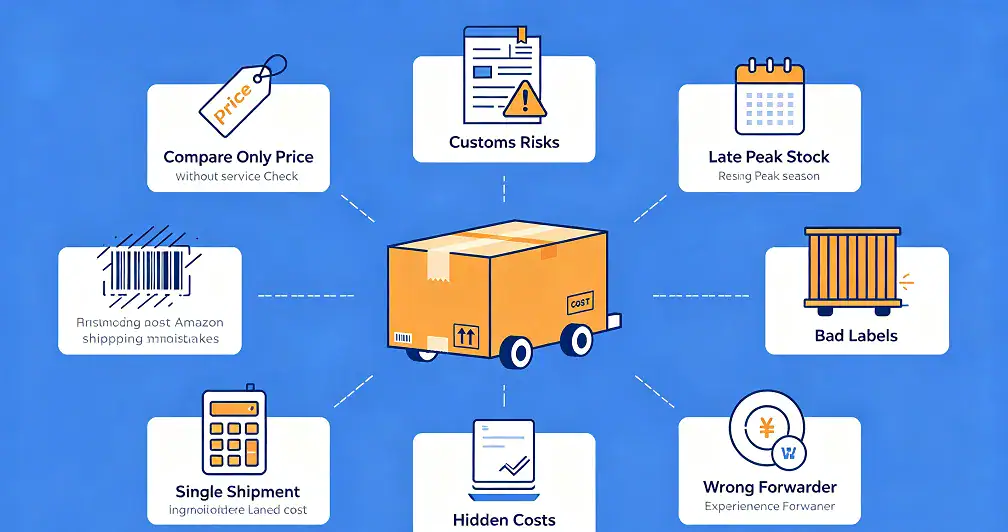
9. Seven Shipping Mistakes That Cost Amazon Sellers Thousands
Over the years, we’ve seen the same mistakes pop up again and again. Avoiding these can save you a lot of headaches—and money.
1. Comparing Price Without Comparing Service
Looking only at per-kilo rates while ignoring whether clearance, delivery, and duty prepayment are included often means you end up paying more overall.
2. Brushing Off Customs Compliance
Lowballing declared values or using vague product descriptions might get past the system once, but if customs catches you, you’re looking at fines, seizure, or even destruction of your goods.
3. Not Stocking Up Before Peak Season
Q4 and Prime Day bring tight space, port delays, and surging freight rates. Last-minute restocking during these periods costs way more than planning ahead.
4. Messing Up Carton Labels
Smudged, missing, or incorrectly placed labels mean FBA scanners can’t read them. Your shipment ends up in the problem-solving pile, and receiving takes forever.
5. Relying on a Single Shipment
Only having one batch in the pipeline means any delay equals an immediate stockout. Keep at least two shipments in motion—one in transit, one being prepared.
6. Ignoring Total Landed Cost
Focusing only on product cost and freight while ignoring duties, handling fees, and FBA storage charges can make your actual margins look very different from what you expected.
7. Picking a Forwarder Without Amazon Experience
A general freight forwarder might not know FBA label rules, packaging specs, or appointment protocols. When things go wrong, communication gets messy. Choosing a forwarder that specializes in Amazon sellers cuts down on these friction points.
10. Frequently Asked Questions
How long does shipping from China to USA usually take?
It depends on the method you choose. Express takes about 3-7 business days, air freight around 5-10 business days, and sea freight roughly 25-45 calendar days. For sea freight, we recommend starting your planning at least a month in advance.
What’s the cheapest way to ship from China to USA?
Sea freight is the most economical option for moving large volumes of FBA inventory. Whether you go LCL or FCL, shipping by sea brings your per-unit logistics cost down significantly.
Can a freight forwarder deliver directly to an Amazon FBA warehouse?
Absolutely. Professional Amazon-focused forwarders arrange US truck or parcel delivery services, book the required appointment, and get your shipment right to the specified FBA warehouse door.
What documents do I need to prepare for shipping to US FBA?
You’ll need a commercial invoice, packing list, FBA carton labels, FNSKU product labels, and “Made in China” markings. For customs, you’ll also need HS codes and importer information. With DDP service, your forwarder can take care of the clearance side for you.
Under DDP, do I still take on US clearance risk?
No—under DDP, the shipper or freight forwarder handles customs clearance and pays the duties upfront. You don’t need to provide a US importer number or deal with clearance yourself. It’s a much smoother way to ship, especially if you’re new to US imports.
ABout AMZ Shipper
AMZ Shipper has several years of experience for international logistics Freight Forwarding service. Our service is for importer and exporter, foreign freight forwarders, local and abroad business. Export of 1500 of 40HQ per year for FBA Amazon shipping, 15-30tons of air shipments per month.
Member of WCA. Our company is a professional Amazon freight forwarder that specializes in providing comprehensive and efficient services to customers.