
I. A “Logistics Earthquake” Out of Nowhere: Who’s Shaking?
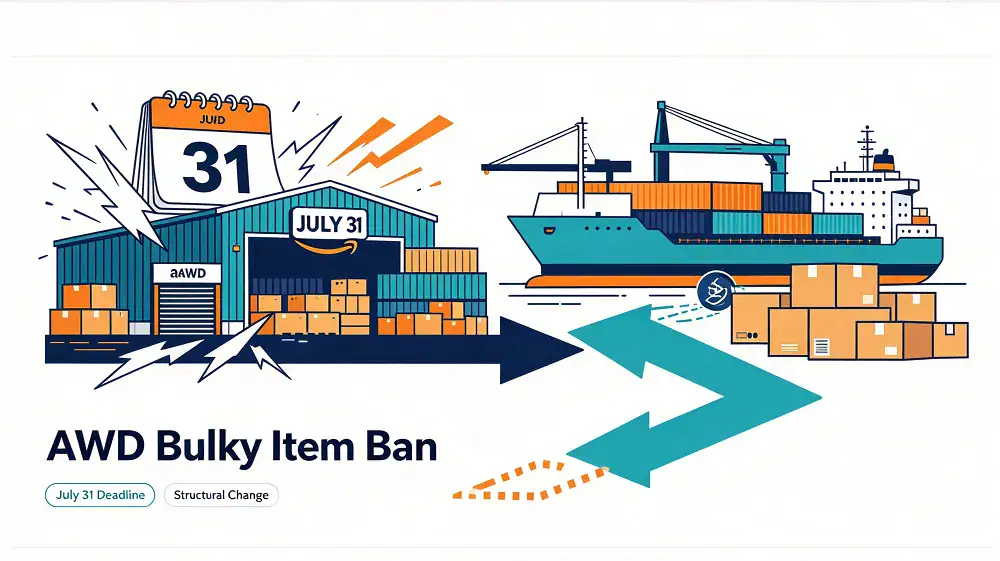
Amazon dropped a bombshell in July 2026. The company officially announced that starting July 31, 2026, its U.S. AWD (Amazon Warehousing & Distribution) will completely stop accepting bulky and heavy items, leaving only standard-sized products eligible for inbound shipping.
This isn’t just a minor rule tweak. It’s a structural supply chain overhaul aimed squarely at sellers in specific product categories.
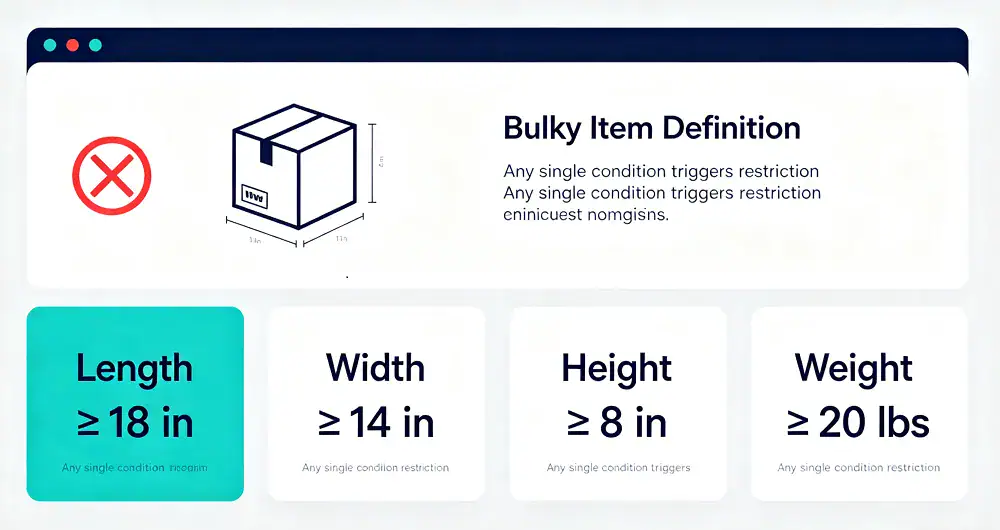
The new rules are brutally clear: if your product meets any one of the conditions below, it’s classified as “bulky” and permanently banned from AWD:
| Dimension | Threshold (Any Single One Triggers Restriction) | Approximate Metric |
|---|---|---|
| Length | ≥ 18 inches | ≥ 45.7 cm |
| Width | ≥ 14 inches | ≥ 35.6 cm |
| Height | ≥ 8 inches | ≥ 20.3 cm |
| Weight | ≥ 20 lbs | ≥ 9 kg |
“No exceptions, no flexibility” – Amazon’s wording leaves zero room for interpretation. That means the old trick of “slightly tweaking packaging to stay under the radar” is dead this time around.
Who Gets Hit the Hardest?
At the epicenter of this policy earthquake are, without a doubt, sellers of mid-to-large sized products. Furniture, fitness equipment, outdoor gear, baby furniture, large pet supplies – sellers in these categories have come to rely on AWD as a low-cost offshore buffer warehouse over the past few years.
Their typical playbook looked like this: stock 2–3 months of inventory in AWD, where storage fees are way lower than FBA, and use AWD’s auto-replenishment feature to feed FBA warehouses on demand. This setup successfully avoided FBA’s brutal peak-season storage charges and long-term storage penalties, while still keeping Prime delivery times intact.
Now, that lifeline is being cut for good.
The Real Pain Behind the Numbers
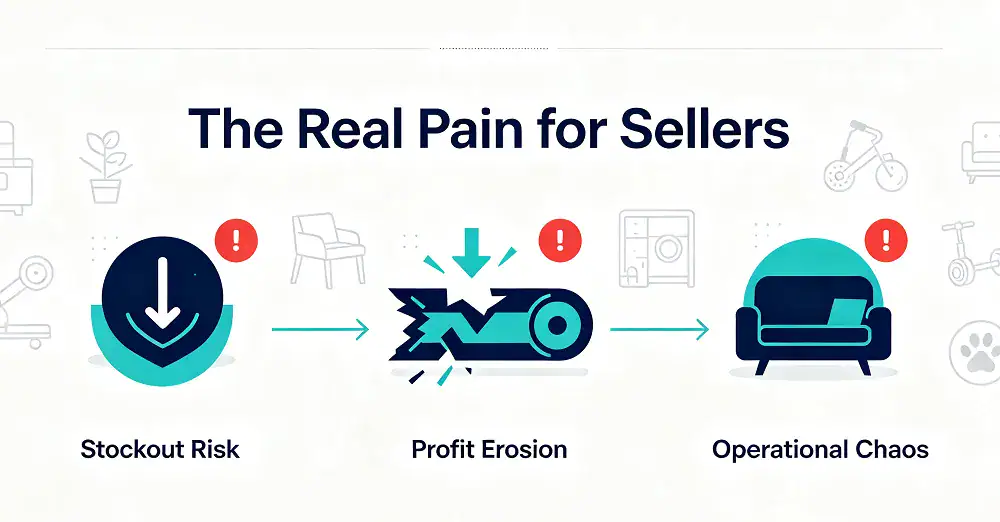
Some sellers ran the numbers and found that for their best-selling items – products with packaging just over the 8.5-inch threshold – logistics costs could jump over 20%. And that’s just the direct hit. The bigger risks are:
-
Stockout disasters: Without AWD as a buffer, any delay in your ocean freight or any unexpected FBA capacity cut could leave your hot sellers out of stock. Rankings plunge, and recovery takes months.
-
Profit erosion: Forced to send bulky items straight to FBA means not just higher monthly storage fees, but also the looming threat of long-term storage fees kicking in at 181 days, which can go up to 13 times the base rate. For slow-moving bulky goods, that’s almost a death sentence.
-
Operational chaos: The old “factory → AWD → FBA” pipeline is broken. Sellers now have to rethink their inventory levels, replenishment schedules, and shipping routes from scratch. The complexity just exploded.
II. The Two Official Paths – Why Do Both Feel Like Tightropes?
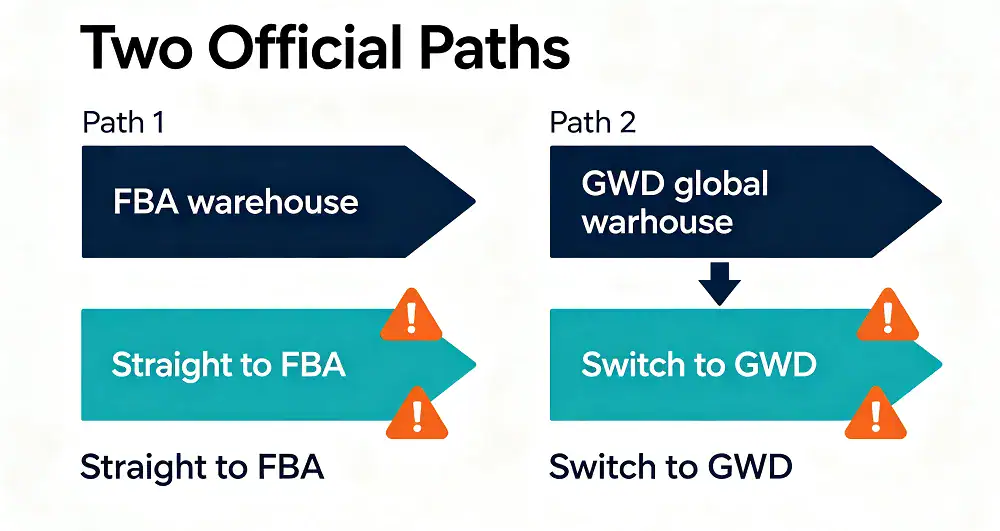
Facing an avalanche of seller questions, Amazon offered two official alternatives:
Path 1: Send bulky items straight to FBA fulfillment centers.
Path 2: Switch to the new GWD (Global Warehousing & Distribution).
But if you dig deeper, both routes come with hidden costs that are easy to overlook.
Path 1 Breakdown: Straight to FBA – Seems Simple, But Costs a Fortune
This looks like the most straightforward move, but the price tag could be way bigger than expected.
-
Storage fee trap: FBA storage fees have always been higher than AWD. During peak season (October–December), they practically triple. For bulky items that eat up tons of warehouse space, the bill adds up fast.
-
The sword hanging over your head – long-term storage fees: This is the biggest silent killer. Bulky items usually turn over slower than small ones. If they sit in FBA warehouses past the 181-day mark, you’re hit with long-term storage fees that are 13 times the standard rate. That can wipe out your entire profit margin.
-
Capacity limits squeeze: FBA capacity is dynamically allocated. Heavy/bulky inventory eats into your standard-size restock limits, potentially throwing your entire catalog’s replenishment plan off track.
Path 2 Breakdown: Switching to GWD – Is It Just Old Wine in a New Bottle?
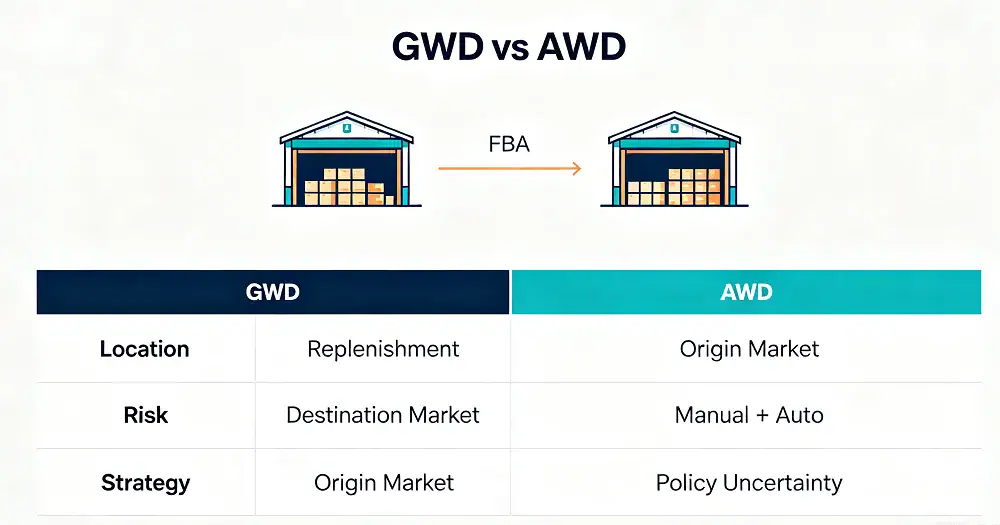
GWD is Amazon’s big push for 2026, positioned as an “upstream reserve warehouse” that connects directly from the origin country (like China) to your target sales market. It works similarly to AWD, but the broader vision is to support multi-market sales globally.
On paper, here’s how they compare:
| Aspect | GWD (Global Warehousing & Distribution) | AWD (Amazon Warehousing & Distribution) |
|---|---|---|
| Warehouse Location | Origin country (e.g., Shenzhen, China) | Sales destination country (e.g., U.S.) |
| Core Function | Replenish U.S. FBA from China-based reserve stock | Replenish U.S. FBA from U.S.-based reserve stock |
| Replenishment Mode | Manual + Auto | Manual + Auto |
| Strategic Vision | Supports multi-market global sales | Serves the local market of the destination country |
On the surface, GWD looks like a “drop-in replacement” for AWD, possibly even with lower storage fees. But bulky sellers need to face a few uncomfortable truths:
-
Policy risk hasn’t gone away: GWD currently claims to accept bulky items, but there’s no guarantee they won’t copy AWD’s restrictions down the road. History shows that when volumes scale up, similar restrictions tend to follow.
-
Service maturity is still a question mark: As a newer service, GWD’s system stability, customer support responsiveness, and integration with AGL (Amazon Global Logistics) still need to prove themselves in real-world operations.
-
Vendor lock-in risk increases: Using GWD means getting even more deeply embedded in Amazon’s supply chain ecosystem (storage + shipping + delivery all handled by Amazon). That gives you less negotiating power and less flexibility.
One Important Window to Watch
Amazon did set up a transitional protection period:
-
Bulky inventory already sitting in AWD before July 31 doesn’t need to be moved out and can continue feeding FBA until sold out.
-
AWD inbound shipments for bulky items created before July 31 will still be accepted even if they arrive in August or September.
That means over the next couple of weeks, sellers still have one last chance to “rush in” inventory they’ve already planned. But after that, the logistics playbook has to be completely rewritten.
III. Supply Chain Restructuring Is Unavoidable
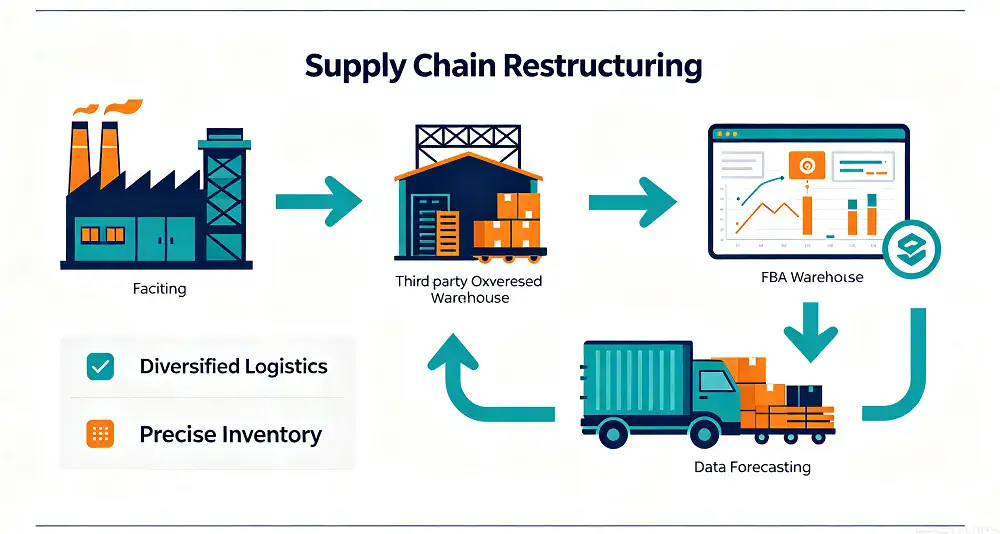
This AWD policy shift sends a clear signal about Amazon’s global supply chain strategy: they’re repositioning AWD as a dedicated accelerator for small, fast-moving products, while shifting the burden of bulky goods storage and logistics onto sellers and third-party service providers.
For mid-to-large size sellers, this means a few things:
-
It’s time to fully let go of relying on a single low-cost official transit warehouse – you need to build a more flexible, diversified logistics mix.
-
Inventory management precision has become a make-or-break skill – balancing the speed of direct FBA shipments against the cost advantages of third-party overseas warehouses will define who wins the peak season game.
-
Digital supply chain transformation can’t wait – only by using data tools to forecast demand, monitor capacity limits, and fine-tune replenishment cycles can you survive and thrive under the new policy landscape.
The clock is ticking. With less than two weeks until July 31, the storm is right at the doorstep. It’s time to take a hard look at your bulky product supply chain – and decide what comes next.
ABout AMZ Shipper
AMZ Shipper has several years of experience for international logistics Freight Forwarding service. Our service is for importer and exporter, foreign freight forwarders, local and abroad business. Export of 1500 of 40HQ per year for FBA Amazon shipping, 15-30tons of air shipments per month.
Member of WCA. Our company is a professional Amazon freight forwarder that specializes in providing comprehensive and efficient services to customers.