For cross‑border e‑commerce sellers, shipping insurance is an essential part of the international logistics chain. Many sellers focus only on freight costs and transit times when dispatching goods, overlooking the various mishaps that can occur during long‑haul transport – container water ingress, collisions, theft, or even complete loss of the shipment. When damage actually happens, they soon discover that the carrier’s liability covers only a fraction of the cargo’s true value. A proper shipping insurance policy, on the other hand, turns those unpredictable risks into a manageable, fixed cost.
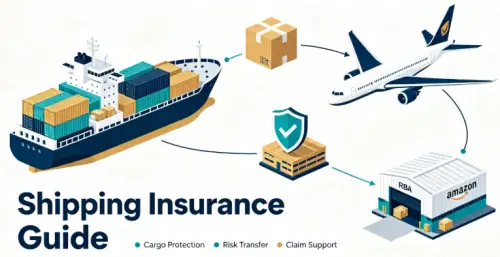
This guide walks you through six key areas: the limits of carrier liability, the core coverage of shipping insurance, the three main coverage levels, special considerations for FBA sellers, common reasons claims get denied, and practical tips for buying and claiming. By the end, you’ll have a solid framework to protect your international shipments.
Why Carrier Liability Falls Short – The Case for Shipping Insurance
Many sellers assume that if goods are lost or damaged, the carrier will foot the bill. But the reality is quite different.
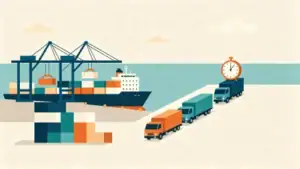
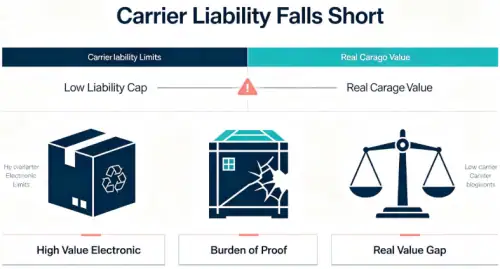
International ocean freight is governed by rules like the Hague‑Visby Rules or the US COGSA, which cap a carrier’s liability at a fixed amount per package or per kilogram – and that cap is far below the actual value of most cross‑border e‑commerce goods. Air freight, under the Montreal Convention, has similar limits. So if you are shipping high‑value electronics and they get damaged, the carrier may only reimburse you a small portion of what they are worth.
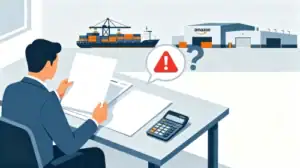
Worse still, even if the carrier admits liability, you have to prove that the carrier was at fault – and the burden of proof lies with the shipper. For most Amazon sellers, that is a daunting, often impossible task. Your choice of Incoterms also determines who is responsible for arranging insurance; if the contract is vague, your cargo might travel through the most dangerous stretches of the journey completely uninsured.
A professional shipping insurance policy bridges that gap between carrier limits and your cargo’s real worth. It does not depend on proving carrier negligence – as long as the loss falls within the covered risks, you get compensated.
What Shipping Insurance Typically Covers
A standard international cargo insurance policy (shipping insurance) generally covers four broad categories of risk:
-
Natural disasters – extreme weather like heavy rain, floods, earthquakes, lightning, etc.
-
Accidents – collisions, grounding, sinking, fire, explosions, and other unexpected incidents during transit.
-
Theft and robbery – goods stolen while in transit or storage.
-
Non‑delivery – cargo arrives at the destination port but is never picked up or cannot be delivered.
Different transport modes face different risks. Ocean shipments often deal with container water ingress, cargo shifting, and general average contributions. Air freight is more prone to turbulence damage and handling errors. Road transport involves vehicle accidents and theft. It is worth noting that shipping insurance typically follows a “warehouse‑to‑warehouse” clause – coverage starts at the shipper’s warehouse and ends at the consignee’s warehouse. For Amazon FBA sellers, that means your goods are protected from the moment they leave your supplier in China all the way until they reach the FBA fulfillment centre and are checked in.
The Three Levels of Shipping Insurance – A Closer Look at ICC Clauses
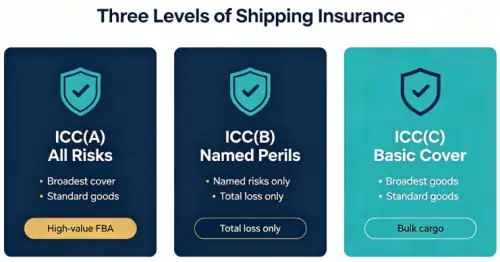
The vast majority of cargo insurance policies are based on the Institute Cargo Clauses (ICC) , which offer three levels of coverage, from broadest to most basic:
| Clause Level | Scope of Cover | Typical Use Case |
|---|---|---|
| ICC(A) – All Risks | Covers all physical loss or damage except for specified exclusions (e.g., inherent vice, improper packing, war, strikes). Includes theft, wetting, contamination, mishandling, etc. | High‑value electronics, precision instruments, FBA shipments |
| ICC(B) – Named Perils | Covers only named risks like fire, explosion, sinking, grounding, collision, earthquake – does not cover theft or minor damage. | General industrial goods, standard merchandise |
| ICC(C) – Basic Cover | Covers only total loss caused by major catastrophes like sinking or fire – no partial loss cover. | Low‑value bulk commodities, break‑bulk cargo |
A crucial point: ICC(A) – “All Risks” – is not literally “all risks”. The exclusions are clearly spelled out: inherent vice (e.g., quality defects in the product itself), improper packaging, delay‑related losses, and war/strike risks (which require additional coverage). Industry data shows that the majority of exporters choose ICC(A) for their shipments. For Amazon FBA sellers, given the relatively high value of their goods and the multiple handling stages, ICC(A) is usually the most recommended shipping insurance option.
Special Considerations for FBA Sellers – Shipping Insurance and the “Check‑in” Gap
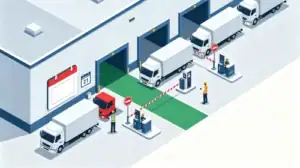
For Amazon FBA sellers, shipping insurance has an extra dimension – the so‑called “check‑in” cover. Standard policies typically end once the goods arrive at the destination warehouse and are signed for. But FBA shipments often sit in the receiving queue for days or even weeks before they are actually checked into inventory. If goods are lost or damaged during that gap, your standard policy may not respond, and Amazon’s own warehouse compensation is limited.
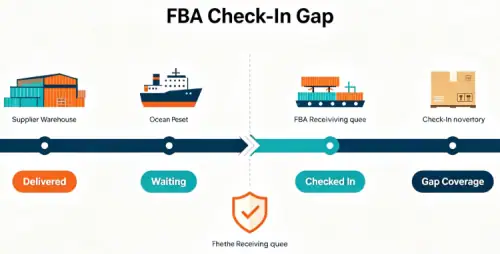
FBA check‑in insurance is designed exactly for this scenario – it extends coverage to cover losses that occur after physical delivery but before the items are officially checked into your FBA inventory. For sellers who rely heavily on FBA, this extra layer is invaluable.
At the same time, the need for independent shipping insurance has grown even more pressing. In recent years, Amazon has adjusted its FBA inventory reimbursement policies – moving from sales‑price compensation to manufacturing‑cost reimbursement, and drastically shortening the claim window. That means the platform’s own protection is actually shrinking. You cannot rely on Amazon to cover your losses; a standalone, comprehensive shipping insurance policy is your real safety net.
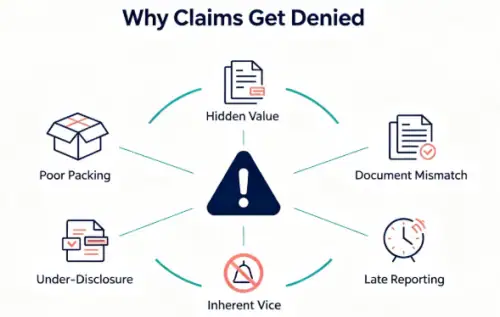
Common Reasons Shipping Insurance Claims Get Denied – and How to Avoid Them
Buying shipping insurance does not guarantee you will get paid. Knowing the common pitfalls can help you avoid them from the start – during both the packing and the claiming stages.
| Common Denial Reason | What It Looks Like | How to Avoid |
|---|---|---|
| Improper packing | Thin cartons, poor waterproofing, loose wooden frames, inadequate securing | Use packaging that meets long‑haul standards; keep photos of the packing process |
| Inconsistent documents | Mismatched item descriptions between customs declaration and insurance policy; missing key papers | Ensure all documents match exactly; keep originals safe |
| Failure to disclose | Under‑declared value; undeclared hazardous properties (e.g., lithium batteries) | Be truthful; do not cut corners |
| Inherent vice | Product defects that cause damage during normal transit | Conduct quality checks before shipment |
| Late reporting | Not notifying the insurer within the required timeframe (usually 24‑48 hours) | Report immediately upon discovery of damage |
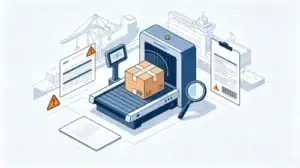
Improper packing is the number one reason for denial in shipping insurance claims. Industry data suggests that a significant proportion of rejected claims stem from packing issues. Many sellers spend good money on premiums, only to be turned down because their cartons were not strong enough or their waterproofing was inadequate. The policy clearly states: damage caused by packaging that is not fit for long‑distance transport is not covered by shipping insurance.
Practical Tips for Buying and Claiming Shipping Insurance
When You Buy – Key Points
Insure for the full value. Base your insured amount on the total of “purchase cost + freight + customs duties + a reasonable profit margin”. International practice suggests insuring at about 110% of the cargo value. Under‑insuring means you only get a proportional payout – which defeats the purpose.
Choose the right cover. For FBA shipments, prioritise policies that cover the “post‑delivery, pre‑check‑in” window. For high‑value goods, go for ICC(A).
Read the exclusions carefully. Do not be fooled by the name “All Risks” – it has clear boundaries. Know exactly what is not covered, so you have realistic expectations.
Pick a reliable channel. You can buy insurance through your logistics provider or directly from a professional insurer. Buying through your forwarder is usually easier, and they can help with claims.
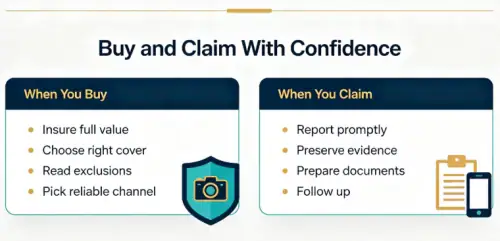
When You Claim – Crucial Steps
Report promptly. As soon as you discover damage, notify the insurer – typically within a very short window (e.g., 24‑48 hours). Delaying may lead to denial or reduced payouts.
Preserve evidence. Take multiple photos of the damage from different angles, keep the damaged goods (if possible), and record the scene. The more evidence you have, the smoother the claim.
Prepare a complete set of documents. Essential items include: the original policy, bill of lading/air waybill, commercial invoice, packing list, proof of loss, survey report, etc. Incomplete documentation is one of the most common reasons claims are rejected.
Follow up. Stay in touch with the insurer or your logistics partner to make sure the process moves forward.
As a logistics provider focused on cross‑border e‑commerce, AMZ Shipper not only offers international transport services but also helps sellers understand and arrange the right shipping insurance – so you can navigate the complexities of global shipping with greater confidence.
ABout AMZ Shipper
AMZ Shipper has several years of experience for international logistics Freight Forwarding service. Our service is for importer and exporter, foreign freight forwarders, local and abroad business. Export of 1500 of 40HQ per year for FBA Amazon shipping, 15-30tons of air shipments per month.
Member of WCA. Our company is a professional Amazon freight forwarder that specializes in providing comprehensive and efficient services to customers.