If you’re selling on Amazon FBA in the US or Europe, your supply chain can make or break your business. Logistics isn’t just about moving boxes into a warehouse – it affects your inventory health, IPI score, restock cycles, and even your account security. But let’s be real: freight forwarders are everywhere, and not all of them are good. Some hide fees in their quotes, miss delivery windows, or mess up customs clearance.
So before you sign anything, use these 8 questions to vet every forwarder. They cover pricing transparency, shipping times, customs responsibility, damage handling, and compliance support – whether you’re shipping from China, Vietnam, or India to Amazon’s warehouses.
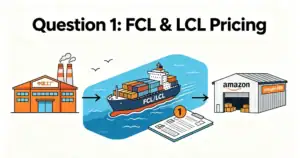
1. Can you give me separate quotes for FCL (full container) and LCL (less than container) from major ports (like Shanghai, Ningbo, Shenzhen, or Ho Chi Minh) to my target FBA warehouses (like US ONT8, LGB8, or Germany FRA1, UK BHX4)?
Why this matters:
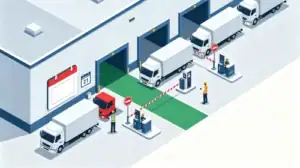
Many new sellers only ask for LCL rates, but once your sales take off, FCL can actually save you money. If your forwarder doesn’t handle FCL, switching later is a pain. Also, different FBA warehouses have different rules (like requiring pallets or appointments), so your forwarder must know the specific requirements for each one.
What a good forwarder does:
-
Gives you tiered pricing by volume (e.g., 100kg, 300kg, 500kg, 1x20GP, 1x40HQ)
-
Clearly states the minimum CBM or weight for LCL shipments
-
Tells you upfront about special rules for your target FBA warehouse (e.g., ONT8 requires four-way entry pallets and max height 1.8m)
2. Does your quote fully include all these delivery fees? Are there any hidden charges?
That “too good to be true” low price often hides costs at the destination. If any of the following are missing, you’ll probably get surprise bills:
| Fee Category | Specific Items | Risk If Not Included |
|---|---|---|
| Export side | Customs clearance, documentation, port fees | 50–150 extra per shipment |
| Ocean/Air freight | BAF, PSS (peak season surcharge) | Can be 20–50% of base freight |
| Destination port | THC, swap fee, inspection coordination | 100–300 extra |
| Last-mile delivery | Trucking to FBA, appointment fee, unloading | 250–500 per truckload in the US |
| Special handling | FBA label application, pallet wrapping, oversize fees | 15–50 per pallet; $25 per overweight carton |
A good forwarder gives you an all-in-one price list and promises in writing: no extra fees except for force majeure (like a full customs inspection or extreme weather). Forwarders like AMZ SHIPPER break down every cost beforehand so you don’t get a nasty surprise.

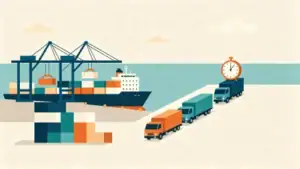
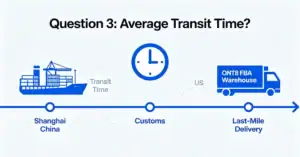
3. What’s the actual average transit time from pickup at the origin port to delivery at the FBA warehouse? Can you share real data from the last 3 months for this route, not just theoretical numbers?
-
Air + last-mile: Usually 5–9 calendar days (from handing goods to forwarder’s warehouse to FBA scan).
-
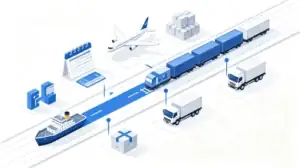
Fast boat (e.g., Matson CLX/CLX+): Shanghai to LA/Long Beach: 11–13 days, plus unpacking and trucking – around 18–22 days total to ONT8.
-
Regular boat (e.g., ZIM, Wan Hai): 25–35 days to US West Coast FBA, plus 5–7 more days to Midwest or East Coast.
What you can do:
Ask for the vessel name and voyage number, and daily tracking screenshots from the carrier’s website. If they can’t provide a table of actual transit times (fastest, slowest, average) from the last 3 months, that’s a red flag – they don’t have a stable operation.
4. If customs inspects my shipment, or if goods are damaged or lost, what’s your compensation standard and process?
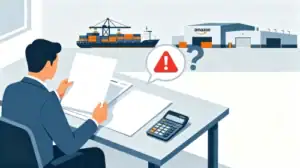
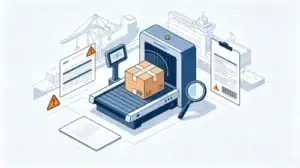
This is the most overlooked but most dangerous question. Many forwarders say “we handle customs for you,” but once the goods are held up (e.g., for undervaluation or missing certificates), they often drag their feet or even abandon the shipment.
You need to clarify three things:
-
When does “lost” officially start? (Industry norm: 45–60 days after sailing if no FBA scan)
-
Compensation amount: Based on freight multiples (usually 2–3x freight) or declared value? Declared value is better, but many only pay 2x freight – so if freight is 500,youget1000, far less than your product cost.
-
Who pays for customs issues? If the problem is your product (missing CE or CPC certificate), you pay. If it’s the forwarder’s customs broker (wrong EIN/VAT, missing docs), they pay.
Table: Who’s responsible when customs detains your goods
| Reason for Detention | Responsible Party | What You Can Do to Prevent It |
|---|---|---|
| Undervalued goods (too low) | Seller | Declare real purchase cost + some freight; don’t go below 30% of market price |
| Missing certifications (CE/FCC/CPC) | Seller | Provide compliance docs upfront; have forwarder pre-check them |
| Broker error (EIN/VAT wrong) | Forwarder | Ask for broker’s credentials and historical inspection rate |
| Random inspection (no violation) | No fault | Pay inspection fee (50–200) and wait for release |
A good forwarder has cargo insurance and tells you upfront: if lost, you get up to the declared value (typically capped at 100/kgor5,000 per shipment). Forwarders like AMZ SHIPPER help you prepare full customs files (commercial invoice, packing list, product link) to reduce the chance of inspections.

5. Do you help with FBA inbound problems like wrong labels, overweight boxes, or damaged packaging?
FBA warehouses are super picky. If any of these happen, your shipment could be rejected, hit with extra fees (1.50–3.00 per unit), or even get your FBA privileges suspended:
-
Overweight boxes: US: over 50 lbs (22.5kg) needs “Team Lift” label; over 100 lbs (45kg) needs “Mech Lift”. Europe: max 23kg per box.
-
Wrong labels: Smudged FNSKU, wrong placement, unreadable barcode.
-
Poor packaging: Weak cartons, no protection for fragile items.
What a forwarder should offer:
-
Pre-check before shipping: Weigh, measure, and scan FNSKU labels at their warehouse.
-
Fix it for cheap or free: Replace outer boxes, re-stick labels, wrap pallets.
-
If FBA rejects: Quickly move goods to a third-party warehouse nearby, then reschedule delivery.

6. Can you share your on-time performance (OTP) data for the same route and same carrier over the last 6 months?
“On-time performance” isn’t a salesperson saying “90%+”. It needs to be backed by real numbers. Ask them for:
-
The average actual transit days (from ETD to FBA scan) for that route over the past 6 months.
-
On-time rate: For example, “Matson CLX to ONT8: 60 shipments, 55 arrived in 18–22 days – 91.7% on-time.”
-
Worst-case delay: What’s the longest delay, and why did it happen?
If they refuse or mumble, it means they don’t track data properly – which means they’re not professional. A good forwarder will proudly show you their performance dashboard, or give you access to track your own shipments.
7. For undervaluation, product compliance (CE, FCC, CPC, FDA), or dangerous goods, what’s your process? Do you have a dedicated compliance team?
US and European customs have been cracking down hard on undervaluation and missing compliance. Examples:
-
US CPSC requires a CPC certificate for children’s products – without it, goods get seized and destroyed.
-
Europe demands CE, WEEE, and RoHS for electronics – missing documents can lead to whole container seizure.
What you really need to know:
-
Which product categories (electronics, toys, cosmetics, lithium batteries) need extra documents?
-
Can you pre-screen my products – for free – before I ship? Check photos and certificates for obvious issues.
-
If customs questions my goods, can you give me contact info for a law firm or broker who can help me respond or appeal?
8. If there’s peak season congestion (Prime Day, Black Friday) or port strikes / weather delays, what’s your backup plan? For example: alternate ports, temporary overseas warehouses, or switching to faster boats / air freight?
Relying on a single port, a single carrier, or a single trucking company is a recipe for disaster. One strike or snowstorm and you’re out of stock for weeks.
Checklist for evaluating their backup plan (bulleted list):
-
Port diversity: Besides LA/Long Beach, can they use Seattle, Oakland, or Houston? In Europe, besides Felixstowe, can they use Rotterdam or Antwerp?
-
Overseas warehouse access: Do they have partner warehouses near major FBA hubs (US West/East, Germany, UK)? Can they offer at least 15 days of free storage, plus re-labeling, transshipment, and one-off fulfillment?
-
Mode switching ability: If ocean delays exceed 7 days, will they proactively suggest and help switch some urgent cargo to air freight (even if it means re-labeling)?
A good forwarder will talk to you about supply chain resilience: keep 5–10% extra safety stock, split 30% of your volume to fast boat/air combo – don’t put all eggs in one basket.
Quick Scorecard to Compare Three Forwarders (you can copy this)
| Evaluation Area | Forwarder A: ______ | Forwarder B: ______ | Forwarder C: ______ |
|---|---|---|---|
| Offers tiered FCL + LCL pricing | Yes / No | Yes / No | Yes / No |
| Provides full destination fee breakdown (no hidden costs) | Yes / No | Yes / No | Yes / No |
| Shares actual transit time data from last 3 months | Yes / No | Yes / No | Yes / No |
| Loss/damage compensation: by cargo value or freight multiple? | Value / Freight | Value / Freight | Value / Freight |
| Offers pre-shipment check (labels/weight/packaging) for FBA | Yes / No | Yes / No | Yes / No |
| Proactively warns about compliance risks (CE/FCC/CPC) | Yes / No | Yes / No | Yes / No |
| Has backup plan: overseas warehouse + multiple ports for peak season | Yes / No | Yes / No | Yes / No |
How to use this: Send these 8 questions to each forwarder and ask for written answers (email or chat records). Don’t trust verbal promises. Only forwarders that pass all 8 tests deserve to handle your inventory – which could be worth tens of thousands of dollars.
ABout AMZ Shipper
AMZ Shipper has several years of experience for international logistics Freight Forwarding service. Our service is for importer and exporter, foreign freight forwarders, local and abroad business. Export of 1500 of 40HQ per year for FBA Amazon shipping, 15-30tons of air shipments per month.
Member of WCA. Our company is a professional Amazon freight forwarder that specializes in providing comprehensive and efficient services to customers.